
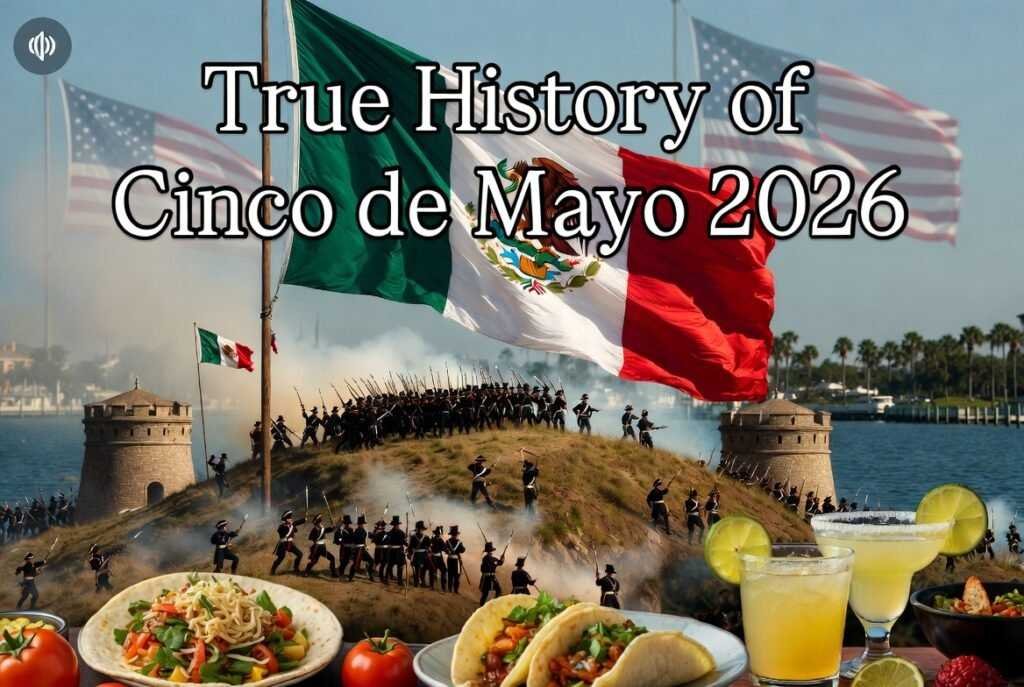
Cinco de Mayo history 2026 continues to spark curiosity every spring, and here in Safety Harbor we make sure the real story takes center stage. As the Bathrobe Patriot, I always emphasize accurate history because celebrations become more meaningful when we understand where they come from. Therefore, this guide walks through the Battle of Puebla, clears up common myths, and explains why patriots across Pinellas County still honor the day with pride and community spirit.
For example, the 1862 victory represents resilience against long odds. Additionally, it carries lessons that resonate with American values of determination and liberty. Let’s explore the full context so your Safety Harbor gatherings this year feel both fun and informed. In addition, we will connect the dots to modern celebrations right here in Florida, showing how a single battle from the 19th century still inspires local traditions today.
Once you know the real Battle of Puebla story, pair it with the perfect drink by reading our history of tequila and mezcal 2026.“

The Road to the Battle of Puebla in Cinco de Mayo History
Mexico faced serious challenges in the early 1860s. In addition to recovering from a civil war known as the Reform War, the country carried heavy foreign debt. When President Benito Juárez suspended payments for two years, France, Britain, and Spain initially responded together. However, Britain and Spain soon withdrew after negotiations, leaving Napoleon III’s France to pursue its own ambitions. The French emperor wanted a friendly monarchy in the Americas, partly to counter growing U.S. influence and to collect debts while expanding power.
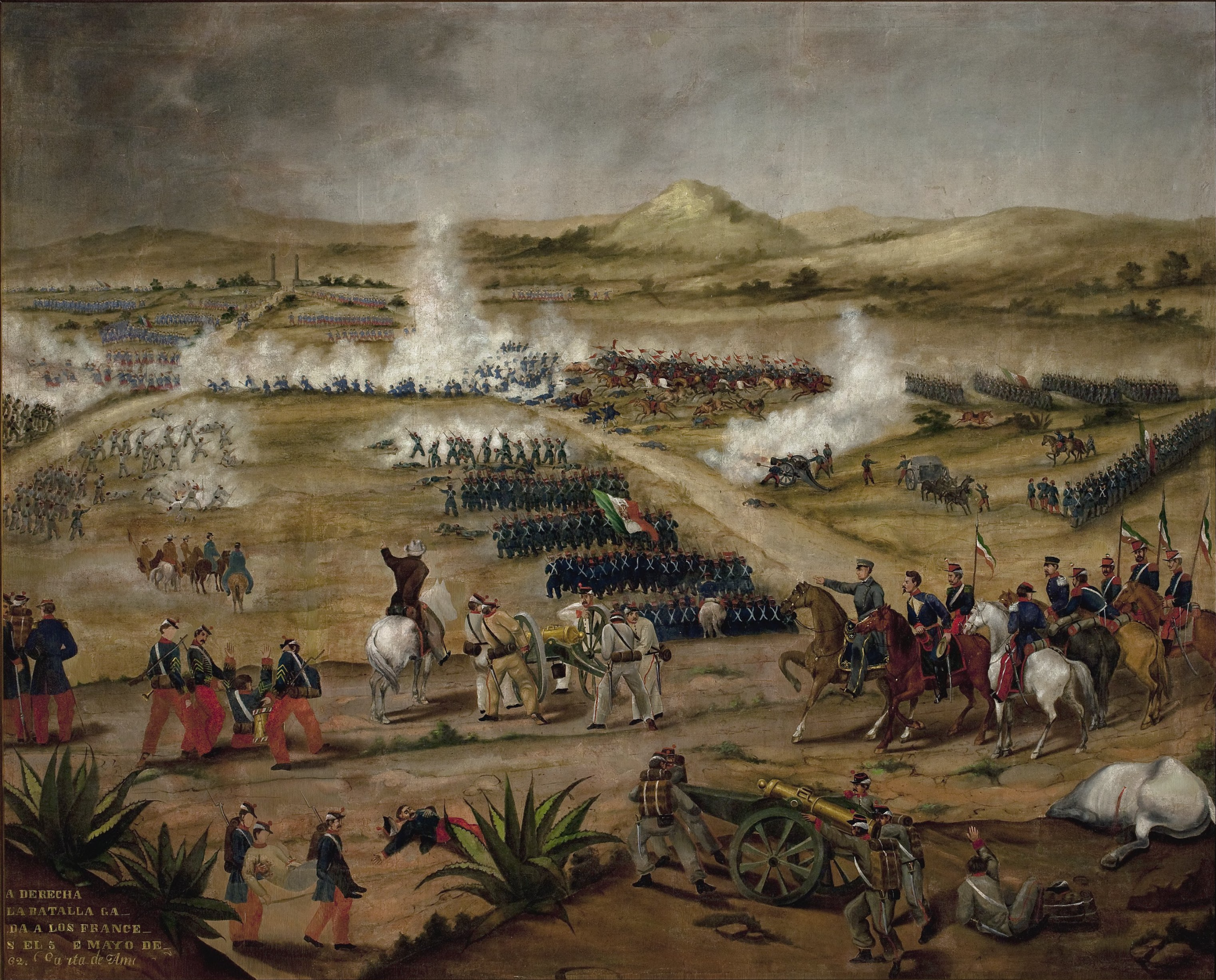
Therefore, the stage was set for a dramatic confrontation. By late 1861, French troops had landed at Veracruz. They expected an easy advance to Mexico City. Yet the route passed through Puebla, where General Ignacio Zaragoza, a Texas-born Mexican commander, prepared a defense. Zaragoza commanded roughly 4,000 to 5,000 troops against a French force of around 6,000. Because of strong defensive positioning at Forts Loreto and Guadalupe, combined with heavy rain that turned the ground to mud, the Mexicans held firm.
On May 5, 1862, the French launched repeated frontal assaults. However, Mexican artillery and infantry fire, supported by timely cavalry counterattacks, broke the advances. Brigadier General Porfirio Díaz also played a key role in repelling a flank attempt. By the end of the day, the French had lost nearly 1,000 men and retreated in disarray. Zaragoza’s famous report to Juárez captured the moment: “The national arms have covered themselves in glory.” This victory, although not the end of the war, became a powerful symbol of resistance.
Why This Is Not Mexican Independence Day – Clearing Up the Confusion
Many people still confuse the dates, yet the distinction is important for accurate understanding. Mexican Independence Day falls on September 16 and marks the 1810 Grito de Dolores led by Father Miguel Hidalgo y Costilla against Spanish rule. Cinco de Mayo, by contrast, specifically commemorates the 1862 battle against France. Because the holiday gained popularity in the United States through Mexican-American communities, the mix-up persists year after year.
However, knowing the real background helps us honor the courage shown at Puebla without blending unrelated events. For instance, Independence Day celebrates the beginning of the long struggle that ended Spanish colonial rule in 1821. Cinco de Mayo, on the other hand, highlights a mid-19th-century clash during the French Intervention. Therefore, treating them as separate allows for deeper appreciation of each chapter in Mexican history. In Safety Harbor gatherings, sharing this distinction turns casual conversations into meaningful history lessons.
The Broader Impact and How the Story Spread to America
The Battle of Puebla delivered a major morale boost even though France later returned with greater forces and eventually occupied Mexico City. Additionally, the event resonated in the United States during the Civil War era. Some historians suggest the French setback may have delayed any potential support for the Confederacy, giving the Union an indirect advantage. Consequently, the victory carried importance beyond Mexico’s borders.
Over the following decades, Mexican immigrants in California and other western states began observing the date as a point of cultural pride. For example, early celebrations occurred among miners in the 1860s. Therefore, what started as modest gatherings grew into widespread festivities focused on food, music, and heritage. In Pinellas County today, we continue that tradition through local spots and family-friendly events.
Furthermore, the story of General Zaragoza — a man with Texas roots fighting for Mexico — bridges cultures in a unique way. Because many Safety Harbor residents value underdog narratives, the tale feels especially relevant. Moreover, it reminds us that determination and smart strategy can overcome superior resources, a principle that applies to personal life, small businesses, and community efforts alike.
Key Facts and Timeline in Cinco de Mayo History
To make the events easier to remember, here is a clear timeline:
- 1850s–1861: Mexico endures the Reform War; Juárez becomes president and suspends debt payments.
- 1861–1862: French invasion begins; troops land at Veracruz.
- May 5, 1862: Battle of Puebla — decisive Mexican victory under Zaragoza.
- 1863–1867: France installs Maximilian as emperor, but Mexican resistance eventually prevails.
- 1860s onward in the U.S.: Celebrations begin among Mexican-American communities, especially in California.
- 1970s–today: The holiday evolves into a major cultural observance in the United States, with growing emphasis on authentic food, music, and history.
Because this timeline shows both the battle’s immediate impact and its long-term legacy, it helps separate fact from festival hype.
Local Relevance: Why Safety Harbor Patriots Embrace Cinco de Mayo History 2026
In our slice of Florida, the holiday feels personal. Safety Harbor’s small-town atmosphere encourages neighborly gatherings rather than oversized crowds. Therefore, residents often celebrate at walkable spots like the Screaming Jalapeno on Main Street. Additionally, families use the day to discuss courage and heritage while enjoying tacos and music. For the complete local event calendar and restaurant recommendations, see our Ultimate Guide to Cinco de Mayo 2026 in Pinellas County.
However, celebration must stay respectful. Consequently, we focus on community support and responsible enjoyment instead of stereotypes. Moreover, pairing the day with knowledge from our companion post on the true history of tequila and mezcal adds another layer of appreciation for the craftsmanship behind the drinks.
Ready to celebrate right here at home? Check our Ultimate Guide to Cinco de Mayo 2026 in Pinellas County for the best local events and restaurants.
Common Questions About Cinco de Mayo History 2026
Is Cinco de Mayo a big holiday across all of Mexico? It is celebrated most enthusiastically in Puebla. The rest of Mexico focuses more on September 16 for Independence Day. However, the symbolic power of the Puebla victory remains strong nationwide.
Did the battle decide the entire French Intervention? No, but it provided crucial inspiration. France eventually occupied Mexico City before being driven out in 1867. Therefore, the win served as a moral turning point rather than a final military victory.
How should families in Safety Harbor approach the day? Focus on the history first, then enjoy food and music. Local options like the Screaming Jalapeno offer a relaxed, walkable way to participate with kids. In addition, many restaurants provide non-alcoholic versions of festive drinks.
Why do Americans celebrate it more visibly than in Mexico? Mexican-American communities kept the tradition alive and expanded it into a broader cultural festival. Consequently, it became an opportunity to honor heritage while inviting wider participation.
After learning the true history of tequila and mezcal, you’ll never look at a margarita the same way again.
Final Thoughts and How to Carry the Story Forward
In summary, the Battle of Puebla stands as a testament to courage under pressure. Although the full war continued for years, the May 5 victory became a lasting emblem of resistance. Here in Safety Harbor and across Pinellas County, we honor that legacy through community gatherings, authentic cuisine, and respectful appreciation of heritage. Because understanding the past makes the present celebration richer, I encourage you to share these facts with friends and family this year.
For deeper context on the beverages that define the day, revisit our tequila and mezcal history post. And for event details happening right now, head to the full Pinellas County guide. Drop your favorite fact or local memory in the comments — let’s keep the real history alive together.
¡Viva la victoria! Raise a glass to real history and God bless the USA. 🇺🇸🌮

Eric Webber is the founder of Bathrobe Patriot, a lifestyle brand centered on bourbon, cigars, and common sense. As an ISSA-certified trainer and former restaurant owner with 20 years of experience, he values quality over quantity and backbone over political correctness. Currently, Eric lives in Safety Harbor, Florida, where he advocates for a life of balance, discipline, and the occasional slow pour. Consequently, his mission is to provide you with the unfiltered truth about the gear, spirits, and culture that define the American spirit.