
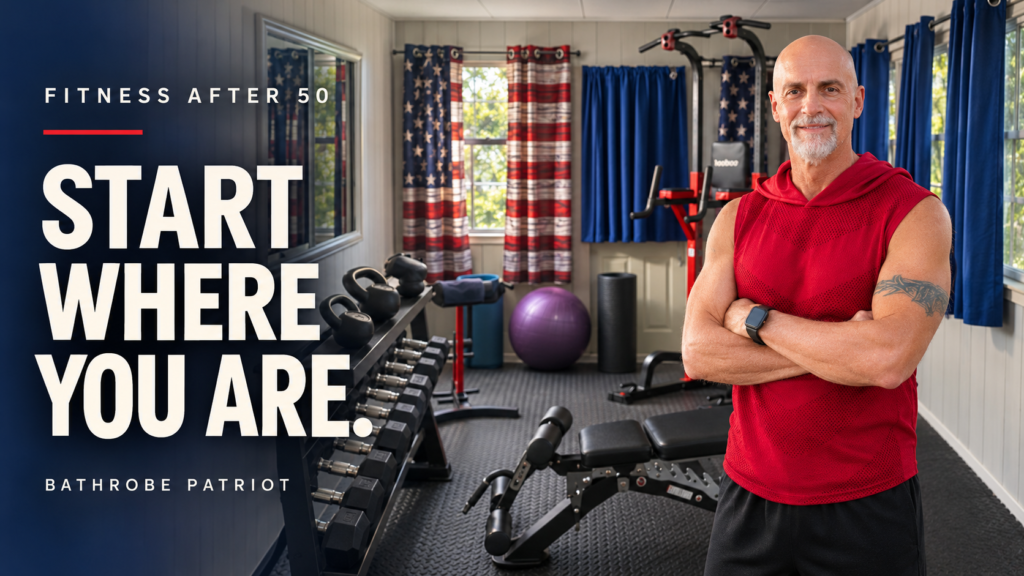
By Eric Webber, founder of Bathrobe Patriot. In this article, you’ll discover helpful advice on how to start exercising again after 50.
Figuring out how to start exercising again after 50 can feel harder than the workout itself. You remember what you used to lift. Your schedule is already full. And somewhere on the internet, a man with six cameras is explaining why your morning needs seventeen additional steps.
Let’s make the first week simpler.
Choose movement that fits your current ability, give it a place in your schedule, and build from there. Your starting point can be modest. What matters is having a sensible next step when you finish.
I’m Eric, the Bathrobe Patriot. I lost 50 pounds by changing how I eat and making movement a regular part of my life. That experience is why I care about making fitness after 50 feel practical enough to belong in a real week.
Here’s a way to begin.
How to start exercising again after 50: the short answer
Begin with a short, comfortable walk or another suitable activity. Add brief strength sessions on two separate days as you’re able, learn the movements, and increase the workload gradually. Work toward the adult activity guidelines over time. If you have a chronic condition or plan to return to vigorous exercise after being inactive, discuss your starting point with a healthcare professional.
The CDC’s advice for getting started emphasizes enjoyable activities, specific times in your routine, and gradual increases. That is a useful foundation for a comeback.
Before you start exercising again after 50, check your starting point
Your old routine is useful history. Today’s ability determines today’s starting point.
Ask yourself:
- What movement am I already doing comfortably?
- Which activities cause pain, unusual breathlessness, or dizziness?
- How much time can I realistically set aside this week?
- What would I like to do more easily: walk farther, carry groceries, climb stairs, or get back to a hobby?
Write down one everyday goal. “Walk around the park more comfortably” gives you something concrete to work toward.
Moderate activity is safe for most adults. However, the CDC recommends discussing suitable activity with your doctor if you have a chronic health condition. It also recommends a conversation before vigorous exercise if you have been inactive, have a disability, or have overweight. An injury that limits movement deserves individual guidance, too.
Stop exercising if you develop concerning symptoms. Chest pressure or discomfort, shortness of breath, and lightheadedness can be heart attack warning signs; call 911 for suspected heart attack symptoms, even if you’re unsure. The American Heart Association explains the warning signs.
How much exercise should men over 50 get?
The CDC’s adult activity guidelines recommend at least:
- 150 minutes of moderate-intensity aerobic activity each week, such as brisk walking, or 75 minutes of vigorous activity, or an equivalent combination.
- Two days of muscle-strengthening activity that work the major muscle groups.
Those are longer-term targets to build toward. You can spread activity across the week and use shorter bouts of movement. Some activity is better than none.
For adults 65 and older, the CDC also specifically includes balance activities. Individual abilities and health conditions should guide the choices.
When you start exercising again after 50, make the first week manageable enough to repeat. Then gradually move toward a fuller routine.
Start with a walk you can actually fit into your day
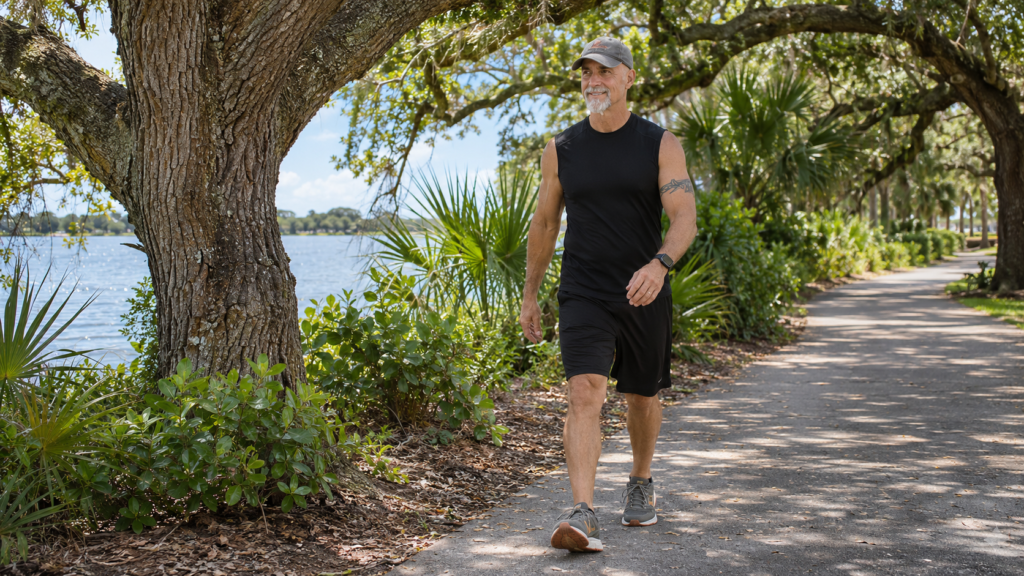
Walking is a straightforward place to begin if it suits your health and mobility. Choose a comfortable route, appropriate footwear, and a time when you can give it your attention.
For someone who has been very inactive, that might be five minutes. Someone with an established walking habit may need a different starting point. A short walk around the block is still a real appointment with yourself.
During an easy introductory walk, you should be able to converse comfortably. As you build toward moderate intensity, the CDC’s talk test offers a useful guide: you can generally talk, while singing becomes difficult.
You can leave the singing out of it if the neighbors have already suffered enough.
For Tampa Bay readers, my Philippe Park guide offers ideas for getting outside around Safety Harbor. Elsewhere, choose your own convenient neighborhood route or indoor option.
Convenience matters. A route you can reach easily is easier to put into an ordinary Tuesday.
Your first week of exercise after 50
Here’s one gentle example for a generally healthy adult returning after a long break. Adjust it to your abilities and any clinical advice. It is an introductory week, with less activity than the longer-term recommendations above.
| Day | Possible activity | Main job |
|---|---|---|
| Monday | A comfortable 5–10-minute walk | Find a manageable starting point |
| Tuesday | A brief 10–15-minute strength practice, including an easy warm-up | Learn a few appropriate movements |
| Wednesday | Another comfortable 5–10-minute walk | Repeat something familiar |
| Thursday | Rest or easy everyday movement, depending on how you feel | Allow recovery |
| Friday | A second brief strength practice | Revisit the movements with control |
| Saturday | A comfortable walk somewhere you enjoy | Make movement part of your weekend |
| Sunday | Rest, review the week, and choose next week’s times | Keep the routine going |
Shorten a session if this exceeds your current ability. If you already do more activity comfortably, use a starting point that reflects that.
This example separates the strength practices with recovery days. It is designed to help you learn and establish a routine; it is not a complete, individualized training program.
If you want to start exercising again after 50, having a realistic first week gives you somewhere to begin. Keep a note of what you did and how it felt afterward.
How to restart strength training after 50
Strength work belongs in the plan alongside aerobic activity. The National Institute on Aging explains how strengthening activities support everyday tasks, including getting out of a chair and carrying groceries.
Begin with movements you can perform with control and a comfortable range of motion. Here are three examples to discuss or learn from a reliable demonstration:
| Movement | What the beginning version looks like |
|---|---|
| Sit-to-stand | Rise slowly from a stable, non-slip chair and sit down with control. Use an appropriate modification if needed. |
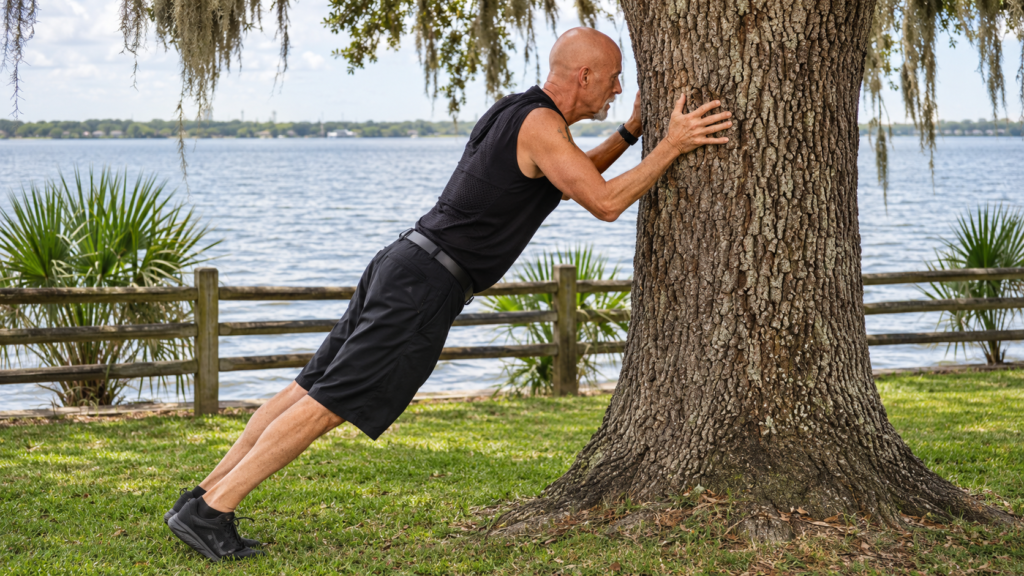
| Wall push-up | Place your hands against a wall, bend your elbows to move toward it, then press away with control. |
| Supported calf raise | Hold a stable support, lift your heels comfortably, and lower them slowly. |
The NHS strength exercise guide demonstrates these movements and gives beginner instructions. A solid chair without wheels is important for chair-based exercise.
Use a few comfortable repetitions to learn an appropriate movement, resting as needed. Keep breathing, and get guidance if you are unsure about technique. Avoid forcing a movement that causes pain.
These examples are a starting point for practice. Over time, a balanced strength routine should work all major muscle groups, including the back, shoulders, and abdomen. Exercise selection and resistance should reflect your ability.
I use a home gym, and you can see my actual gym setup and equipment here. Use it for ideas while deciding what fits your space and goals. Several introductory movements can be practiced with body weight and a suitable stable support.
Build up your workouts gradually
When a routine becomes comfortable and you’re recovering well, consider a small increase.
That could mean:
- Adding a few minutes to one walk.
- Practicing an additional controlled repetition.
- Using slightly more resistance once you can manage the movement well.
Change one thing at a time. That makes it easier to notice how you respond.
The National Institute on Aging recommends gradual increases over weeks to months, with a lower-intensity starting point that suits your current fitness. It also recommends warming up and cooling down.
Begin a session with easier movement and finish by easing down. Keep strength sessions for the same muscle groups on separate days to allow recovery.
When you start exercising again after 50, progress includes learning what you can repeat comfortably. If a session leaves you struggling with ordinary activities afterward, reduce the workload and reassess. Persistent or worsening pain needs appropriate professional advice.
Make your exercise routine fit your real life
The calendar is where a good intention gets a chance to become an appointment.
Choose a specific time: after morning coffee, during lunch, or before you settle in for the evening. Make the location equally clear.
“Walk around the block after breakfast on Monday” is actionable.
“Get healthier sometime” can spend six months sitting next to the unopened resistance bands.
Set up before the day gets busy

From my years in professional kitchens, I know how much a good setup matters. Give your exercise routine the same consideration:
- Put suitable shoes somewhere visible.
- Clear the space you plan to use.
- Have the equipment you need ready.
- Put the next session on your calendar.
Keep the preparation small enough that you’ll actually do it.
Have a shorter version for busy days
If your original plan becomes impractical, choose a manageable alternative: a shorter walk or another appropriate bit of movement. Reschedule a missed strength session when you can recover properly between sessions.
The aim when you start exercising again after 50 is to build a routine that survives ordinary life. A busy week is useful information about the plan.
Give meals and downtime some attention, too
Choose regular meals you enjoy and can prepare. If you want to explore the food side, my protein guide for men over 50 is a separate starting point.
Then make room to recover between workouts. Filling every free minute with another demand can make a new routine harder to maintain.
Fitness should help you participate in the life you want: getting outdoors, carrying your own gear, enjoying a hobby, and keeping up with the people who matter to you.
Track progress you can use
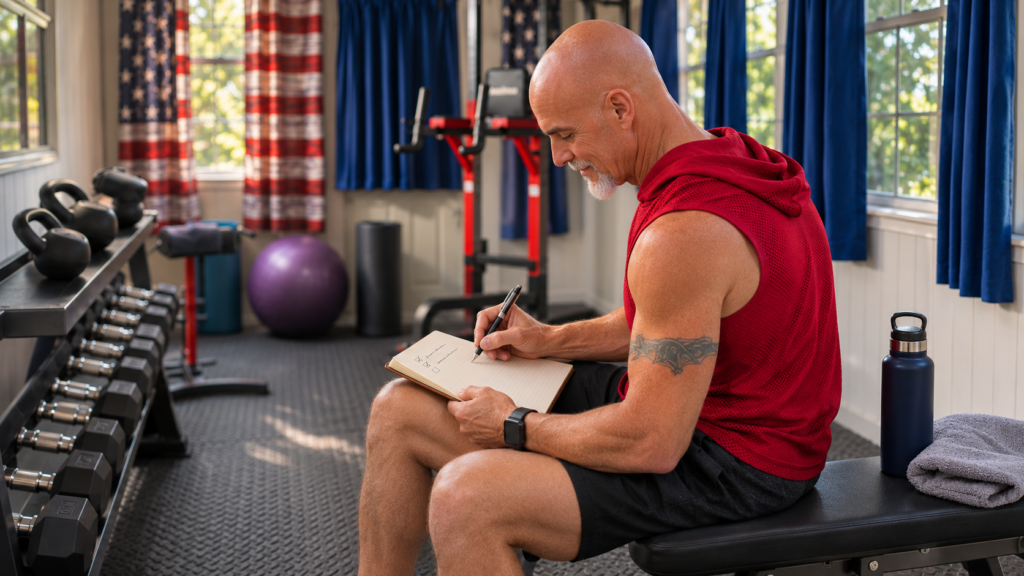
After each session, jot down three things:
- What you did: the route, time, exercise, or resistance.
- How it felt: manageable, challenging, or something that needs adjusting.
- What happens next: repeat it, make a small change, or get guidance.
Over time, those notes give you a clearer picture than memory alone. You may notice that a familiar walk feels easier or that you can perform a movement with better control.
If you are also tracking body weight, keep the activity notes alongside it. They tell you something different: whether you’re establishing and progressing a routine.
At the end of the week, ask, “What can I realistically keep doing?” Build next week around that answer.
Questions about starting exercise again after 50
Is 50 too late to start exercising?
No. Adults can benefit from physical activity as they age. Start at a level suited to your current ability and health, then build gradually. Your previous level of fitness does not have to determine your first workout back.
How do I start exercising again after 50 if I’m very out of shape?
Choose a short activity you can manage, such as a comfortable walk, and increase gradually. Discuss suitable activity with a clinician if you have a chronic condition, and get advice before vigorous exercise after being inactive. A small, appropriate beginning is useful.
How many days a week should a beginner over 50 exercise?
Build toward the adult guidance of aerobic activity across the week and strength work on at least two days. Two nonconsecutive strength days can be a practical beginning. The amount you do initially depends on your starting point and recovery.
Is walking enough exercise after 50?
Walking can contribute to your aerobic activity, with the intensity depending on your pace and ability. Strength work has a separate place in the adult guidelines. Adults 65 and older should also include balance activities suited to their abilities.
Do I need a gym membership to get started?
No. Walking and appropriate bodyweight exercises can be done outside a gym. A suitable space, stable supports where needed, and guidance on movements matter more than building a complete equipment collection before you begin.
Should I work out through pain?
Stop a movement that causes pain rather than forcing it. Get advice about persistent, worsening, or unexplained pain. Treat chest discomfort, unusual shortness of breath, or faintness seriously; suspected heart attack symptoms require emergency help.

Get help to start exercising again after 50
If you’d like someone to work through your starting point with you, explore Fitness After 50 with Bathrobe Patriot.
I offer private, live online sessions for men over 50. Each paid appointment lasts 50 minutes, with exercise instruction and feedback as we work together. Choose a single session or a package of three, five, or ten.
Start with a free 15-minute phone call. We’ll talk about your goals, experience, available equipment, and schedule, and see whether working together feels like a good fit. There’s no obligation to purchase.
Book your free 15-minute fitness intro call.
For today, choose one manageable bit of movement and a time to do it. That gives your comeback a place to start.
About the author
Eric Webber is the founder of Bathrobe Patriot, a former chef and restaurant owner, and a man who lost 50 pounds by changing his food and movement habits. He writes about practical fitness after 50, real food, and making more of life off the clock.
Sources and further reading
- CDC: Steps for Getting Started With Physical Activity
- CDC: Adult Activity Guidelines
- CDC: Adding Physical Activity as an Adult
- CDC: Measuring Physical Activity Intensity
- CDC: Activity Guidelines for Adults 65 and Older
- National Institute on Aging: Getting and Staying Active
- National Institute on Aging: Types of Exercise
- NHS: Strength Exercises
- American Heart Association: Heart Attack Warning Signs

Eric Webber is the founder of Bathrobe Patriot, a former chef and restaurant owner, and a Florida guy who believes life after 50 should include good food, regular movement, and time worth enjoying. He shares bourbon and cigar reviews, practical cooking, and the habits that helped him lose 50 pounds. His approach is simple: real food, consistency, common sense, and making room for life off the clock.