
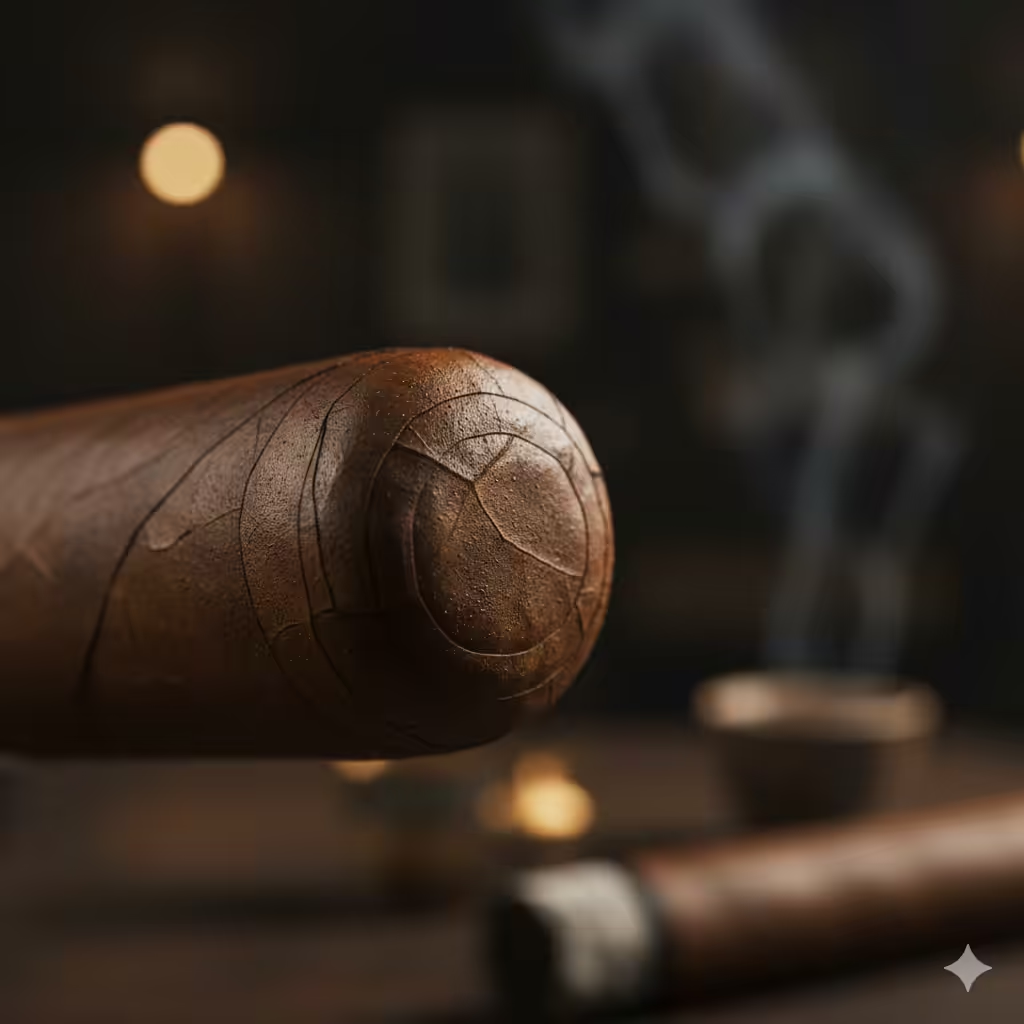
Every cigar enthusiast dreams of owning a humidor overflowing with $30 “blue chip” sticks. We see the Davidoffs and Padróns of the world and naturally equate that price tag with the pinnacle of the hobby. However, a true patriot knows that in the world of tobacco, price doesn’t always equal performance. You can often find incredible value if you know exactly how to identify luxury cigar construction on a budget.
Understanding the hallmarks of a premium build allows you to find luxury experiences without the “prestige” markup. In this guide, we’ll break down the anatomy of a perfectly rolled cigar so you can stop paying for the label and start paying for the craft.
Why Construction is the Foundation of Flavor
Before we dive into the physical checks, we must understand why construction matters. Ultimately, a cigar is an engine. If the “plumbing”—the way the leaves are bunched and rolled—is flawed, even the finest aged tobacco in the world will taste bitter or burn out.
When a cigar is rolled too tight, the draw becomes restricted, heating up the cherry and creating acrid flavors. Conversely, if it is rolled too loose, it burns too hot and fast. By focusing on luxury cigar construction, you are essentially ensuring that the flavor profile intended by the master blender actually reaches your palate.
If you are looking for specific recommendations that meet these high standards without the high price tag, check out our curated list of top 5 affordable cedar wood cigars under $10 that perform like blue-chip legends.
1. Inspecting the Wrapper: The “Silk” Standard
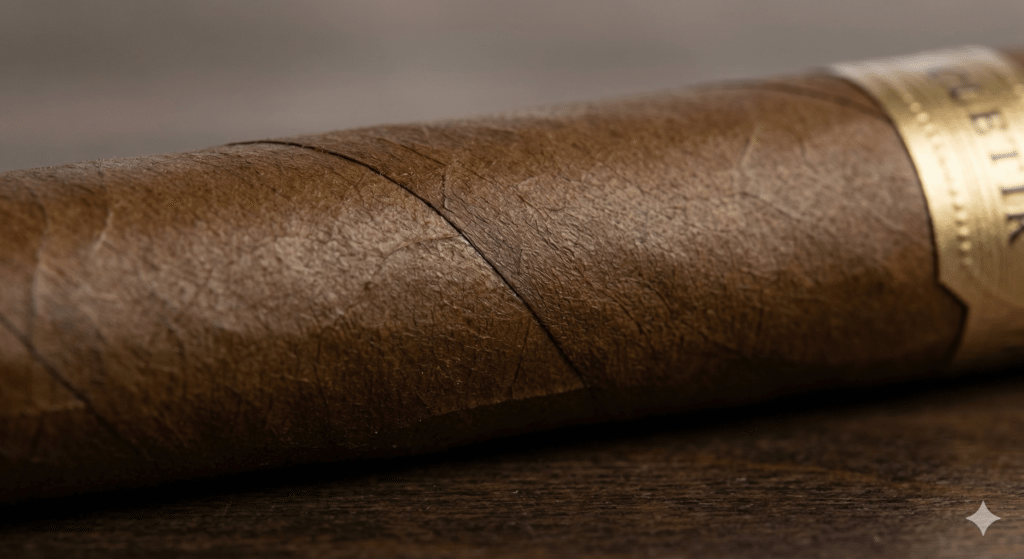
When you pick up a cigar, the first thing you should inspect is the wrapper leaf. This is the most expensive part of the cigar and the most telling sign of quality control.
Look for Seamlessness
High-end construction is almost always seamless. In premium factories, rollers are trained to overlap the wrapper leaf just enough to secure it without creating visible ridges. If you see huge gaps or “flaps” of tobacco, it’s a sign of a rushed job.
Minimal Veining
Furthermore, the veins in the leaf should be thin and minimal. While all tobacco has veins, a “bumpy” or “veiny” cigar often indicates lower-quality leaf sorting. Premium brands reserve the thinnest, most elastic leaves for their top-tier lines. If the wrapper looks like a single, smooth piece of silk, you have likely found a winner.
Color Consistency
Check for “sun spots” or green chlorophyll blemishes. While these don’t always ruin the taste, a lack of blemishes shows that the manufacturer invested time in a proper fermentation and sorting process—key indicators of luxury cigar construction.
2. The Resistance Test: Mastering the “Gently Squeeze”
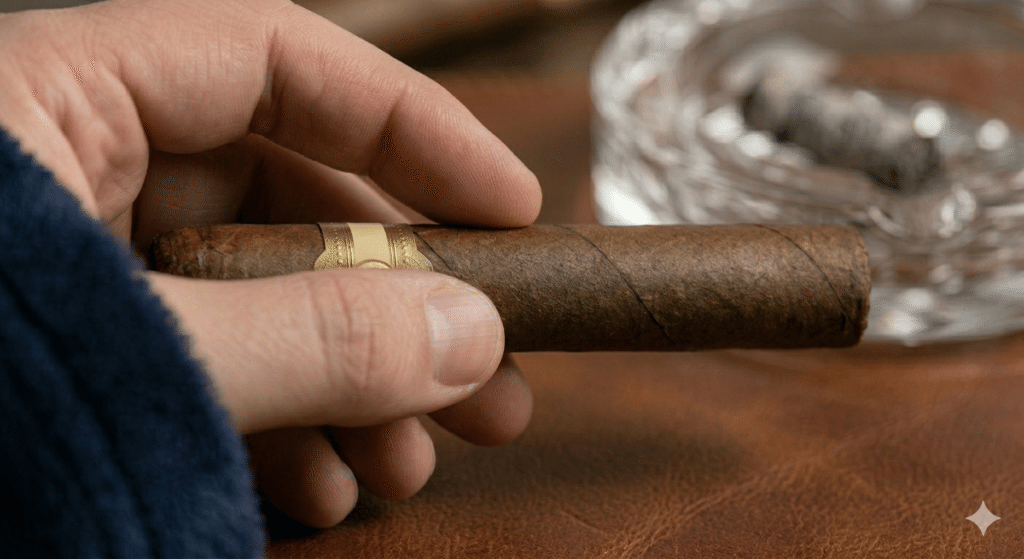
Once you’ve cleared the visual inspection, it’s time for a tactile assessment. Premium rollers ensure a cigar has a consistent density from the head to the foot. This is achieved through a technique called “Entubar” rolling, where each filler leaf is rolled into a small tube to allow for maximum airflow.
Choosing a stick with great physical feedback is only half the battle; you also need to ensure you have the best cigars for your game day strategy to match the intensity of your afternoon.
How to Squeeze Correctly
To test this, gently squeeze the cigar between your thumb and forefinger. It should feel firm but have a slight “spring” to it, much like a ripe fruit. Consequently, if you find “soft spots” (divots in the tobacco) or “hard knots” (plugs), the cigar will likely burn unevenly or require constant relighting.
Consistency is a vital sign of luxury cigar construction. If the cigar feels like a solid wooden dowel, it’s likely over-filled and will have a “tight draw.” If it feels hollow, it will burn hot and lose its nuanced flavors.
3. The Triple Cap: The Mark of a Master
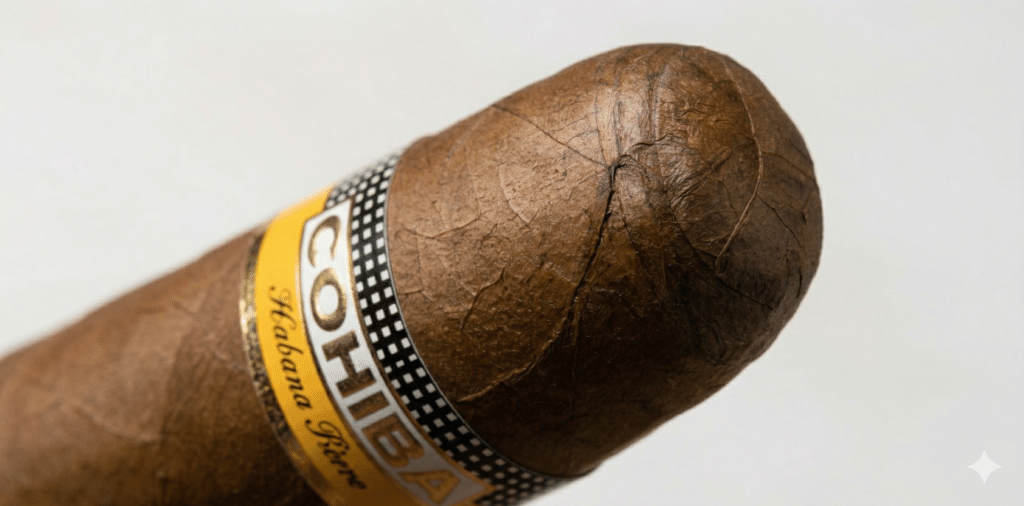
One of the easiest ways to spot a high-effort build is by looking at the head of the cigar. Most budget cigars use a single or double cap, but premium manufacturers—especially those following the Cuban tradition—utilize a triple cap.
What is a Triple Cap?
A triple cap is a series of three small, overlapping circles of tobacco applied to the head. Because this technique requires significantly more skill and time, it is a reliable “tell” for a high-quality factory.
Why the Cap Matters
Beyond aesthetics, the triple cap serves a functional purpose. It ensures that when you use your guillotine cutter, the wrapper doesn’t unravel. A well-applied cap creates a structural bond that keeps the entire leaf under tension, providing a clean, easy cut every time.
To ensure you don’t ruin a perfectly constructed head, make sure you are using a precision guillotine or a high-quality cigar cutter to maintain the integrity of those overlapping leaves.
4. Ash Integrity and the Burn Line
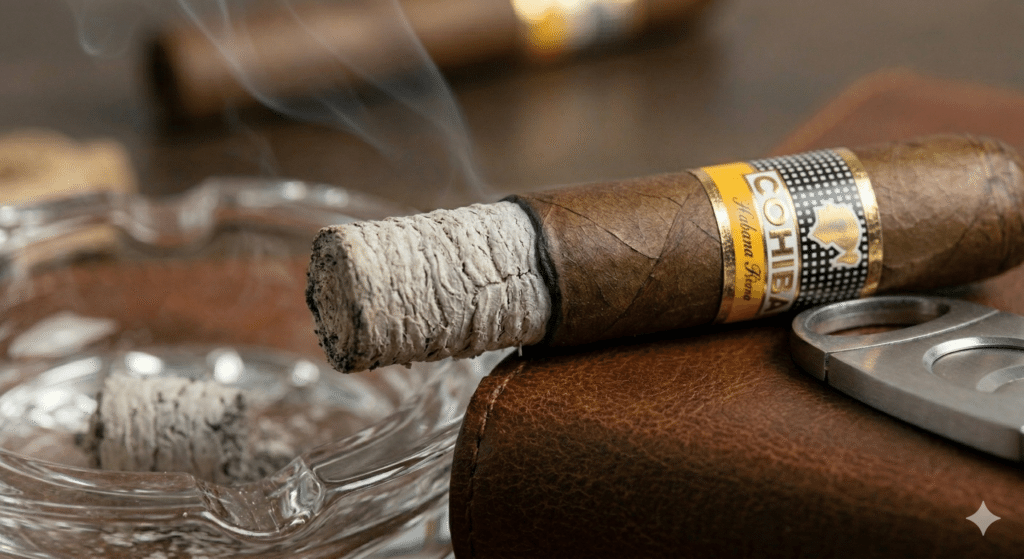
While you can’t always test this in the shop, pay attention to the performance once you light up. This is where the “budget” gems separate themselves from the duds.
- The Burn Line: A luxury build will maintain a relatively straight burn line. If the cigar “tunnels” (burns inside out) or “canoes” (burns down one side), the leaves were not bunched symmetrically.
- The Ash: Strong, white-to-light-gray ash that holds for an inch or more is a sign of mineral-rich tobacco and tight, professional bunching. If your ash is “flaky” and falling off every thirty seconds, the construction is sub-par.
How to Find “Hidden Gems” in the Wild
Now that you know what to look for, how do you apply this to your next trip to the local humidor?
Research the Factory, Not the Brand
Many of the world’s most famous “blue chip” cigars are made in the same factories as mid-priced sticks. For example, factories like AJ Fernandez or My Father Cigars produce their own premium lines, but they also roll “house blends” or smaller boutique brands using the same rollers and similar construction standards.
Utilize Technical Resources
For those who want to dive deeper into the technical side of tobacco, Cigar Journal is an incredible external resource. They offer deep dives into fermentation and rolling techniques that can help you identify quality from a mile away.
Final Thoughts for the Bathrobe Patriot
Identifying luxury cigar construction is a skill that pays dividends. By focusing on the wrapper’s silkiness, the density of the roll, and the precision of the triple cap, you can stop chasing $30 price tags and start chasing $30 experiences.
In “The Lounge,” we value the craft over the clout. The next time you’re browsing the shelves, trust your hands and your eyes more than the MSRP. You might just find your new favorite “everyday” smoke hiding in plain sight.
Ready to find your next favorite? I’ve applied these exact tests to dozens of sticks to find the Top 10 Affordable Cigars That Smoke Like Luxury. Read the full list to see which budget-friendly options made the cut.

Eric Webber is the founder of Bathrobe Patriot, a lifestyle brand centered on bourbon, cigars, and common sense. As an ISSA-certified trainer and former restaurant owner with 20 years of experience, he values quality over quantity and backbone over political correctness. Currently, Eric lives in Safety Harbor, Florida, where he advocates for a life of balance, discipline, and the occasional slow pour. Consequently, his mission is to provide you with the unfiltered truth about the gear, spirits, and culture that define the American spirit.