
The Right Cutlery

The Right Cutlery for the Right Job: Knives Every Patriot Should Own

Introduction: Why the Best Knives for Meat Matter 

You can buy the best cut of meat in the store and still ruin it with the wrong knife. However, most kitchens are filled with unnecessary tools, dull blades, and gimmicks that promise precision but deliver frustration. In fact, when it comes to meat, the right cutlery matters just as much as the cut itself.

This guide explains which tools are actually the best knives for meat, what each one is designed to do, and how to build a simple, effective setup without wasting money.

best knives for meat

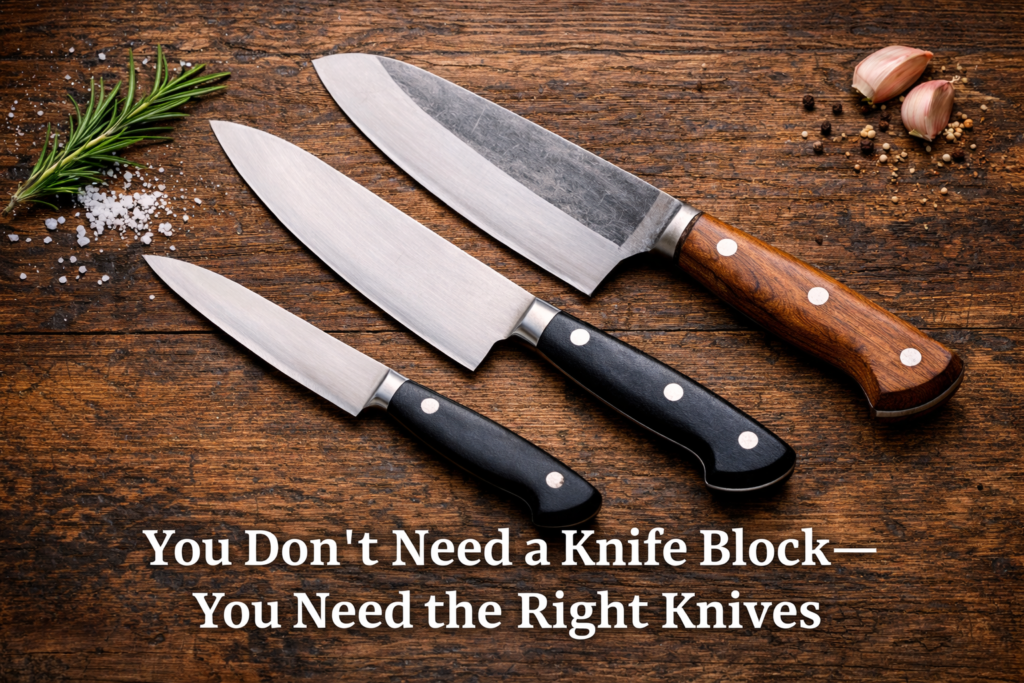
You Don’t Need a Block — You Need the Best Knives for Meat

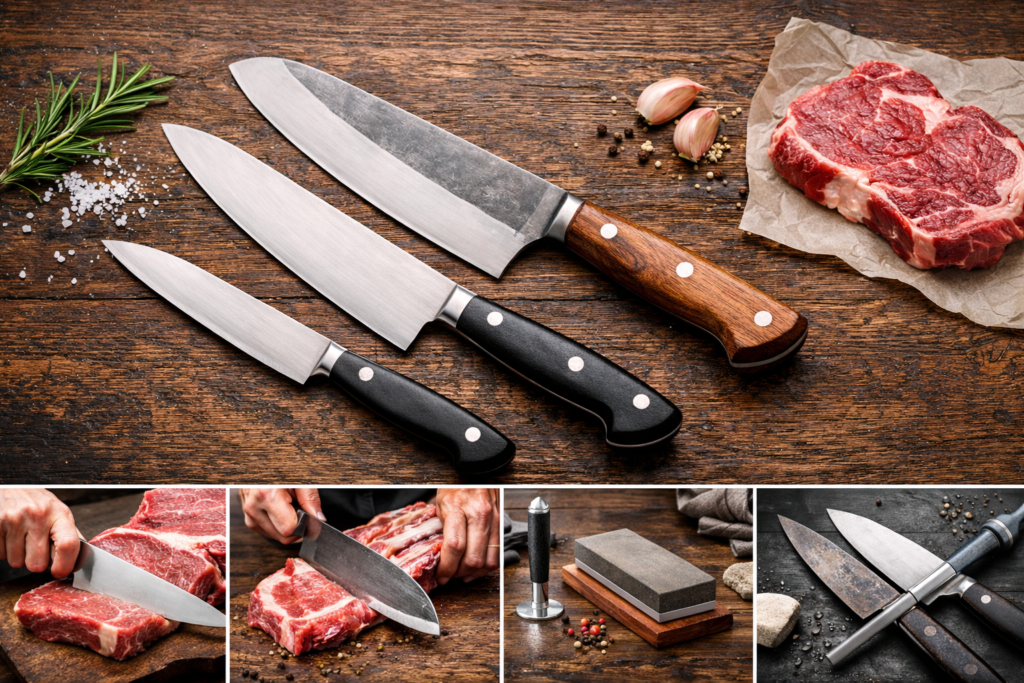
A drawer full of knives doesn’t make you prepared; conversely, a few well-chosen blades do. In reality, a meat-focused kitchen only needs three core knives, plus one optional tool to get the job done right.

best knives for meat

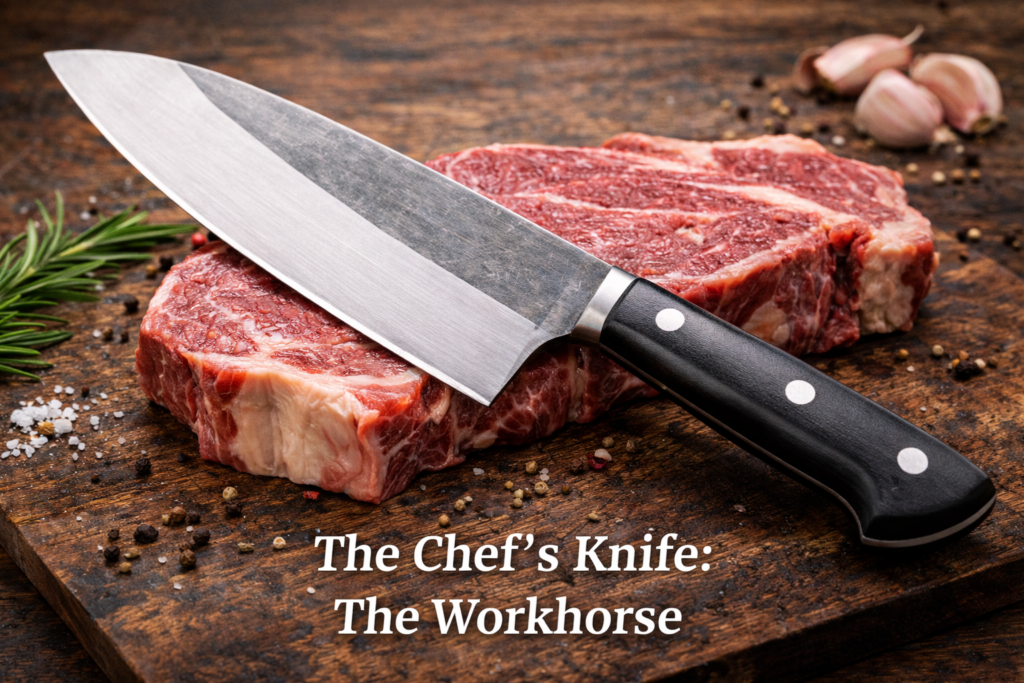
1. The Chef’s Knife: The All-Purpose Best Knife for Meat

If you only own one knife, it should be a chef’s knife. Basically, this knife handles the majority of meat prep tasks and should feel natural in your hand. Furthermore, remember that sharp beats expensive every time.

  • Best uses:

    • Slicing steaks

    • Breaking down larger cuts

    • General meat prep

  • What to look for:

    • 8–10 inch blade

    • Balanced weight

    • Comfortable grip

    • Minimal branding

This knife handles the majority of meat prep tasks and should feel natural in your hand. Furthermore, remember that sharp beats expensive every time.

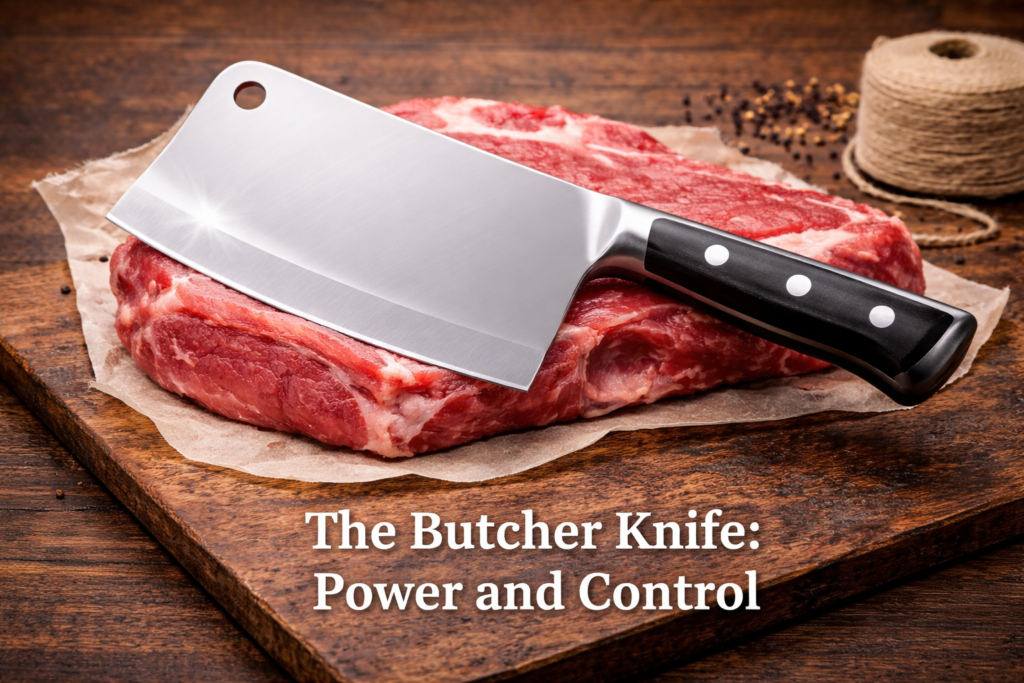
2. The Butcher Knife: The Best Knife for Meat Breakdown

While a chef’s knife is for general use, a butcher knife is built for larger cuts and heavier work. The longer blade allows cleaner cuts with fewer passes, which protects the structure of the meat. Therefore, if you regularly buy large cuts to save money, this knife earns its place.

  • Best uses:

    • Brisket

    • Roasts

    • Whole sub-primal cuts

    • Bulk meat breakdown

The longer blade allows cleaner cuts with fewer passes, which protects the structure of the meat and improves presentation. Therefore, if you regularly buy large cuts to save money, this knife earns its place in your rotation.

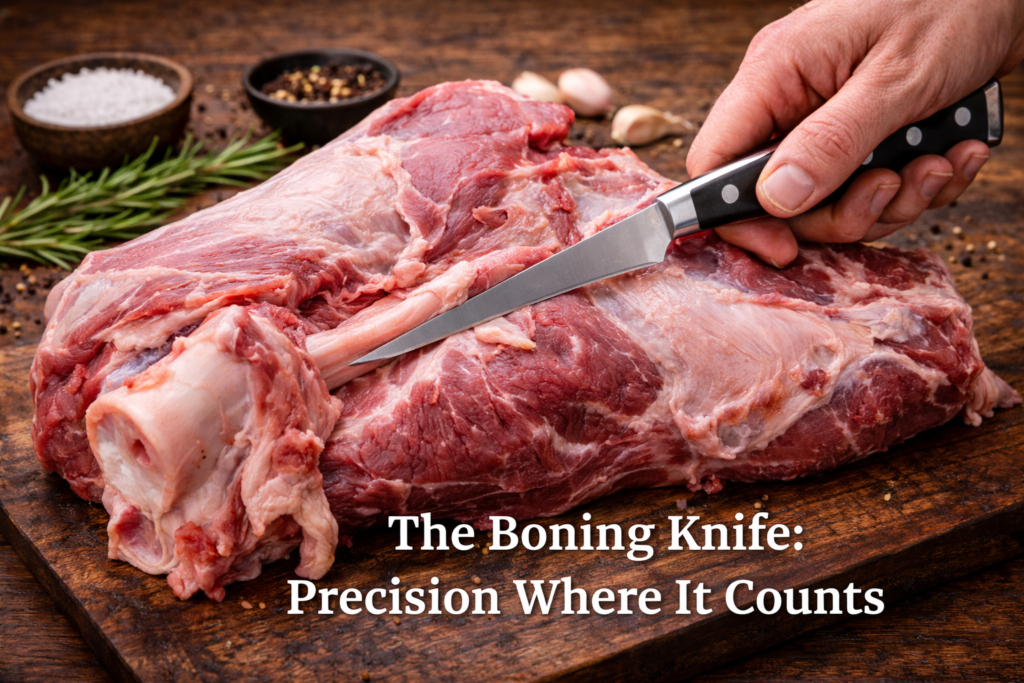
3. The Boning Knife: The Best Knife for Meat Precision

This is the knife that separates casual cooks from confident ones. Because it has a narrow, flexible blade, a boning knife gives you control without tearing meat fibers—especially when breaking down whole cuts.

  • Best uses:

    • Trimming fat

    • Removing silver skin

    • Working around bones

    • Separating muscle groups

  • Key features:

    • Narrow blade

    • Slight flexibility

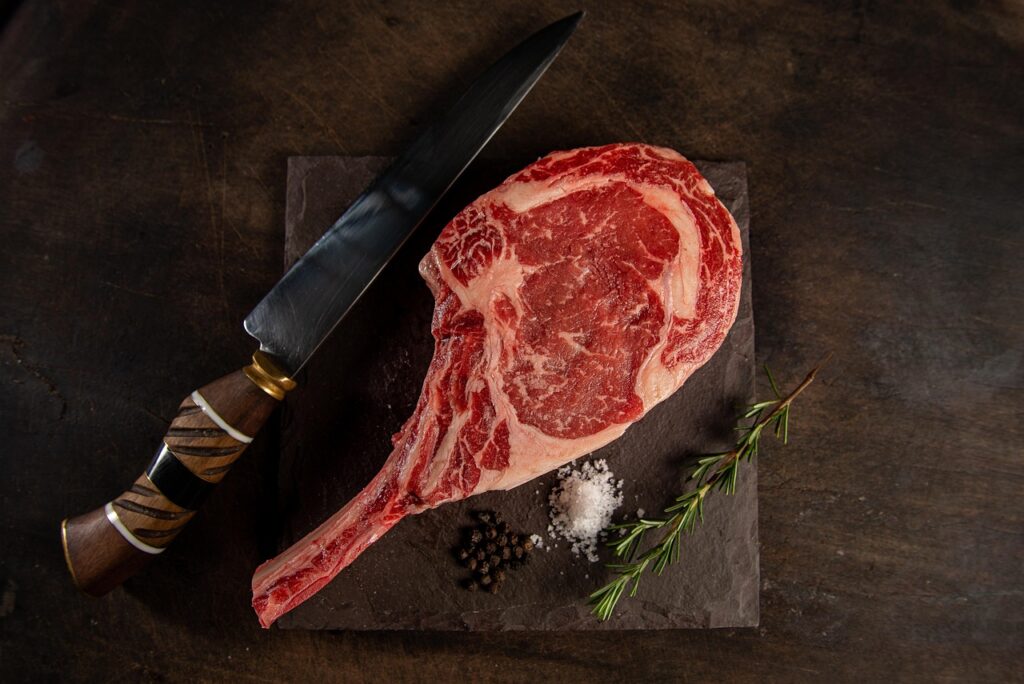
A boning knife gives you control without tearing meat fibers, especially when breaking down whole cuts. (Image Placeholder: Alt Text: “A sharp boning knife trimming fat off a brisket, one of the best knives for meat prep.”)

Need a Quick Meat Lesson? Read Cuts of Beef Explained

best knives for meat

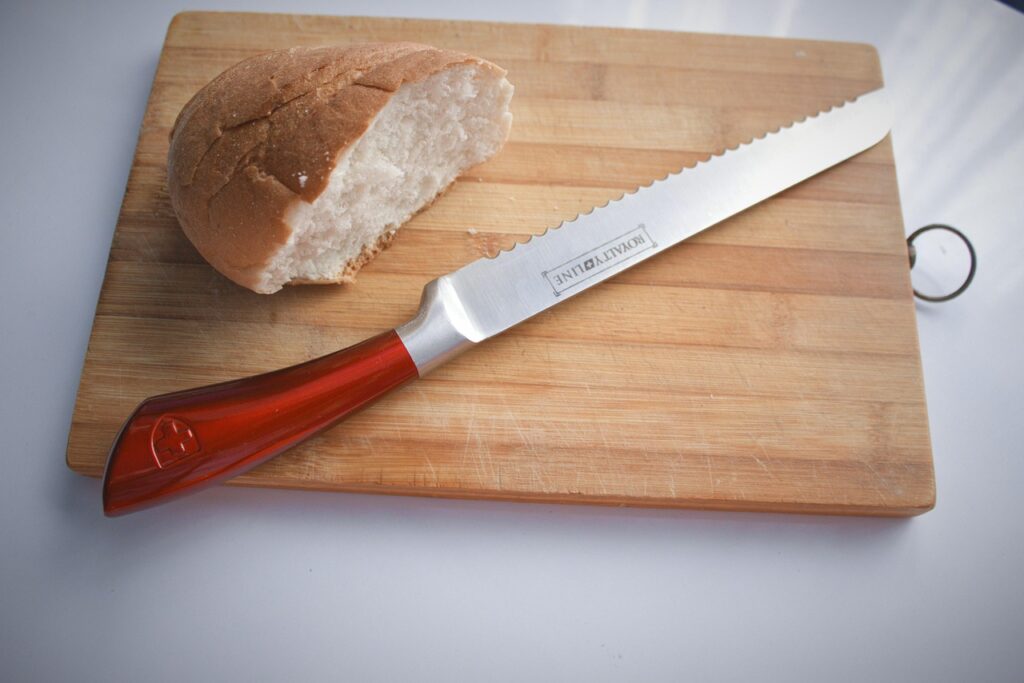
4. Serrated Knives: Why They Are Not the Best Knives for Meat

Serrated knives are useful—just not for most meat prep. Although they are great for bread, they are not ideal for raw meat. Unfortunately, serrated blades tear more than they cut. Consequently, you should use them intentionally, not by default.

  • Good for:

    • Crusty bread

    • Cooked roasts with bark

  • Not ideal for:

    • Raw meat

    • Clean slicing

    • Precision work

Serrated blades tear more than they cut. Consequently, you should use them intentionally, not by default.

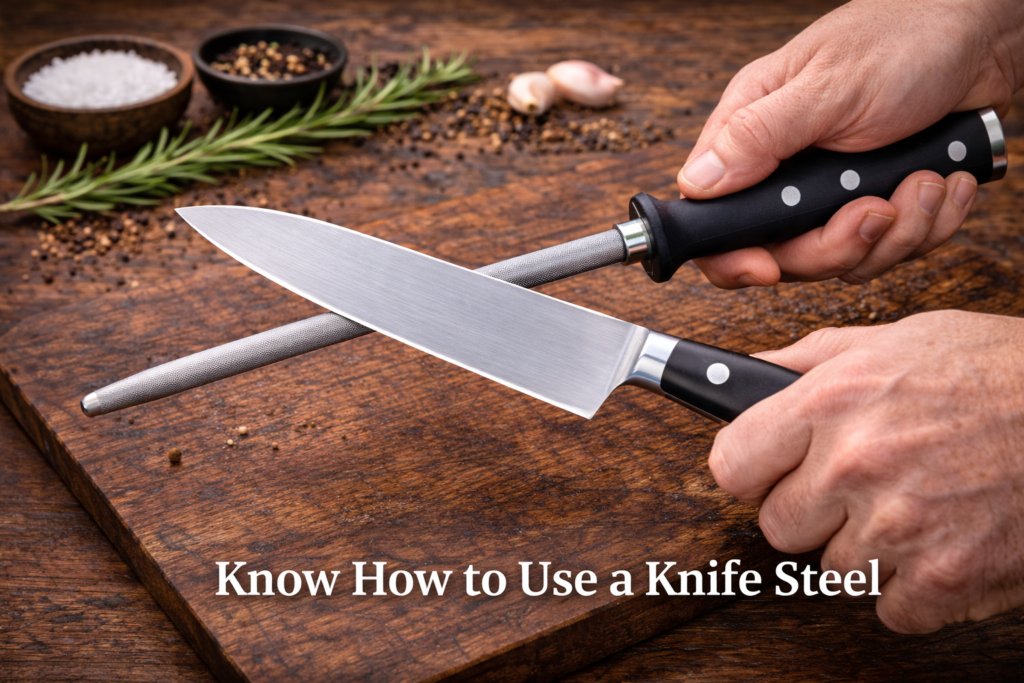
Knife Steel: Choosing the Material for the Best Knives for Meat

For example, Stainless Steel is rust-resistant and low maintenance. On the other hand, Carbon Steel takes a sharper edge but requires drying and care. As a rule of thumb: If you sharpen regularly, carbon steel is rewarding.

  • Stainless Steel: Rust-resistant, low maintenance, and ideal for most kitchens.

  • Carbon Steel: Takes a sharper edge and develops a natural patina, but requires drying and care.

Rule of thumb: If you sharpen regularly, carbon steel is rewarding. On the other hand, if you prefer low maintenance, stainless steel is the smarter choice.

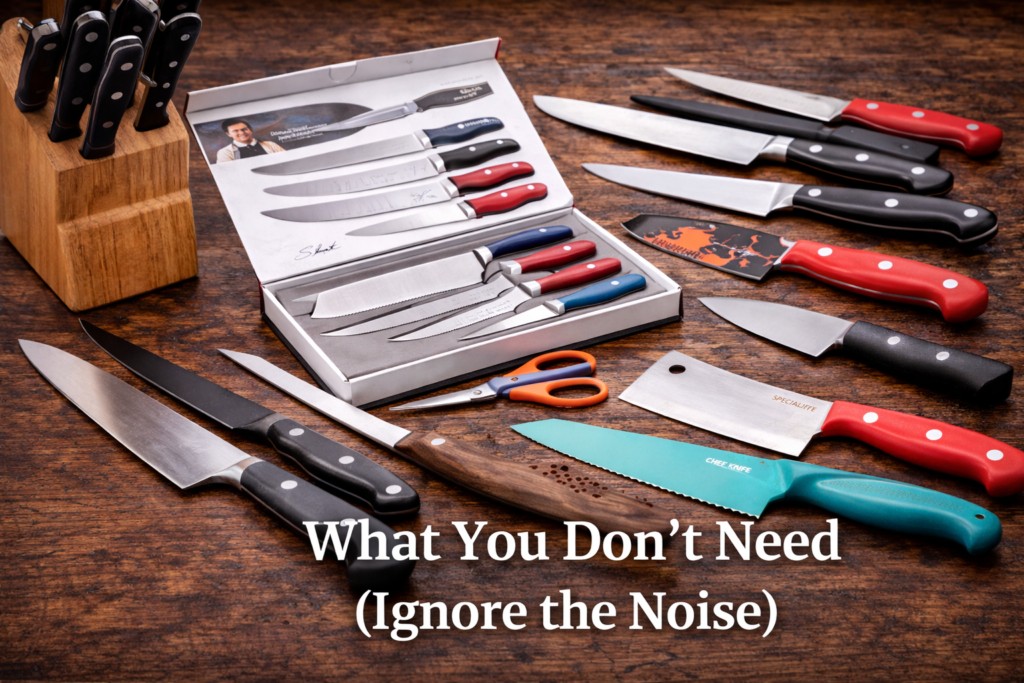
What You Don’t Need (Ignore the Noise)

What You Don’t Need (Ignore the Noise) You can safely skip oversized knife sets, celebrity chef branding, specialty “meat knives,” or coated novelty blades. Ultimately, a few quality knives outperform a cluttered drawer every time.


the right cutlery

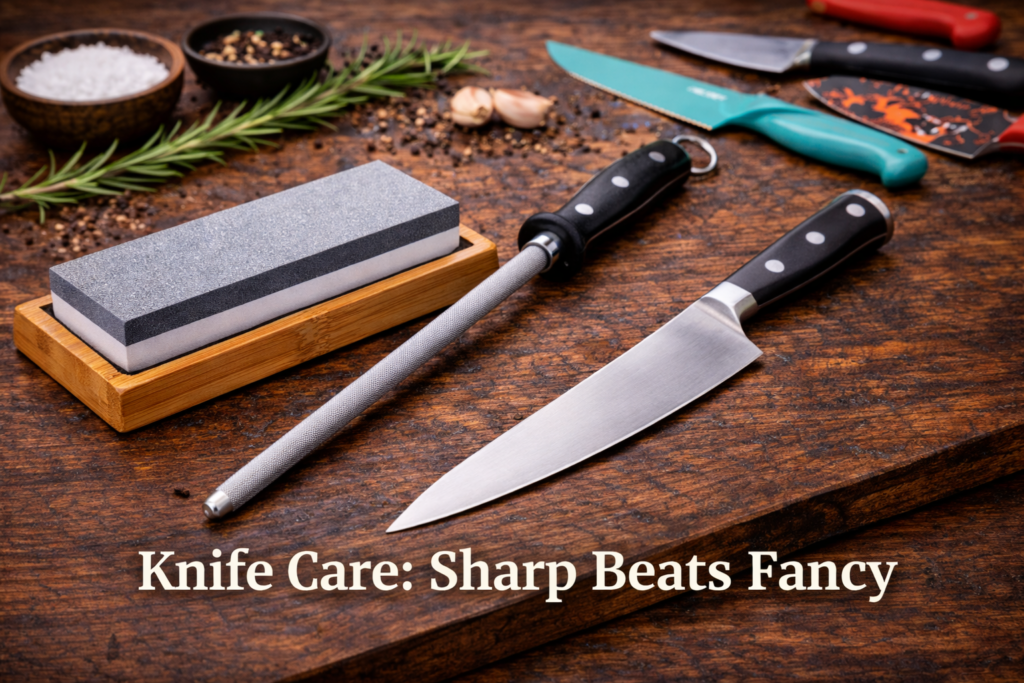
Knife Care: Maintaining the Best Knives for Meat

Ultimately, a moderately priced knife that’s cared for will outperform an expensive one that isn’t. In short, neglect ruins knives faster than cheap steel.

Best practices:

  • Hone regularly

  • Sharpen professionally 1–2 times per year

  • Hand wash only

  • Dry immediately

Neglect ruins knives faster than cheap steel ever could.

Patriot Kitchen Rule

Respect the cut. Respect the tool.

Good cutlery isn’t about showing off — it’s about doing the job right.

Finally, finding the best knives is only half the battle. You also need durable cookware. Just like you maintain your blades, you need to maintain your pans—specifically, learning the right way to season cast iron will ensure your equipment outlasts you.

Make Your Own Smoked Old Fashioned

Get This Whiskey Smoker Now!

Leave a Comment

Your email address will not be published. Required fields are marked *

Scroll to Top