
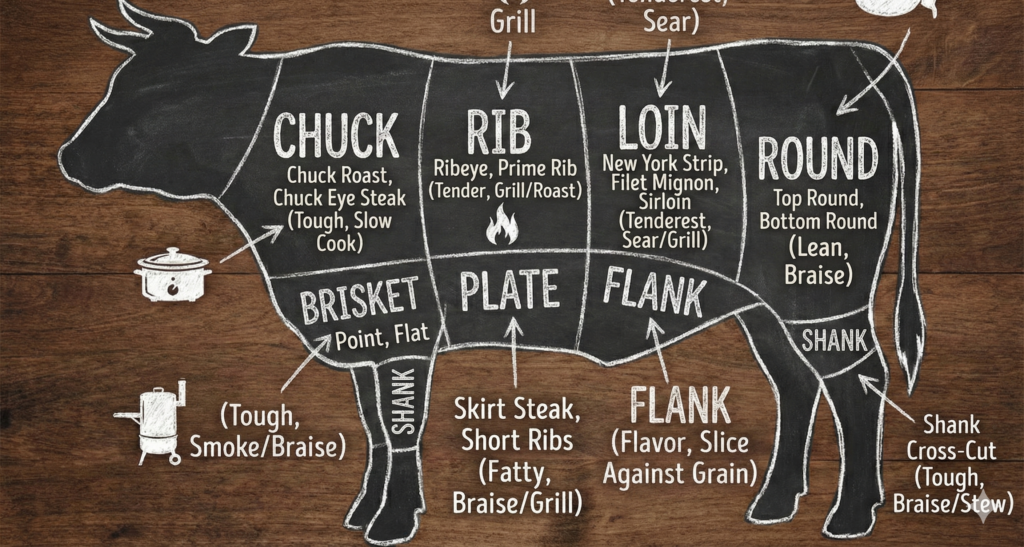
If you’ve ever stood at the meat counter wondering why one steak is $12 and the one next to it is $28, this guide is for you. Understanding the different cuts of beef is the foundation of confident cooking. Not fancy cooking. Not influencer cooking. Real, everyday, common-sense cooking.
This breakdown covers the most important beef cuts, what they’re best used for, how tender they are, and how to choose wisely without overspending.
🥩 Why Beef Cuts Matter
Every cut of beef comes from a different muscle on the cow. That means:
- Different tenderness levels
- Different fat content
- Different best cooking methods
- Different price ranges
When you understand this, you:
- ✅ Stop overpaying
- ✅ Stop overcooking
- ✅ Start choosing smarter
- ✅ Build real kitchen confidence
Moreover, the marbling matters just as much as the cut, which is why we broke down the differences between Prime, Choice, and Select meat grades.
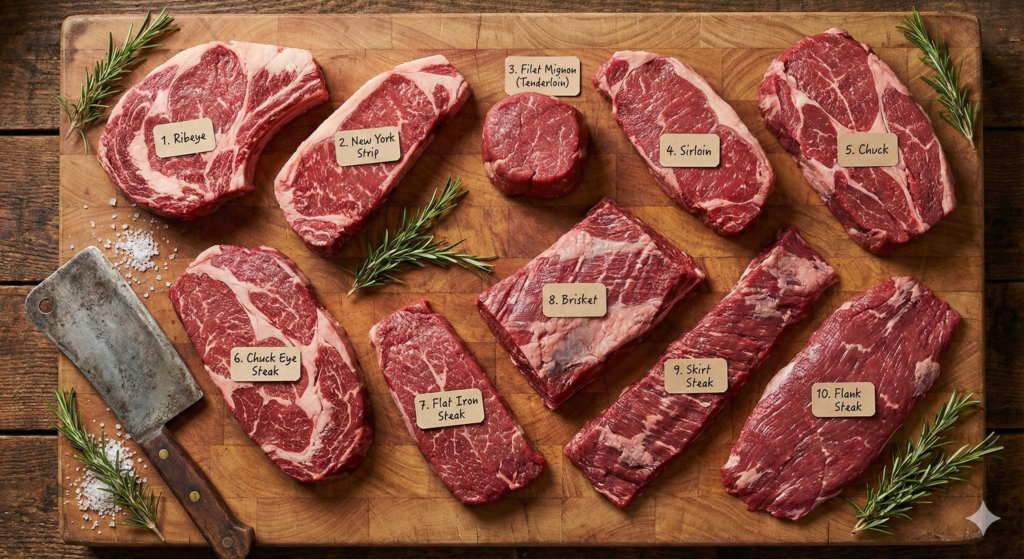
🔪 The 10 Core Cuts of Beef Every Home Cook Should Know
These are the cuts you’ll see most often in grocery stores and butcher shops — and the ones that give you the best range of flavor, value, and versatility.
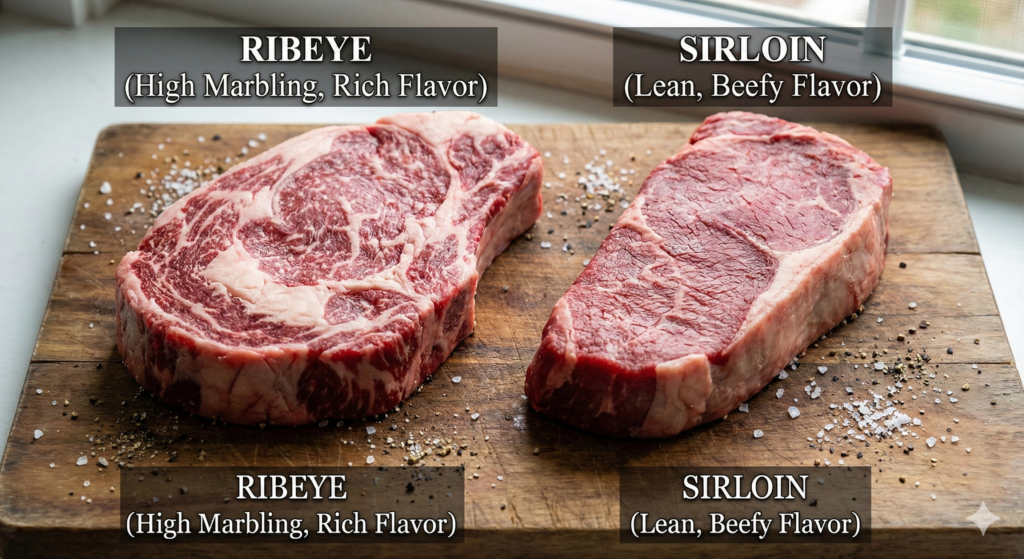
1. Ribeye
- Best for: Grilling, cast iron searing
- Why people love it: Heavy marbling, bold flavor
- Tenderness: Very high
- Price: Premium
If you want maximum flavor and juiciness, ribeye leads the pack.
2. New York Strip
- Best for: Grilling, pan-searing
- Flavor: Clean, beef-forward
- Tenderness: High
- Fat: Less than ribeye, still rich
A perfect balance of structure and flavor.
3. Filet Mignon (Tenderloin)
- Best for: Pan-searing, butter basting
- Tenderness: Extremely high
- Flavor: Mild
- Price: Very high
You’re paying for softness, not richness.
4. Sirloin
- Best for: Grilling, slicing, meal prep
- Flavor: Good
- Tenderness: Medium
- Price: Affordable
A dependable everyday steak for families.
5. Chuck
- Best for: Pot roast, slow cooking, burgers
- Flavor: Outstanding
- Tenderness: Low unless slow-cooked
- Price: Budget-friendly
Chuck shines when cooked low and slow.
6. Chuck Eye Steak (The “Poor Man’s Ribeye”)
- Best for: Grilling, pan-searing
- Flavor: Rich and beefy
- Tenderness: Medium-high
- Price: Budget-friendly
This cut sits right next to the ribeye on the cow. When you find it, grab it — it’s one of the best flavor-per-dollar steaks available.
7. Flat Iron Steak
- Best for: Grilling, broiling, slicing
- Flavor: Deep, beefy
- Tenderness: High
- Price: Moderate
Cut from the shoulder, flat iron is one of the most underrated steaks in America. Tender, flavorful, and incredibly versatile.
8. Brisket
- Best for: Smoking, braising
- Texture: Tough at first, legendary when done right
- Flavor: Deep and rich
Brisket rewards patience. Rush it and you lose.
9. Skirt Steak
- Best for: High-heat searing, slicing thin
- Flavor: Very bold
- Tenderness: Medium when sliced correctly
Fast, hot cooking only.
10. Flank Steak
- Best for: Grilling, broiling, slicing thin
- Texture: Lean and structured
- Key rule: Always slice against the grain
Great for slicing and sharing.
Explore the full library of beef cuts at beefitswhatsfordinner.com/cuts
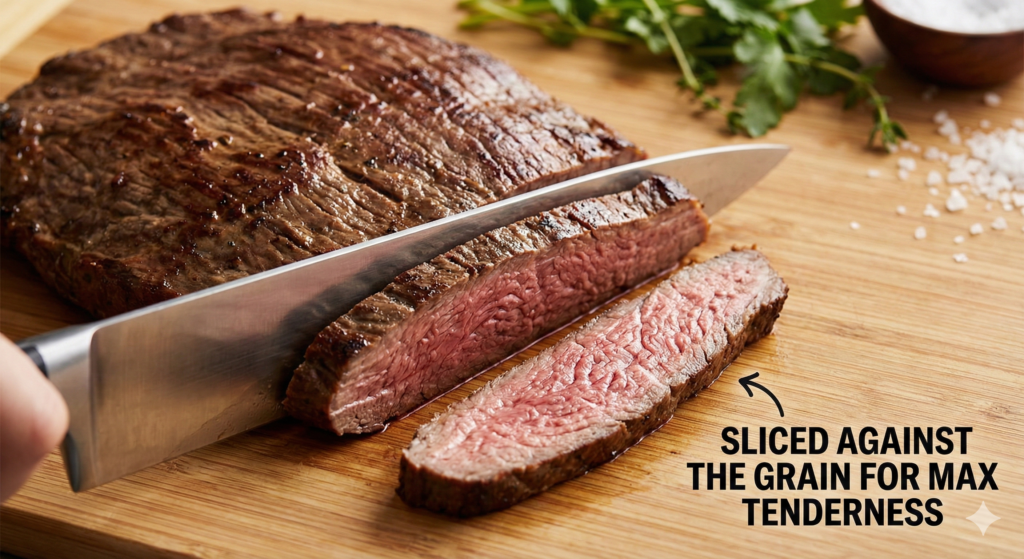
🧠 The Grain Rule (Most People Get This Wrong)
Cuts like flank, skirt, and flat iron must always be sliced against the grain.
- ❌ With the grain = chewy
- ✅ Against the grain = tender
This one rule separates tough steak from tender steak.
🧂 Fat = Flavor (Within Reason)
Marbling controls:
- Juiciness
- Flavor
- How forgiving a steak is on the heat
Ribeye, chuck eye, flat iron, and chuck all benefit greatly from good marbling.
🏷️ Prime, Choice, and Select — Quick Breakdown
We’ll go deep in an upcoming Kitchen post, but here’s the short version:
- Prime: Most marbling, highest price
- Choice: Best balance of quality and value
- Select: Lean, cheapest, easiest to overcook
👉 For most home cooks, Choice is the smart buy.
Here is the USDA standard https://www.ams.usda.gov/grades-standards/beef
Of course, even the best cut of beef can be ruined if you cook it in a flimsy pan. To get that perfect crust on a ribeye, you need heavy-duty cookware, so make sure you read our guide on how to season a cast iron skillet to keep it non-stick and ready for action.
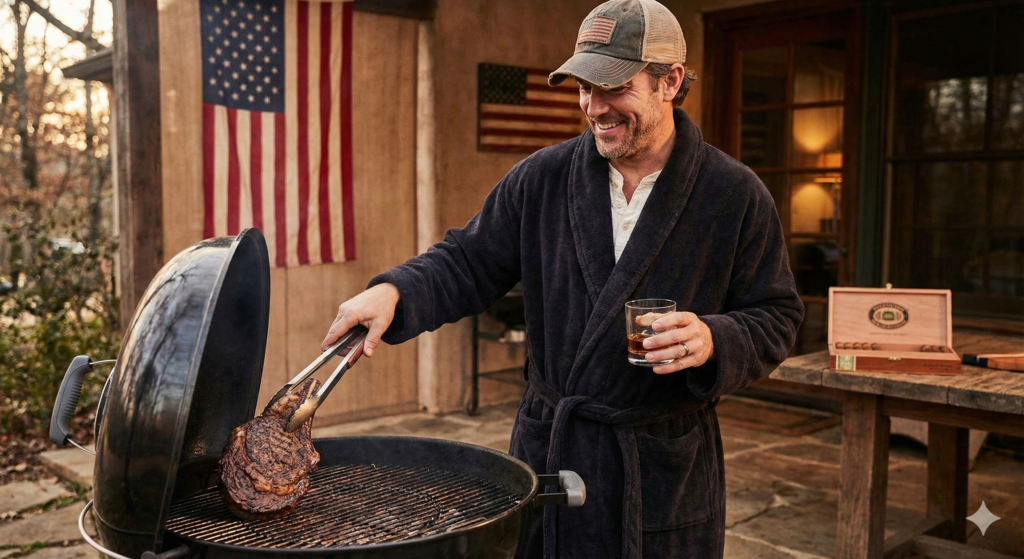
Therefore, to keep the meat tender on the plate, make sure you are using the right cutlery for the job.
✅ Final Takeaway
You don’t need a chef’s coat to cook great beef — but you do need to understand the cut in your hands. When you match the cut to the cooking method, everything gets easier, cheaper, and better-tasting.
That’s the Bathrobe Patriot rule:
No gimmicks. Just good food.