
If you’ve ever wondered how bourbon experts pick up flavors like vanilla, caramel, spice, and oak with a single sip, it all comes down to using the bourbon tasting method correctly. The truth is, you don’t need a fancy whiskey room or a certification to taste bourbon like a pro—you just need the right process. In this guide, the Bathrobe Patriot breaks down the exact step-by-step bourbon tasting method used by distillers, judges, and serious bourbon drinkers.
Before we get fancy, let’s be clear about one thing: tasting bourbon is not about pretending you smell “sun-dried figs on a leather saddle in a Kentucky barn.” That kind of nonsense scares beginners away. The real goal is simple: slow down, pay attention, and learn what your own palate actually likes.
Once you learn this bourbon tasting method, you’ll start understanding why one bottle tastes sweet and smooth, another tastes spicy and bold, and another tastes oaky, dry, or hot. That makes you a smarter buyer, a better drinker, and the guy at the table who actually knows what’s in his glass without acting like a snob.
Bourbon 101 – The Everyday Patriot’s Guide to America’s Spirit
What Is the Bourbon Tasting Method?
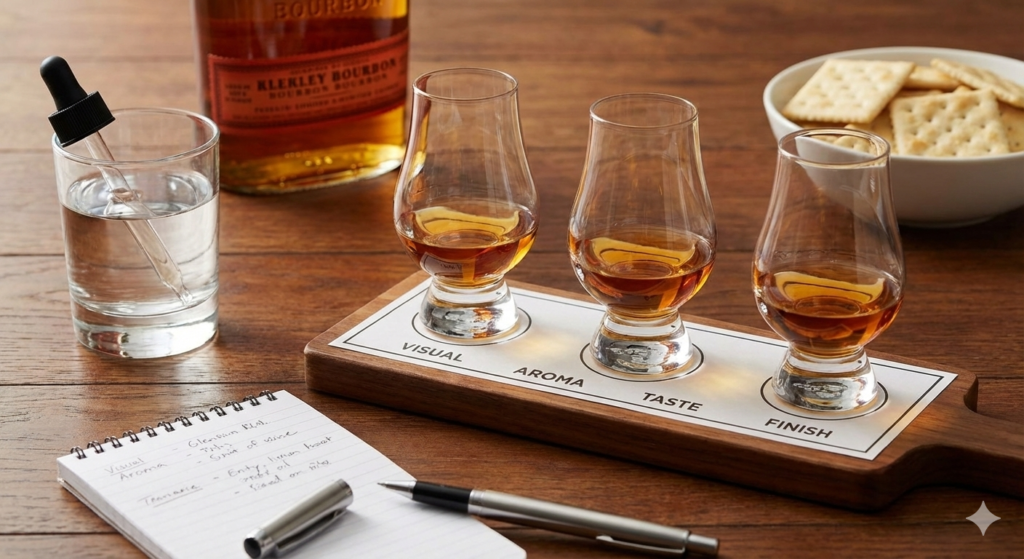
The bourbon tasting method is a structured way to evaluate bourbon using four key stages:
Look – Visual inspection
Nose – Smelling the bourbon
Palate – Tasting the bourbon
Finish – The aftertaste
This method allows you to pick up subtle flavor notes, compare bottles accurately, and understand what makes one bourbon different from another.
Think of this method as a simple checklist. You are not judging bourbon based on one quick sip. You are giving it a fair chance. Bourbon changes from the moment it hits the glass to the moment the finish fades. Some flavors show up immediately. Others appear after the bourbon opens up for a few minutes.
That is why serious bourbon drinkers do not rush the process. They look, nose, sip, hold, swallow, and then evaluate what happens afterward. Once you practice this a few times, tasting bourbon becomes much easier and a lot more enjoyable.
Before You Taste: Set Up Your Bourbon the Right Way
Before you start looking for caramel, oak, vanilla, spice, or anything else, give the bourbon a fair shot.
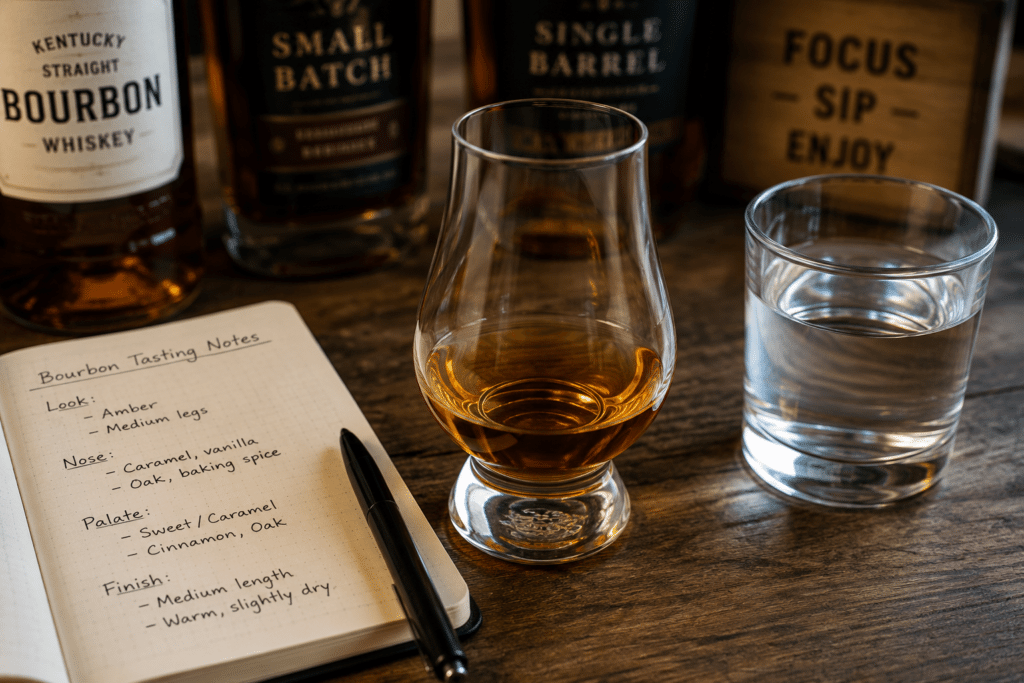
Pour about one ounce into a clean Glencairn glass, tasting glass, or small tulip-shaped whiskey glass. You do not need a fancy whiskey room or a sommelier voice. You just need a glass that lets the aroma gather instead of disappearing into a wide rocks glass.
Let the bourbon sit for three to five minutes before you taste it. That short rest gives the alcohol a chance to settle down and allows more of the aroma to open up.
Avoid tasting bourbon right after brushing your teeth, drinking strong coffee, eating spicy food, chewing gum, or smoking a cigar. Those flavors can completely throw off your palate.
Keep a glass of room-temperature water nearby. Take a sip of water between pours, especially when comparing bourbons. Crackers can help too, but do not overdo it. You are trying to reset your palate, not fill up before dinner.
For beginners, start with bourbon around 90 to 100 proof. It has enough flavor to teach you something without immediately setting your mouth on fire.
What You Need Before You Start
You do not need much to taste bourbon properly at home. Keep it simple.
You need a clean tasting glass, room-temperature bourbon, a small glass of water, and either a notebook or your phone for quick notes. That’s it.
Try not to taste bourbon right after brushing your teeth, eating spicy food, drinking coffee, or smoking a cigar. Strong flavors can wreck your palate before the bourbon even gets a fair shot. If you want to taste bourbon seriously, give your mouth a clean starting point.
Also, pour small. You are tasting, not trying to prove something. A one-ounce pour is plenty when you are learning.
Best Bourbon for Beginners in 2026: Smooth, Affordable Bottles That Won’t Scare You Off
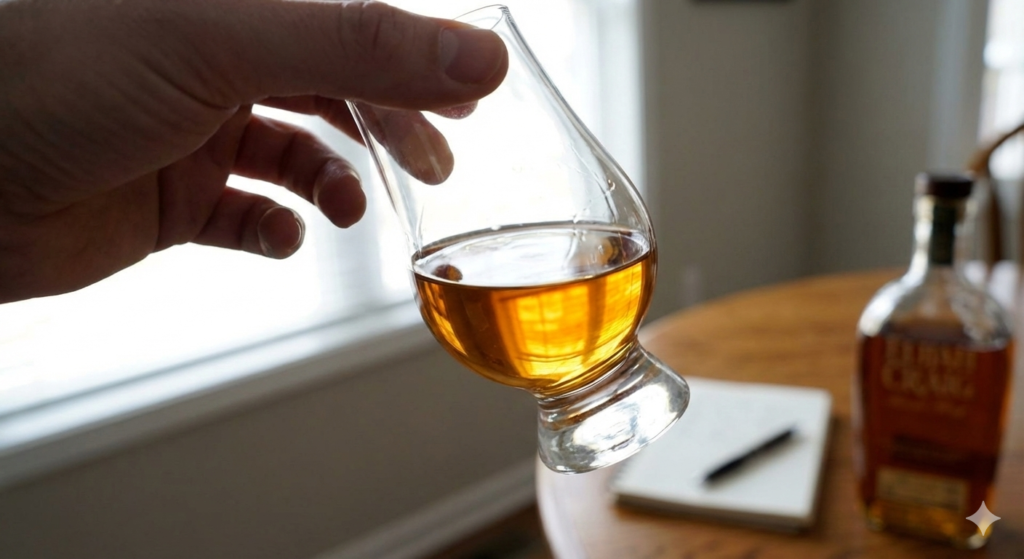
Step 1: Look (Visual Evaluation)
What the Color of Bourbon Can—and Cannot—Tell You
A darker bourbon can look more impressive, but color alone does not tell you whether it is better.
A deep amber or mahogany color may suggest more time in the barrel, a heavily charred barrel, or a warmer aging environment. But it does not automatically mean the bourbon will taste richer, smoother, or more expensive.
Lighter bourbon can still be excellent. Some bottles are bright gold and full of honey, vanilla, corn sweetness, and fresh oak. Others are dark, dry, tannic, and oak-heavy.
Use color as a clue, not a scorecard.
The same goes for the legs running down the glass. Slow, thick legs can hint at texture, proof, or viscosity, but they do not prove quality. The real judgment starts when you smell and taste the pour.
Step 2: Nose (Smelling the Bourbon)
The nose is where 70% of flavor perception begins. This is the most important step in the bourbon tasting method.
✅ How to Smell Properly:
Hold the glass below your nose
Keep your mouth slightly open
Take slow, gentle inhales
✅ Common Aroma Notes:
Vanilla
Caramel
Brown sugar
Oak
Baking spices
Dried fruit
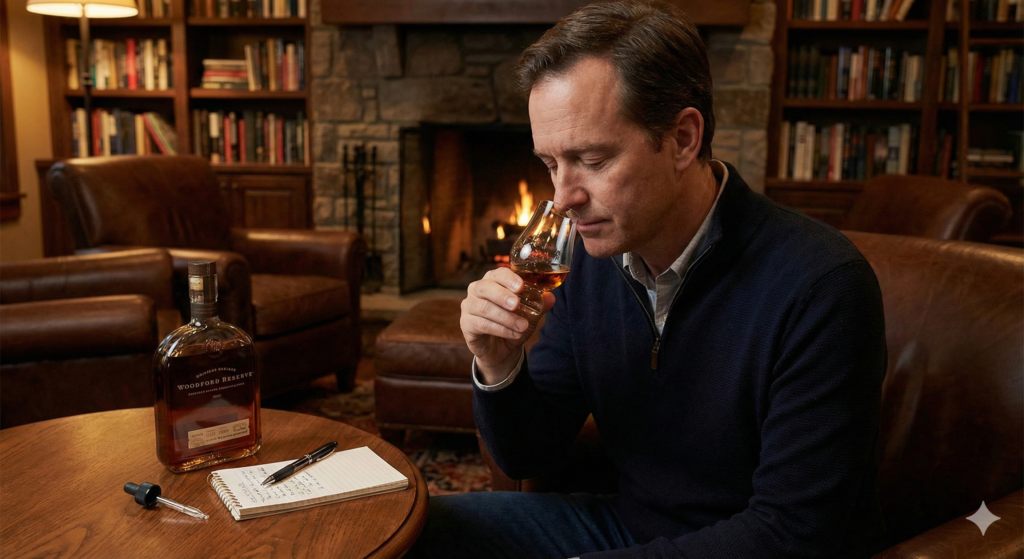
Here is where most beginners mess up: they shove their nose into the glass and inhale too hard. That usually gives you nothing but alcohol burn.
Instead, keep the glass slightly below your nose and take gentle inhales. Move the glass from one side of your nose to the other. One nostril may pick up different notes than the other. Keep your mouth slightly open to soften the alcohol fumes.
Start with broad categories first. Do you smell sweetness? Oak? Spice? Fruit? Nuts? Vanilla? Caramel? You do not have to name every tiny note right away. Your palate gets better with practice.
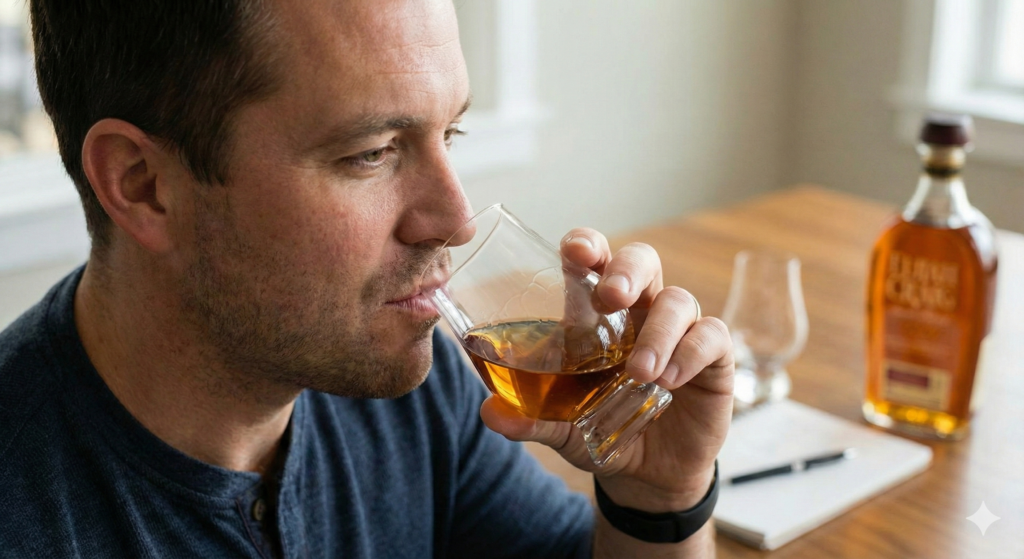
Step 3: Palate — How to Taste Bourbon Properly
Now comes the sip.
Take a small sip first. Smaller than you think you need. Let it sit on your tongue for a second before you swallow. Move it gently around your mouth so it touches the front, sides, and back of your palate.
Your first sip is often a warm-up sip. The alcohol may feel stronger because your mouth is not ready yet. That does not mean the bourbon is bad.
Take a second small sip. This is where the real flavor usually starts to show up.
Pay attention to three things:
First, what hits you immediately? You may get sweetness from corn, caramel, honey, maple, brown sugar, or vanilla.
Second, what develops in the middle? This is where you may notice fruit, nuts, baking spice, cocoa, roasted grain, leather, tobacco, or toasted oak.
Third, what does the texture feel like? Is it thin and quick? Creamy and soft? Oily? Dry? Syrupy? Hot? Rich?
You are not trying to name every flavor in a distillery’s tasting notes. You are trying to understand the basic personality of the bourbon.
A simple way to describe the palate is:
Sweet, spicy, fruity, nutty, oaky, creamy, dry, smoky, hot, or balanced.
That is more than enough to start.
The first sip is not the final judgment. The first sip wakes up your palate. Bourbon has alcohol, and your mouth usually needs a second to adjust before it starts finding the good stuff.
Your second sip is where the real tasting starts. Take another small sip and let it coat your tongue. Notice whether the flavor starts sweet, turns spicy, gets oaky, or finishes warm. A good bourbon often changes as it moves across your palate.
Use simple language. If you taste vanilla, say vanilla. If you taste caramel and oak, say caramel and oak. Don’t force fake tasting notes just because they sound impressive. Honest tasting notes are better than fancy nonsense.
Don’t Forget Mouthfeel
Mouthfeel is how the bourbon feels in your mouth. This is one of the most overlooked parts of bourbon tasting.
Some bourbons feel thin and light. Others feel oily, creamy, rich, or heavy. Some coat your tongue and hang around. Others disappear quickly.
Mouthfeel matters because it changes the whole experience. A bourbon with simple flavors but a rich texture can still be very enjoyable. A bourbon with good flavor but a thin body may feel less satisfying.
Common mouthfeel words include light, soft, creamy, oily, rich, dry, thin, chewy, hot, or sharp.
A Simple Bourbon Flavor Map for Beginners
When you are learning, use these four categories instead of trying to sound like a professional critic.
Sweet notes:
Vanilla, caramel, honey, brown sugar, maple, toffee, marshmallow, sweet corn.
Spice notes:
Black pepper, cinnamon, clove, nutmeg, rye spice, baking spice, heat.
Oak and barrel notes:
Toasted oak, char, leather, tobacco, dry wood, cocoa, roasted nuts.
Fruit and grain notes:
Cherry, apple, orange peel, banana bread, dark fruit, cereal grain, cornbread.
Most bourbons are a mix of these categories. The question is not whether a bourbon has every flavor. The question is which direction it leans.
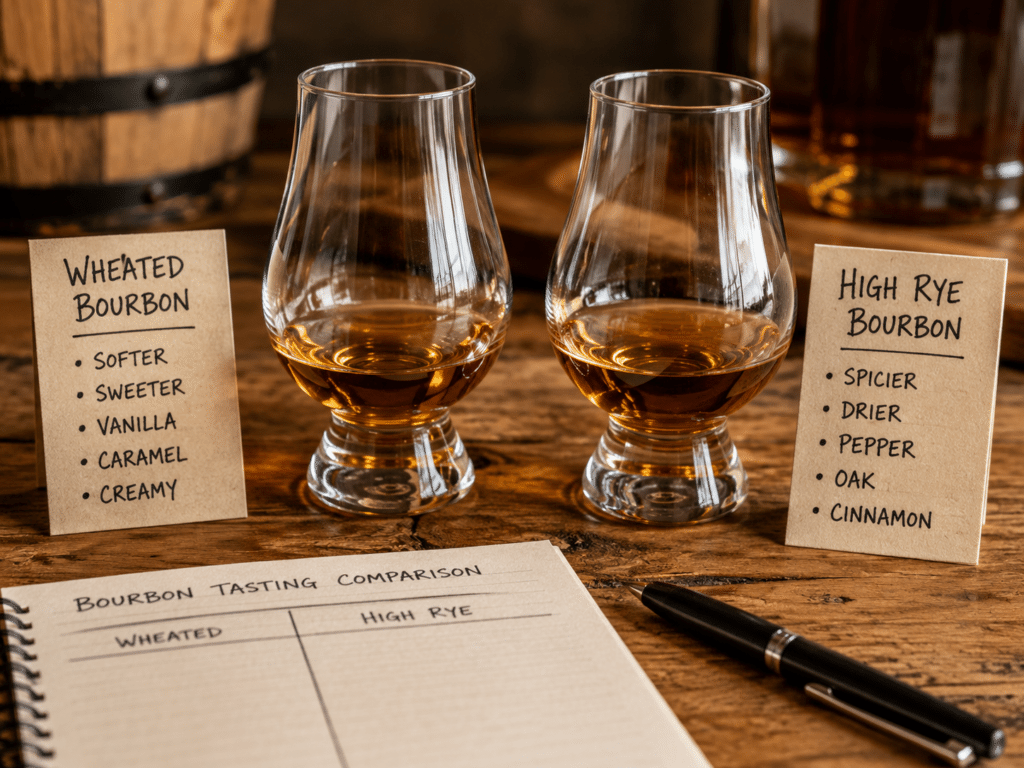
A wheated bourbon often leans softer, sweeter, and creamier. A high-rye bourbon often leans drier, pepperier, and spicier. A higher-proof bourbon may feel more intense and concentrated, while a lower-proof bourbon can feel easier and lighter.
If you are still learning the difference between wheated bourbon, high-rye bourbon, proof, and mash bills, start with my complete Bourbon for Beginners guide.
Step 4: Finish (The Aftertaste)
The finish is what stays with you after the sip is gone.
A short finish fades quickly. You taste the bourbon, swallow it, and the flavor disappears within a few seconds.
A medium finish hangs around long enough for you to notice a second wave of flavor.
A long finish keeps developing. You may taste caramel first, then oak, then spice, then a little dryness or warmth on the back of your tongue.
Pay attention to whether the finish is pleasant or harsh.
Warmth is normal. Especially with higher-proof bourbon. But “warm” and “burning for no reason” are not the same thing.
A good finish can be bold without feeling rough. It may leave you with vanilla, cinnamon, oak, dark fruit, cocoa, roasted nuts, or a little peppery heat. A poor finish may feel bitter, overly dry, medicinal, or aggressively hot.
This is one of the easiest ways to compare bottles. Two bourbons may taste similar at first, but one may finish smooth and balanced while the other drops off hard or turns too bitter.
Should You Add Water or Ice When Tasting Bourbon?
Yes, but taste it neat first.
Start with the bourbon exactly as it comes from the bottle. That gives you the cleanest baseline.
After you have tasted it neat, add a few drops of room-temperature water. Not a full splash. Just a few drops.
Water can open up the aroma, soften the alcohol, and bring out sweeter or fruitier notes. This is especially useful with barrel-proof bourbon or anything above 100 proof.
Ice is different. Ice chills the bourbon and slowly dilutes it. That can make a hot pour easier to drink, but it can also mute aroma and hide flavor.
For tasting, use water first.
For relaxing on the patio, use ice however you like. There are no bourbon police coming to your house.
The point is to understand what the bottle tastes like before you change it.
How Bourbon Proof Affects Taste
Proof matters. A lot.
Lower-proof bourbons are usually easier for beginners because the alcohol heat is softer. Higher-proof bourbons often bring bigger flavor, richer texture, and a longer finish, but they can also overwhelm a new palate.
Here is a simple way to think about it:
80 to 90 proof is usually soft and approachable.
90 to 100 proof gives you more flavor without getting too aggressive.
100 proof, especially bottled-in-bond bourbon, usually brings more body and punch.
110 proof and above can be rich and powerful, but a few drops of water may help.
Barrel-proof bourbon is usually best approached slowly.
If a bourbon tastes too hot, it does not automatically mean it is bad. It may just need time, water, or a more experienced palate.
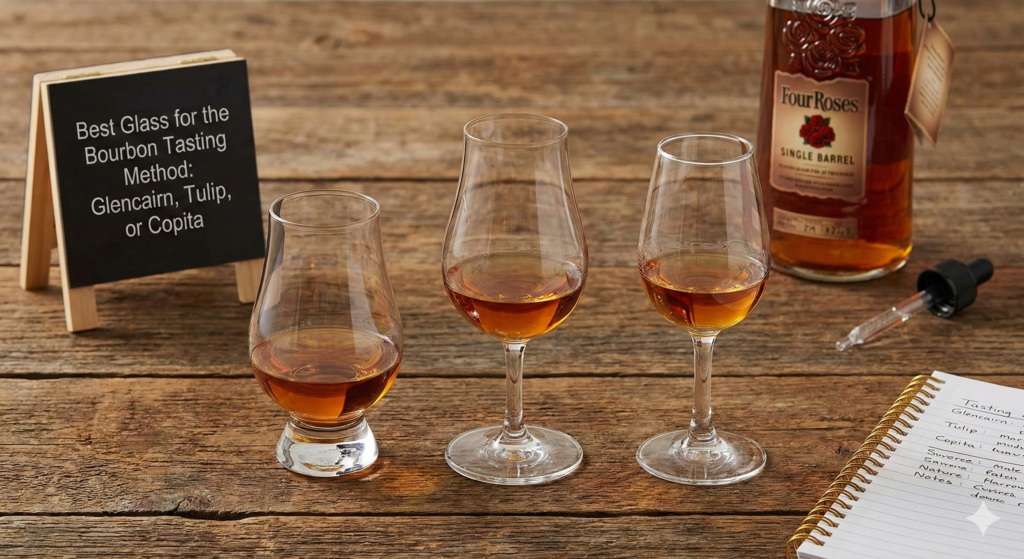
Best Glass for the Bourbon Tasting Method
The right glass makes a massive difference.
✅ Best Options:
Glencairn Glass (Best Overall)
Tulip Glass
Copita Glass
Avoid wide tumblers when tasting seriously—they release aroma too fast.
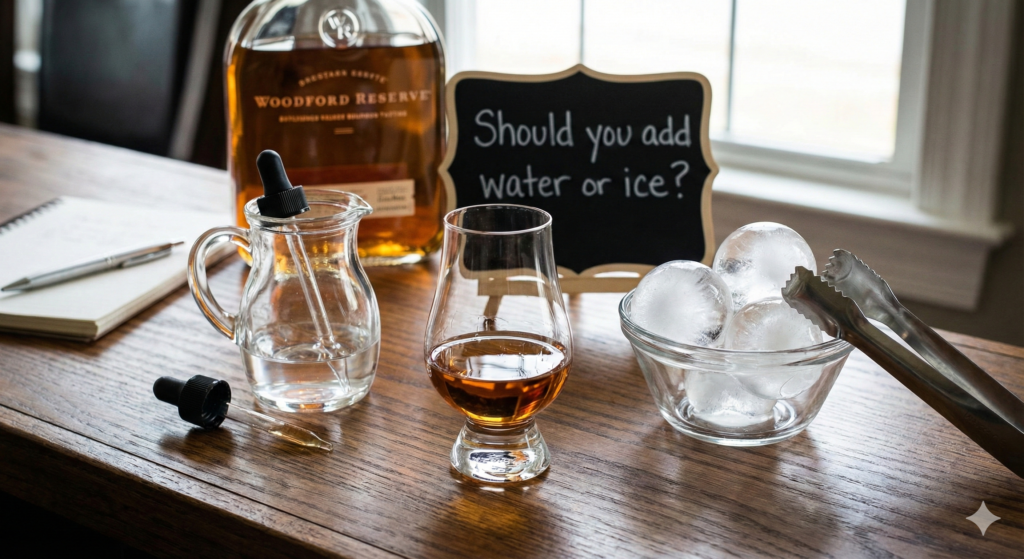
Should You Add Water or Ice?
Yes—if done correctly.
✅ When to Add Water:
High-proof bourbons (110+ proof)
Opens aromatics
Softens alcohol burn
✅ When to Add Ice:
Casual sipping
Hot weather
Reduces intensity
For serious tasting, start neat first. That lets you understand what the bourbon tastes like before you change it.
After that, add a few drops of water and taste again. Water can open up aromas, soften alcohol burn, and reveal flavors that were hidden behind the proof. This is especially helpful with high-proof bourbon.
Ice is fine for casual sipping, especially in Florida heat. But ice also chills the bourbon and mutes some aromas. That is why the best move is simple: taste it neat first, then add water or ice if you want to see how the bourbon changes.
Patriot Tip: Ice does not ruin bourbon. Bad opinions ruin bourbon.
How to Compare Two Bourbons Side by Side
The fastest way to improve your palate is not tasting ten bourbons in one night. It is comparing two.
Choose two bottles with a clear difference. For example:
A wheated bourbon versus a high-rye bourbon.
A 90-proof bourbon versus a bottled-in-bond bourbon.
A younger bourbon versus an older bourbon.
A budget daily sipper versus a more premium bottle.
Pour one ounce of each. Smell the first, then the second. Take a small sip of each. Go back and forth slowly.
Ask yourself:
Which one smells sweeter?
Which one has more spice?
Which one feels richer?
Which one has more oak?
Which one has the better finish?
Which one would you actually buy again?
That is how you stop relying on hype and start figuring out your own taste.
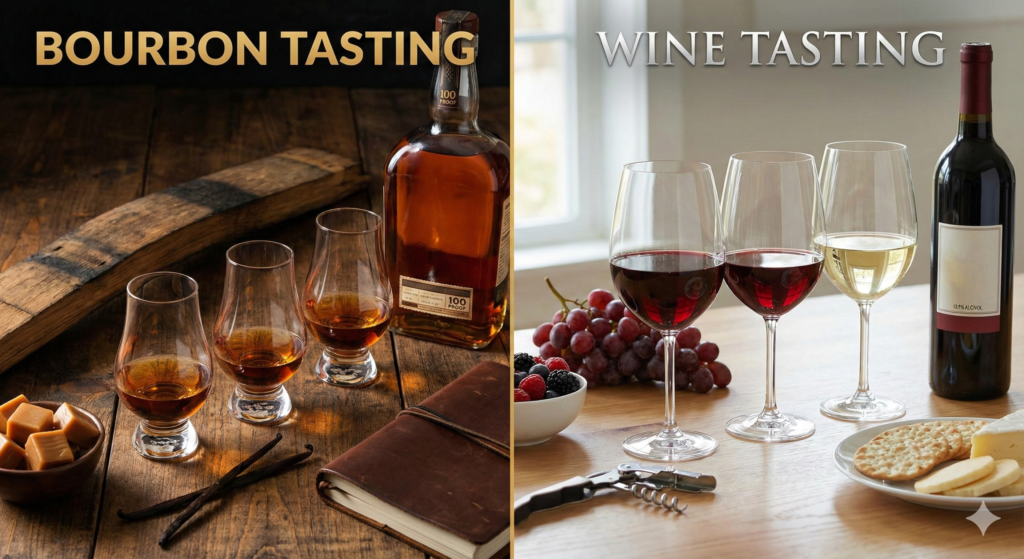
| Bourbon Tasting | Wine Tasting |
|---|---|
| Heavier aromas | Lighter aromas |
| Oak-driven | Fruit-driven |
| Proof matters | Alcohol less dominant |
Simple Bourbon Tasting Notes Template
Use this quick template when tasting bourbon:
Bottle:
Proof:
Glass:
Nose:
Palate:
Mouthfeel:
Finish:
With water:
Would I buy again?
That last question matters. The goal is not to impress strangers online. The goal is to learn what you actually enjoy so you stop wasting money on bottles that do not fit your taste.
Example:
Nose: Caramel, vanilla, light oak, and cinnamon.
Palate: Sweet up front with brown sugar and vanilla. Baking spice shows up in the middle. Oak comes in near the end.
Mouthfeel: Medium body, slightly oily, not too thin.
Finish: Medium finish with warming spice and light oak.
Overall: Easy to drink, balanced, and beginner-friendly.
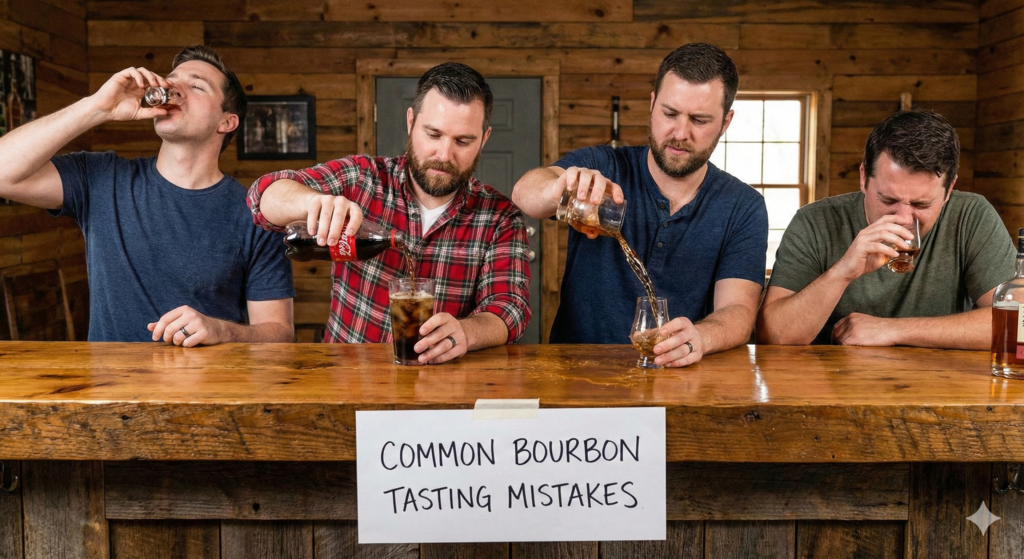
Common Bourbon Tasting Mistakes
Avoid these rookie errors:
Drinking too fast
Overloading with ice
Comparing bourbons back-to-back without water
Ignoring nose stage
Expecting sweetness in every bourbon
The biggest mistake is pretending. If you do not taste cherry, leather, tobacco, or chocolate, do not write it down just because someone else did. Your palate is your palate.
Start with what you actually notice. Sweet, spicy, oaky, fruity, hot, smooth, dry, rich, thin — those are all valid tasting notes. Over time, those broad notes become more specific.
That is how you get better. Not by faking it. By paying attention.
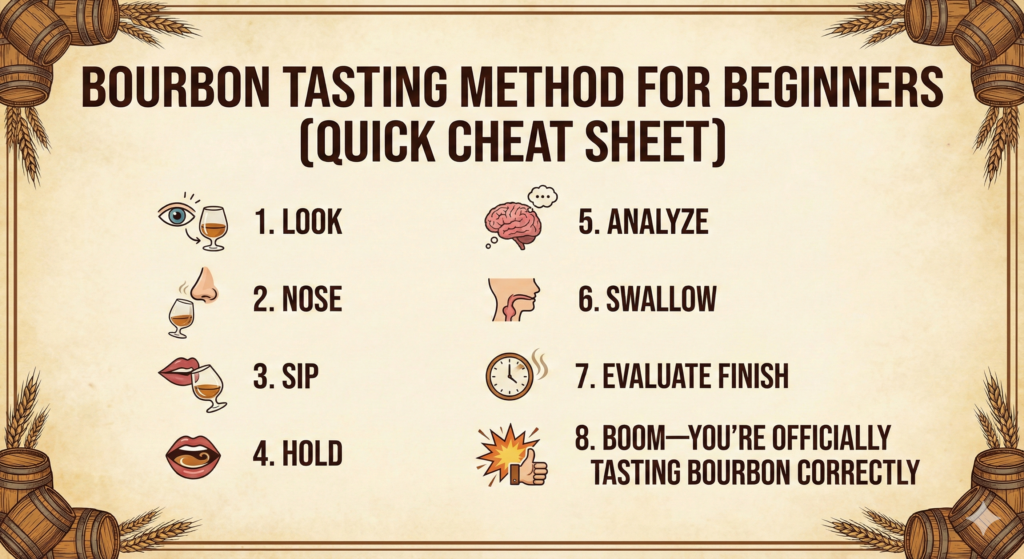
Bourbon Tasting Method for Beginners: Quick Cheat Sheet
Use this simple method every time:
Look at the color.
Smell gently with your mouth slightly open.
Take a small first sip.
Let the second sip coat your tongue.
Notice sweetness, spice, oak, fruit, and heat.
Pay attention to mouthfeel.
Evaluate the finish.
Add a few drops of water if needed.
Write down what you actually taste.
That’s it. You are not trying to pass a bourbon exam. You are training your palate one glass at a time.
Pairing the Bourbon Tasting Method With Cigars
The tasting method works even better with cigars.
Best Pairings:
Wheated bourbon + creamy cigar
High-rye bourbon + spicy cigar
Barrel-proof bourbon + full-bodied cigar
If you enjoy cigars, the bourbon tasting method becomes even more useful. Once you understand the bourbon’s sweetness, spice, proof, and finish, you can choose a cigar that either complements or contrasts those flavors.
A wheated bourbon with soft vanilla and caramel notes can pair beautifully with a creamy Connecticut cigar. A high-rye bourbon with pepper and baking spice can stand up to a spicier cigar. A barrel-proof bourbon usually needs a fuller-bodied cigar with enough flavor to hold its own.
The key is balance. You do not want the cigar to bulldoze the bourbon, and you do not want the bourbon to overpower the cigar. When both work together, that is where the magic happens.
Common Bourbon Tasting Mistakes Beginners Make
You do not need to be perfect, but avoiding these mistakes will make the experience better fast.
Drinking too much too quickly:
A tasting pour is not a party pour. Keep it small and give the bourbon time.
Judging the first sip too harshly:
The first sip often feels hotter than the second. Give the pour a fair chance.
Trying too many bourbons at once:
Two or three pours are plenty. After that, your palate gets tired and everything starts tasting the same.
Using a giant rocks glass for every tasting:
A rocks glass is fine for drinking. A smaller tulip-shaped glass is better for smelling.
Obsessing over tasting notes:
You do not need to identify “burnt orange zest on a cedar plank after rain.” Simple, honest notes are more useful.
Assuming expensive means better:
Price, hype, allocated status, and fancy packaging do not tell you what you will enjoy.
Ignoring proof:
A 120-proof bourbon may taste amazing, but it will drink very differently than a 90-proof bottle. Compare proof fairly.
What Makes Bourbon Different From Other Whiskey?
Bourbon is not just any whiskey with a Kentucky-looking label.
To be labeled bourbon in the United States, the whiskey must be made from a grain recipe containing at least 51% corn and aged in new charred oak containers. Those requirements are a big reason bourbon often carries familiar notes of vanilla, caramel, sweetness, toasted oak, and baking spice. :contentReference[oaicite:1]{index=1}
Knowing the basics helps you taste with more purpose. The mash bill, barrel, age, proof, and finishing process all influence what ends up in your glass.
Final Thoughts: Master the Bourbon Tasting Method
Learning the bourbon tasting method instantly upgrades your whiskey experience.
You stop chasing hype and start understanding your own palate. You learn why one bourbon tastes sweet, another tastes spicy, and another feels rich, oaky, smooth, or hot. You also become a smarter buyer because you know what you actually enjoy.
Remember, the goal is not to sound like a bourbon snob. The goal is to slow down, pay attention, and enjoy America’s spirit with a little more confidence.
Look. Nose. Sip. Hold. Analyze. Finish.
That is the Bathrobe Patriot bourbon tasting method.
Pour something decent, take your time, and let the glass do the talking.
Bourbon Tasting Method FAQ

Eric Webber is the founder of Bathrobe Patriot, a lifestyle brand centered on bourbon, cigars, and common sense. As an ISSA-certified trainer and former restaurant owner with 20 years of experience, he values quality over quantity and backbone over political correctness. Currently, Eric lives in Safety Harbor, Florida, where he advocates for a life of balance, discipline, and the occasional slow pour. Consequently, his mission is to provide you with the unfiltered truth about the gear, spirits, and culture that define the American spirit.