
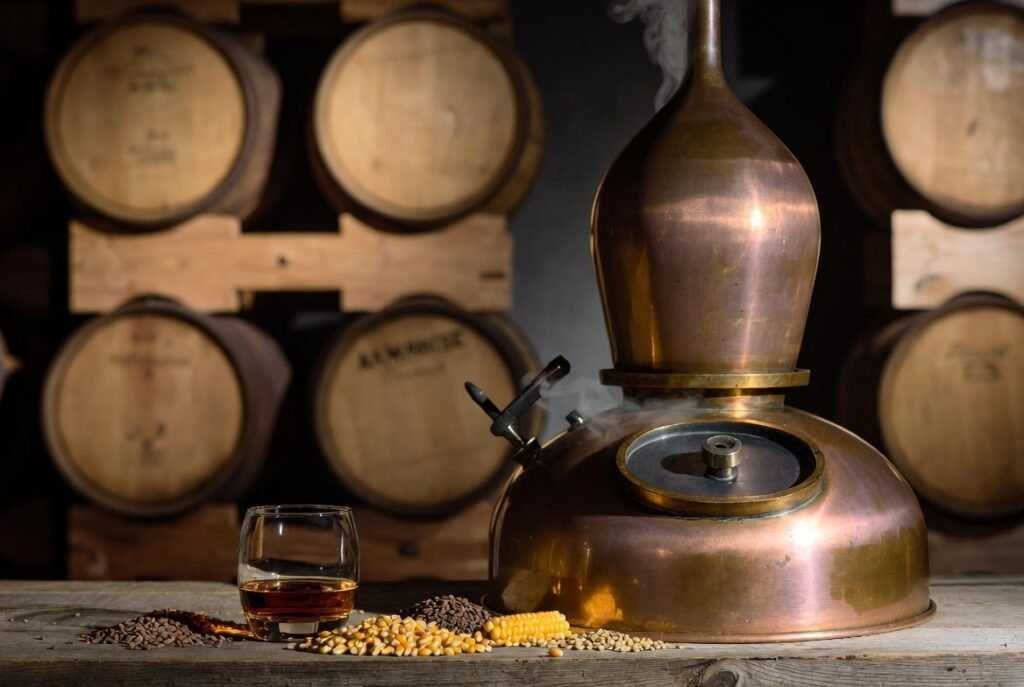
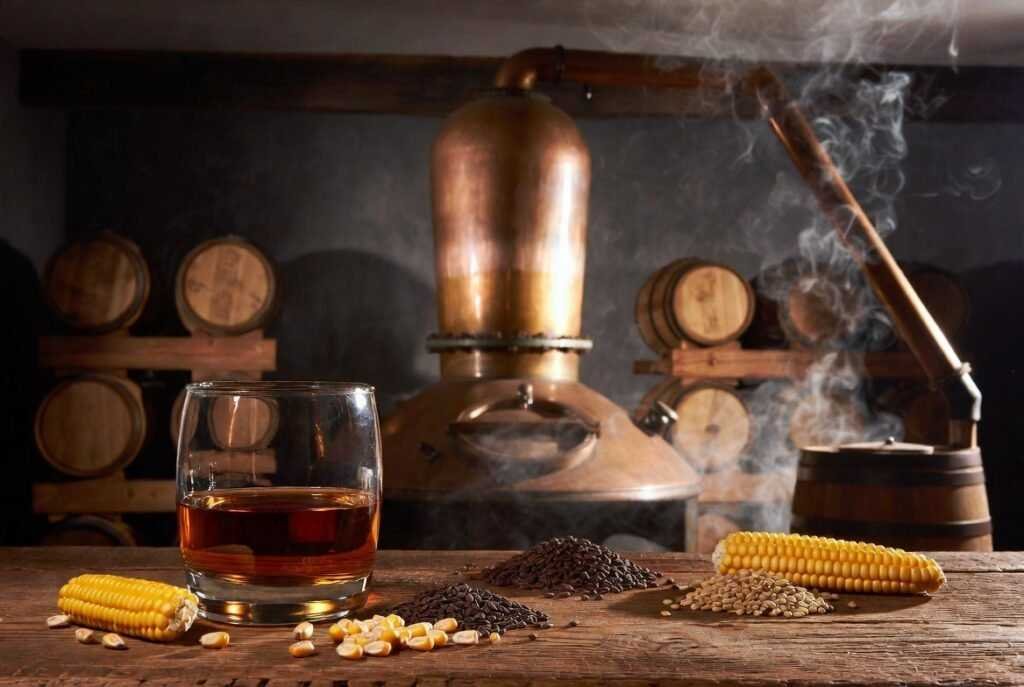
Continuous Column Still: Definition, Design, and Function. The continuous column still plays a crucial role in the bourbon distillation process, shaping the spirit’s character and quality.
The bourbon distillation process is the heart of what transforms simple grains into America’s iconic whiskey. Whether you’re a bourbon enthusiast, a curious home mixologist, or someone searching for “how bourbon is made,” understanding this craft reveals why every bottle tells a story of tradition, science, and flavor. From the legal standards that define true bourbon to the precise chemistry of column stills and doublers, this comprehensive guide walks you through the entire bourbon making process step by step.
In this 2026-updated deep dive, we’ll cover the full bourbon distillation process, including mash bills, sour mash techniques, double distillation, aging in charred oak, and how each stage impacts the final taste. You’ll discover long-tail insights like the role of copper in removing impurities, why proof limits matter, and modern innovations reshaping the industry. By the end, you’ll appreciate every pour like a master distiller.
10 Best Bourbons Under $50 in 2026 (Value Picks for Real Patriots)
What Makes Bourbon Bourbon? Legal Requirements for the Bourbon Distillation Process
Before diving into the steps, let’s clarify what qualifies as bourbon under U.S. law (Federal Standards of Identity). These rules ensure authenticity in the bourbon distillation process:
- Must be produced in the United States.
- Mash bill must contain at least 51% corn.
- Distilled to no more than 160 proof (80% ABV).
- Entered into the barrel at no more than 125 proof.
- Aged in new, charred American white oak barrels (no reuse for straight bourbon).
- Bottled at a minimum of 80 proof (40% ABV).
- No additives except water.
These regulations protect the spirit’s character and flavor. Distilling beyond 160 proof would strip too many congeners (flavor compounds), while higher barrel-entry proof limits wood interaction. This is why the bourbon distillation process delivers that signature sweetness, spice, and oak depth.
The History of Bourbon: America’s Spirit of Freedom and the Pursuit of Craft
The Bourbon Mash Bill: Key Ingredients in Bourbon Production
Every great bourbon distillation process begins with the mash bill—the recipe of grains. Corn provides sweetness and body (at least 51%, often 70-80%). Rye adds spicy, peppery notes; wheat creates a softer, sweeter profile in wheated bourbons like Maker’s Mark or Pappy Van Winkle. Malted barley supplies enzymes that convert starches into fermentable sugars.
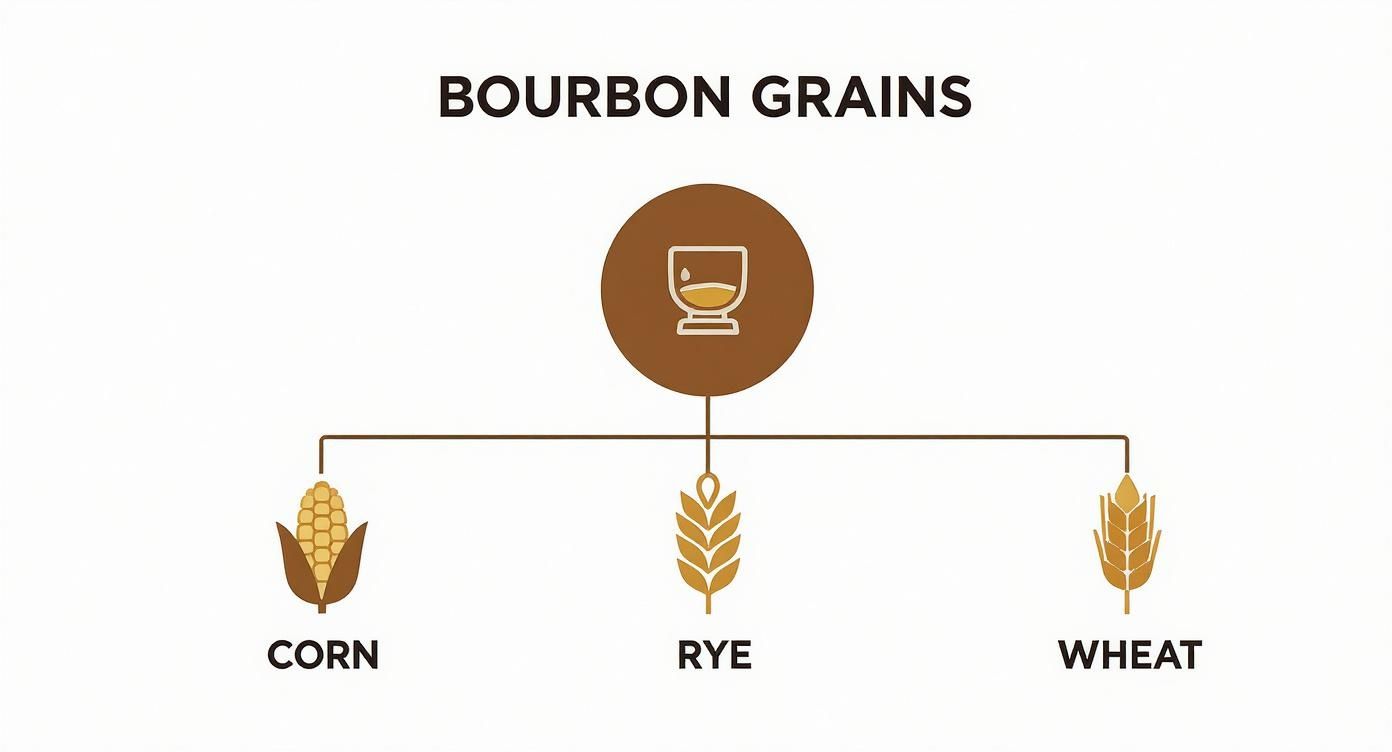
Understanding the Bourbon Mash Bill – Blind Barrels
Distillers experiment with four-grain recipes or heirloom corns for unique flavors. The choice of grains directly influences the final spirit, making the mash bill one of the most guarded secrets in the industry. Long-tail searches like “bourbon mash bill explained” often lead here because it’s the foundation of taste.
Step 1: Milling, Mashing, and the Sour Mash Technique
Grains are milled into a coarse meal to expose starches without generating excess heat. In the cooker (often 10,000-gallon vessels at large distilleries like Jim Beam), water—ideally limestone-filtered Kentucky water—is added. Corn cooks at high temperatures (~220°F) to gelatinize starches, followed by rye or wheat at lower temps, then malted barley or lab enzymes to break everything down into sugars.
Many distilleries use the sour mash process: a portion of acidic “setback” or backset from the previous distillation is added. This lowers pH (around 5.4–5.8), prevents bacterial contamination, and ensures batch-to-batch consistency. The result is a sweet, porridge-like mash ready for fermentation. This technique, popularized by early Kentucky distillers, is a hallmark of traditional bourbon production.
Step 2: Fermentation – Turning Mash into Distiller’s Beer
The cooled mash moves to fermenters where a proprietary yeast strain (sometimes a family secret passed down since Prohibition) is introduced. Yeast consumes the sugars, producing alcohol, CO₂, and heat over 3–5 days. The result: “distiller’s beer” or “wash” at about 8–10% ABV.
Fermenters are temperature-controlled to avoid killing the yeast. Sour mash helps maintain ideal conditions. This stage develops fruity esters and congeners that will survive distillation, contributing to bourbon’s complexity. Some modern distilleries experiment with wild yeast or longer ferments for bolder flavors.
Step 3: The Bourbon Distillation Process – Column Stills, Doublers, and White Dog
Now we reach the core: the bourbon distillation process itself. Most commercial bourbon uses a continuous column still (beer still) for the first distillation, followed by a doubler or thumper (a copper pot-like vessel) for the second. This hybrid system is efficient and produces the clean yet flavorful spirit bourbon demands.
How Column Stills Work in Bourbon Distillation The tall copper column (5–20 meters) has perforated trays. Distiller’s beer enters midway while steam rises from below. Alcohol vapors (boiling at ~173°F) rise through the trays, concentrating as they go. Liquid residues flow down. The vapor exits the top at 78–85°C and condenses into “low wines” around 125 proof.
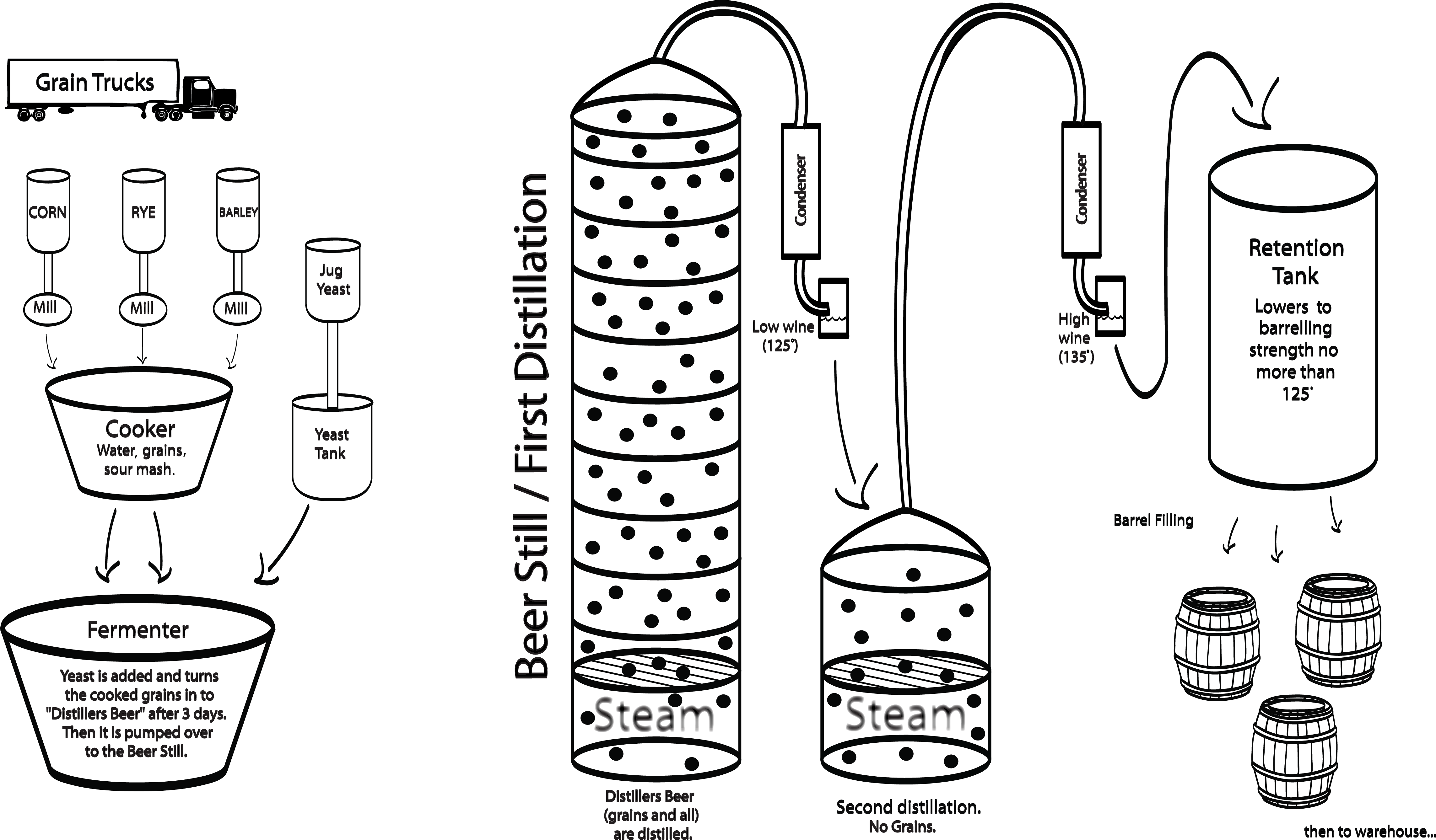
Basic Distilling – Bourbon Whiskey Our Native Spirit
Copper plays a crucial role: it reacts with and removes sulfur compounds, preventing “rotten egg” off-flavors.
The Doubler (or Thumper) Low wines flow into the doubler—a copper vessel that acts like a second pot still. Vapors rise again, further purifying the spirit into “high wines” or “white dog” at under 160 proof. Some setups use a thumper (steam-heated) that makes a characteristic thumping sound. This second pass refines flavors while staying within legal limits.
Heads, Hearts, and Tails Distillers make precise cuts. Heads (first volatile compounds like methanol) are discarded or recycled. Hearts—the pure, flavorful middle cut—become bourbon. Tails (heavier fusel oils) may be redistilled. The art lies in balancing purity and character.
The output is crystal-clear white dog—raw, fiery, and full of potential. Some distilleries now bottle it as “new make spirit” for enthusiasts.
Bourbon Tasting Method: How to Taste Bourbon Like a Pro
Step 4: Aging – From White Dog to Mature Bourbon in Charred Oak Barrels
White dog enters new charred American white oak barrels at ≤125 proof. The char layer (often “alligator char” for deeper caramelization) acts as a filter and flavor source. Over years in rackhouses, temperature swings cause the spirit to expand into the wood (extracting vanillin, tannins, and sugars) and contract back, picking up color and smoothness.
Minimum aging is two years for “straight bourbon,” but most premium expressions mature 4–8+ years. Warehouses create microclimates—top floors age faster due to heat. This stage transforms harsh white dog into smooth, golden bourbon with notes of caramel, vanilla, oak, and spice.

A Look At The Rapid Aging Of Whiskey – bourbonveachdotcom
Step 5: Bottling, Proofing, and Final Quality Control
After aging, barrels are dumped, filtered to remove char particles, and proofed with water to the desired strength. Single-barrel or small-batch selections highlight unique casks. The bourbon is bottled, labeled, and ready for your glass. No artificial flavors or colors are added—pure bourbon character shines through.
How the Bourbon Distillation Process Shapes Flavor Profiles
Distillation proof limits preserve congeners: lower proof retains more grain and fermentation flavors; higher proof yields a cleaner spirit. Column + doubler systems balance efficiency with copper-driven refinement. Grains set the base—rye for spice, wheat for creaminess—while barrels add 60-80% of the final taste through wood extraction and oxidation.
Wheated bourbons skip rye for softer profiles. High-rye expressions deliver bold pepper. Innovations like heritage grains, hybrid stills, or experimental yeast push boundaries while honoring the bourbon distillation process.
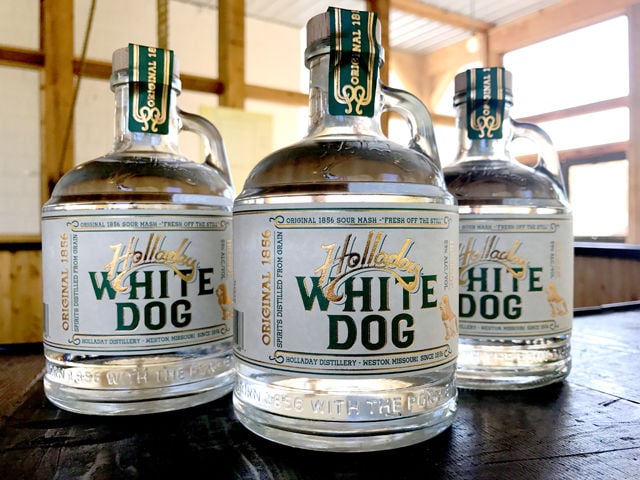
Holladay Distillery in Weston Releases White Dog Spirit
Modern Innovations and Visiting Bourbon Distilleries
Today’s craft distilleries experiment with pot stills for batch character or vacuum distillation for gentler heat. Sustainability efforts recycle stillage into animal feed or energy. If you’re planning a Kentucky Bourbon Trail trip, tours at Jim Beam, Rabbit Hole, or Heaven Hill let you see column stills, doublers, and barrel warehouses in action—often with tastings of white dog.
Red, White & Bourbon: Patriotic Cocktails for Flag Day
Conclusion: Why Mastering the Bourbon Distillation Process Matters
The bourbon distillation process is equal parts art, science, and heritage. From grain to glass, every decision—mash bill, sour mash, double distillation in copper, and patient barrel aging—creates the unmistakable bourbon experience. Whether you’re decoding labels or simply enjoying a neat pour, this knowledge deepens your appreciation.
Next time you sip, toast the distillers who perfect this centuries-old craft. Want to explore further? Check distillery tours, try wheated vs. high-rye side-by-side, or dive into single-barrel selections. Cheers to the bourbon distillation process—the true spirit of America.

Eric Webber is the founder of Bathrobe Patriot, a lifestyle brand centered on bourbon, cigars, and common sense. As an ISSA-certified trainer and former restaurant owner with 20 years of experience, he values quality over quantity and backbone over political correctness. Currently, Eric lives in Safety Harbor, Florida, where he advocates for a life of balance, discipline, and the occasional slow pour. Consequently, his mission is to provide you with the unfiltered truth about the gear, spirits, and culture that define the American spirit.