
There’s something about that first draw of a good cigar—the soft crackle, the burn of aged tobacco, and the quiet pride that comes with it. The History of Cigars is not just a timeline of a product; rather, it is a chronicle of human exploration, luxury, and the American spirit. Furthermore, it is not just smoke. It is a bold statement. At Bathrobe Patriot, we believe cigars are more than a pastime because they are part of America’s character. But before that cigar ever met a glass of bourbon on a Florida porch, it had one hell of a journey. Consequently, to truly appreciate the craft, we must look at how a simple leaf became a global icon of sophistication and freedom.
Cigars 101: The Beginner’s Guide for the Everyday Patriot
Why the History of Cigars Still Matters Today
Most men do not light a cigar because they are trying to rush through life. They light one because they are trying to slow it down. That is why the history of cigars still matters. A cigar is not just tobacco rolled into a tube. It is agriculture, patience, craftsmanship, trade, rebellion, status, ritual, and relaxation all packed into one slow-burning experience.
That is also what separates a cigar from most modern habits. You cannot microwave it. You cannot scroll through it. You cannot finish a good cigar in five minutes and call it done. A proper smoke asks you to sit down, pay attention, and enjoy the moment. That is why cigars have survived centuries of changing politics, changing tastes, and changing rules. They still offer something rare: time with purpose.
For Bathrobe Patriot readers, that is the real lesson. The cigar is not about pretending to be fancy. It is about respecting the craft, understanding the story, and enjoying a simple pleasure without apology.
Ancient Origins: The First Rolls in the History of Cigars
Long before men in suits puffed on victory cigars, the Maya and Taíno tribes rolled and smoked tobacco in the Caribbean. Archaeological evidence suggests indigenous peoples used tobacco in religious ceremonies as early as the 10th century. Interestingly, the word “cigar” comes from the Mayan word sikar, which literally means “to smoke rolled tobacco leaves.”
When Christopher Columbus reached the New World in 1492, his sailors watched locals smoking “firebrands.” These were tightly wrapped bundles of dried leaves. Two crewmen, Rodrigo de Jerez and Luis de Torres, became the first Europeans to take up the habit. While Jerez brought the practice back to Spain, the Spanish Inquisition briefly imprisoned him. Specifically, they thought the smoke coming from his mouth was “satanic.” Despite this rocky start, the world’s obsession had officially begun.
A Quick Timeline of Cigar History
Before we go deeper, here is the fast version of how the cigar went from sacred leaf to global symbol.
Ancient world: Indigenous people throughout the Caribbean and the Americas used tobacco for ceremony, trade, and daily life long before Europeans arrived.
1492: Columbus and his crew encountered tobacco smoking in the New World, helping introduce the practice to Europe.
1500s–1600s: Spain and Portugal helped spread tobacco across Europe. What started as curiosity quickly became commerce.
1700s–1800s: Cuba became the gold standard for cigar tobacco, especially as Havana’s reputation grew among wealthy Europeans and Americans.
Late 1800s: Cuban cigar makers brought their skills to Florida, especially Tampa’s Ybor City, turning it into one of the most important cigar cities in the world.
1960s and beyond: The Cuban embargo changed the American cigar market and opened the door for Nicaragua, Honduras, and the Dominican Republic to become premium cigar powerhouses.
Today: Cigars are no longer just a symbol of wealth or politics. They are part of a wider lifestyle built around lounges, patios, bourbon pairings, special occasions, and slow nights with good company.
The Rise of the Global Tobacco Trade
By the 1600s, smoking was a way of life and a massive economic driver. Spain and Portugal turned tobacco into a royal commodity by establishing the first cigar factories in Seville. Meanwhile, the American colonies made tobacco one of their first booming exports. This trade provided the vital financial backbone for the young United States. Ultimately, the cigar had arrived on the world stage as a premier luxury.
Cuba: The Holy Land in the History of Cigars
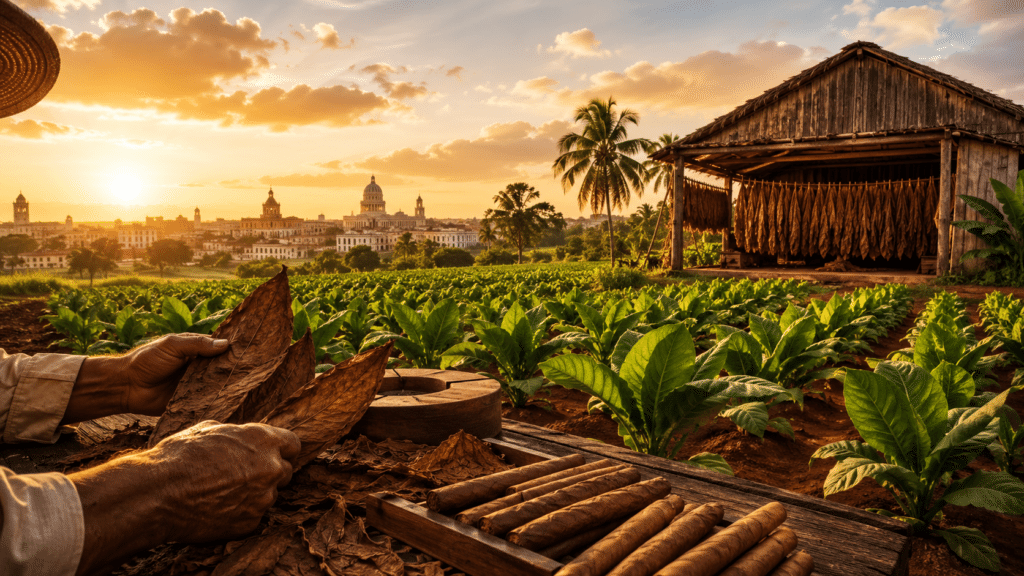
When you think of the History of Cigars, you inevitably think of Cuba. This is because the island possesses a “perfect storm” for tobacco, including nutrient-rich red soil in the Vuelta Abajo region and ideal humidity. Additionally, it boasts a centuries-old tradition of tabaqueros, or master rollers.
By the 1800s, Havana defined excellence across the globe. Iconic brands like Cohiba, Montecristo, and Romeo y Julieta found their footing during this golden age. However, political upheaval eventually tested Cuba’s dominance. For instance, during the Cuban Revolution, many master blenders fled the island. Today, you can find many of these classic profiles through reputable retailers like Famous Smoke Shop.
Why Cuban Cigars Became Legendary
Cuba did not become famous by accident. Great cigars start in the field, and Cuba had the right mix of soil, climate, humidity, and tradition. But the real magic came from the people. Generations of growers, blenders, sorters, and rollers learned how to turn tobacco into something refined.
That is why Cuban cigars became more than a product. They became a reputation. A Cuban cigar carried mystery, scarcity, and status. It represented old-world craftsmanship and forbidden luxury, especially for American smokers after the embargo.
But here is the part beginners need to understand: Cuban does not automatically mean better. It means historic. Some Cuban cigars are excellent, but so are many cigars from Nicaragua, Honduras, and the Dominican Republic. The modern cigar world is much bigger than one island. If you only chase the Cuban name, you may miss some of the best cigars being made today.
Florida: The New World “Havana”
This migration changed American tobacco forever. Specifically, many craftsmen landed right here in Florida, within the streets of Tampa’s Ybor City. By the early 20th century, Tampa factories produced hundreds of millions of hand-rolled cigars annually. As a result, the city earned the title “Cigar Capital of the World.” This local history keeps Florida at the heart of American cigar culture today.
Ybor City was not just a factory district. It was a cigar civilization. Workers did not simply punch a clock and roll tobacco. They built neighborhoods, mutual aid societies, restaurants, social clubs, and a culture that still shapes Tampa today. The cigar factories were filled with skilled rollers, many of them Cuban, Spanish, and Italian immigrants, who brought old-world craftsmanship to Florida’s Gulf Coast.
That is why Ybor City matters so much to the Bathrobe Patriot story. This is not some distant European luxury topic. Cigar history runs right through Florida. It belongs to the same world as front porches, humid nights, strong coffee, bourbon pours, and men arguing about life over a slow smoke.
The Evolution of Craft: Modern Production Methods
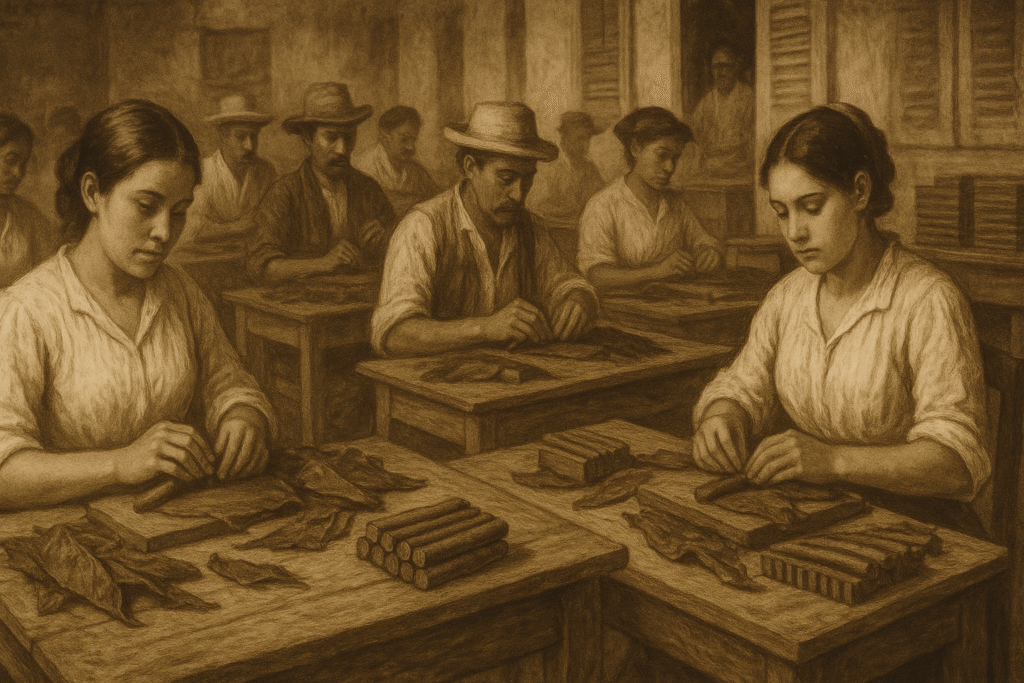
To truly understand the History of Cigars, one must appreciate the grueling labor behind each stick. Workers grow and construct a premium cigar rather than “manufacture” it in a traditional sense.
- Cultivation: Farmers start seeds in greenhouses before moving them to the fields.
- Curing: Next, workers hang leaves in “barns” to remove moisture slowly over 45 days.
- Fermentation: This is where the magic happens. Leaves sit in piles (pilones) so that heat and pressure can remove impurities like ammonia.
- Aging: Furthermore, manufacturers age premium tobacco for years to develop complex flavors.
- Rolling: Finally, a master roller uses a Filler, a Binder, and a Wrapper. Notably, the wrapper provides 60-90% of the flavor.
For those just starting, check out our Cigars 101: Beginner’s Guide. It teaches you how to identify quality construction before you buy.
Anatomy of a Premium Cigar
A premium cigar has three main parts: the filler, the binder, and the wrapper. The filler is the tobacco inside the cigar. This is where the blend gets much of its strength, body, and complexity. The binder holds the filler together and helps the cigar burn properly. The wrapper is the outer leaf, and it is the part you see, touch, smell, and taste first.
That wrapper matters. A smooth Connecticut Shade wrapper can make a cigar creamy and approachable. A dark Maduro wrapper can bring sweetness, earth, cocoa, coffee, or molasses. A Habano wrapper can add spice and punch. This is why two cigars can look similar but smoke completely differently.
Beginner takeaway: Do not shop by brand alone. Learn wrapper types, strength levels, and country of origin. That is how you start buying cigars with confidence instead of guessing.
Cigars and the American Spirit of Defiance
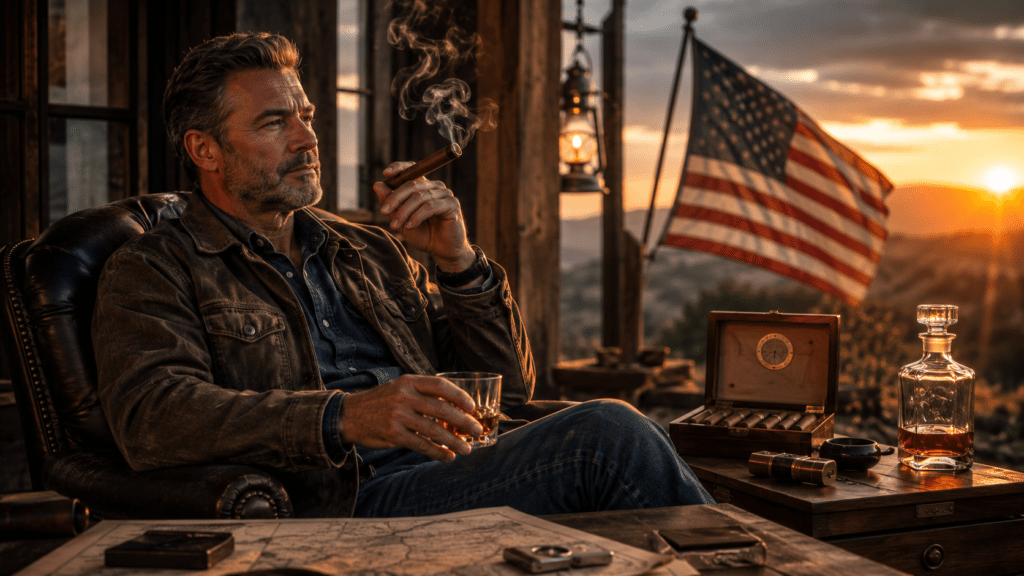
From Ulysses S. Grant to Winston Churchill, cigars have always marked bold men. Throughout American history, lighting up meant confidence, victory, and defiance.
When the Cuban trade embargo hit in the 1960s, American cigar lovers adapted quickly. This era forced the industry to grow in new directions. Consequently, incredible tobacco regions rose in Nicaragua, Honduras, and the Dominican Republic. Today, many enthusiasts argue that Nicaraguan tobacco rivals or even surpasses Cuban leaves. For more on the global impact of tobacco, visit the Tobacco Merchants Association for industry insights.
Expert Tip: If you struggle to keep your collection fresh in the humid South, read our guide on How to Store Cigars in Florida Without Losing Your Mind
How the Embargo Changed the Cigar World
The Cuban embargo did not kill cigar culture in America. In many ways, it expanded it. When Cuban cigars became difficult or illegal for American consumers to obtain, cigar makers and tobacco families looked elsewhere. Nicaragua, Honduras, and the Dominican Republic became serious players, not backup plans.
This is one of the biggest turning points in modern cigar history. The American cigar smoker was forced to discover that greatness did not live in only one country. Nicaraguan cigars brought bold spice and strength. Dominican cigars often delivered balance and elegance. Honduran cigars offered earth, body, and value. The result was a bigger, more diverse cigar world.
That is good news for today’s smoker. You do not need a forbidden Cuban cigar to enjoy a great smoke. You need a quality cigar that fits your palate, your budget, and the moment.
The Modern Revival: Smoke, Sip, and Freedom
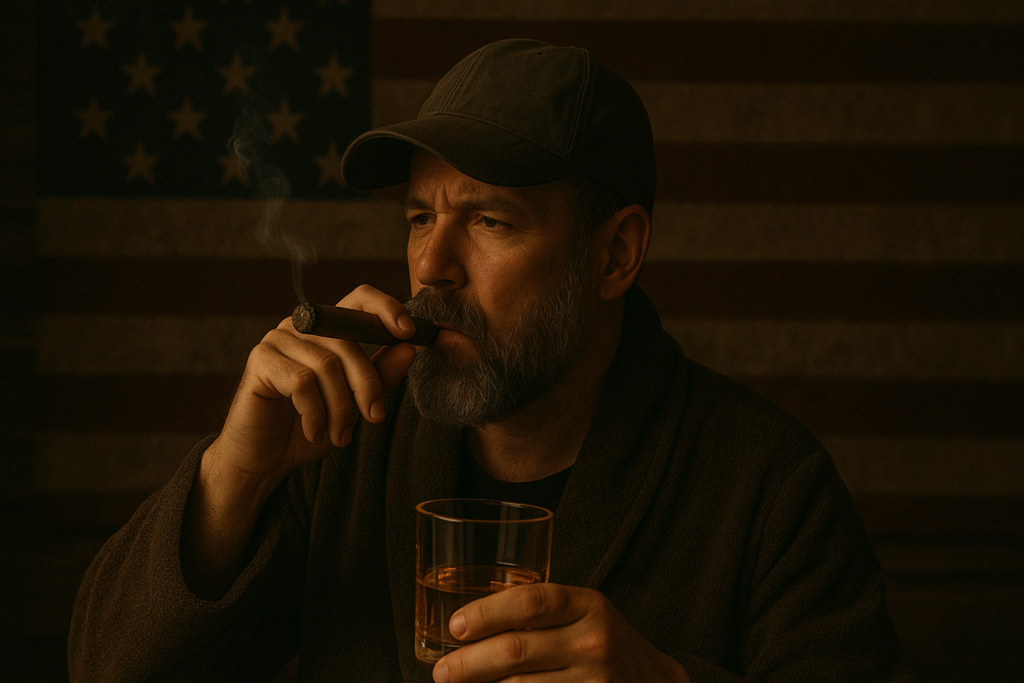
We are currently living in a “Cigar Renaissance.” Modern smokers want an experience, not just a nicotine fix. From high-end lounges to backyard nights, cigars are the heartbeat of the Bathrobe Patriot lifestyle. It is unhurried, unapologetic, and absolutely American.
Moreover, the modern cigar movement ties deeply to the “Slow Movement.” In a world of instant gratification, a cigar forces you to sit still for 90 minutes. Therefore, it serves as a meditative act of rebellion against the clock.
Why Cigars Are Having a Comeback
The modern cigar revival is not just about tobacco. It is about lifestyle. Men are looking for rituals again. They want something that feels real, not digital. A cigar gives you that. It creates a beginning, middle, and end. You cut it, toast it, light it, smoke it, and let the conversation unfold.
That is why cigar lounges, backyard patios, bourbon pairings, and cigar events keep growing in popularity. A cigar gives people a reason to slow down and be present. It turns an ordinary night into an occasion.
For beginners, this is important. You do not have to know every brand, factory, or wrapper to enjoy cigars. Start simple. Choose a mild or medium cigar. Pair it with coffee, bourbon, or sparkling water. Sit somewhere comfortable. Pay attention to the flavor. That is how the hobby starts.
The Ultimate Experience: The Bourbon Pairing Method
While the cigar is the occasion, you can elevate the experience by mastering the art of the pour. Finding the right whiskey to complement your smoke is essential for a balanced palate. You can dive deep into The Bourbon Pairing Method to learn more. For example, discover how the vanilla notes of a wheated bourbon balance a spicy Habano wrapper.
What Cigar History Teaches Beginners
The biggest lesson from cigar history is patience. Nothing about a good cigar is rushed. The seed takes time. The leaf takes time. The curing, fermenting, aging, blending, and rolling all take time. So why would you rush the smoke?
New cigar smokers often make the same mistakes. They cut too much off the cap. They torch the foot too aggressively. They puff too fast. They judge the cigar in the first five minutes. A premium cigar deserves better than that.
Slow down. Toast the foot before lighting. Take one draw every minute or so. Let the cigar rest between puffs. Notice how the flavor changes from the first third to the final third. That is when you start understanding why cigars became legendary in the first place.
Essential Accessories and the History of Cigars
A cigar is an investment; therefore, do not treat it like a common cigarette. To honor the History of Cigars, always use the right tools.
- The Cut: Use a straight cut, V-cut, or a punch for a clean opening.
- The Light: Avoid petrol lighters like Zippos because they taint the tobacco. Instead, use cedar spills or butane torches.
- Storage: A cedar-lined humidor is the only way to prevent dry sticks or mold.
How to Store Cigars in Florida Without Losing Your Mind
Final Draw: A Legacy in Every Puff
Every cigar tells a story of soil, sweat, and tradition. From ancient tribes to Havana masters to the modern patriot under a Florida sunset—the cigar never burned out. It survived prohibitions and wars because quality is timeless.
Next time you fire up a stogie, remember that you are part of a centuries-old legacy. Whether you explore Cigar Culture: Stories From Patios, Lounges & Late Nights or enjoy a quiet evening, you are practicing a ritual of freedom. If you do it right—with bourbon in hand—you’re living the Bathrobe Patriot way.

Eric Webber is the founder of Bathrobe Patriot, a lifestyle brand centered on bourbon, cigars, and common sense. As an ISSA-certified trainer and former restaurant owner with 20 years of experience, he values quality over quantity and backbone over political correctness. Currently, Eric lives in Safety Harbor, Florida, where he advocates for a life of balance, discipline, and the occasional slow pour. Consequently, his mission is to provide you with the unfiltered truth about the gear, spirits, and culture that define the American spirit.