
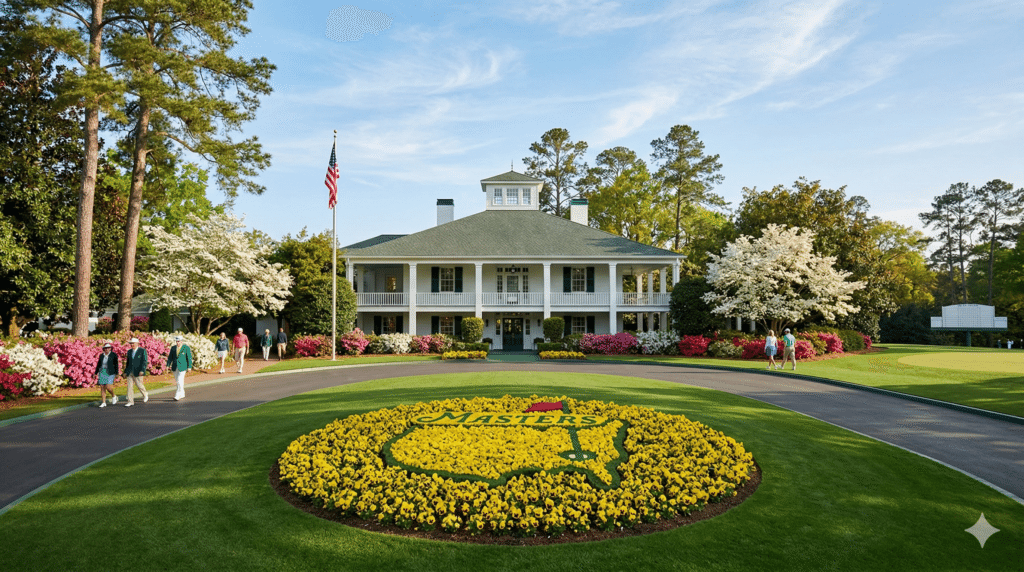
Every spring, as azaleas bloom pink against towering Georgia pines, the golf world converges on Augusta National Golf Club for the Masters Tournament. This beloved tournament has a rich Masters Golf Tournament History that fascinates players and fans alike. It’s more than a major championship—it’s a pilgrimage. This is a place where history whispers through every dogwood-lined fairway. It is where one shot can echo for decades, and where the simple act of slipping on a green jacket carries the weight of legend.
If you’re searching for the Masters Golf Tournament history, the biggest moments that defined it, or why this event stands alone in sports, you’re in the right place. This deep-dive guide tells the full story—from Bobby Jones’ vision in the 1930s to Rory McIlroy’s career Grand Slam in 2025. This post is packed with traditions, records, and unforgettable drama.
Ready to step inside the ropes of Augusta? Let’s tee it up.
The Founding: Bobby Jones’ Dream Becomes Reality (1930s)
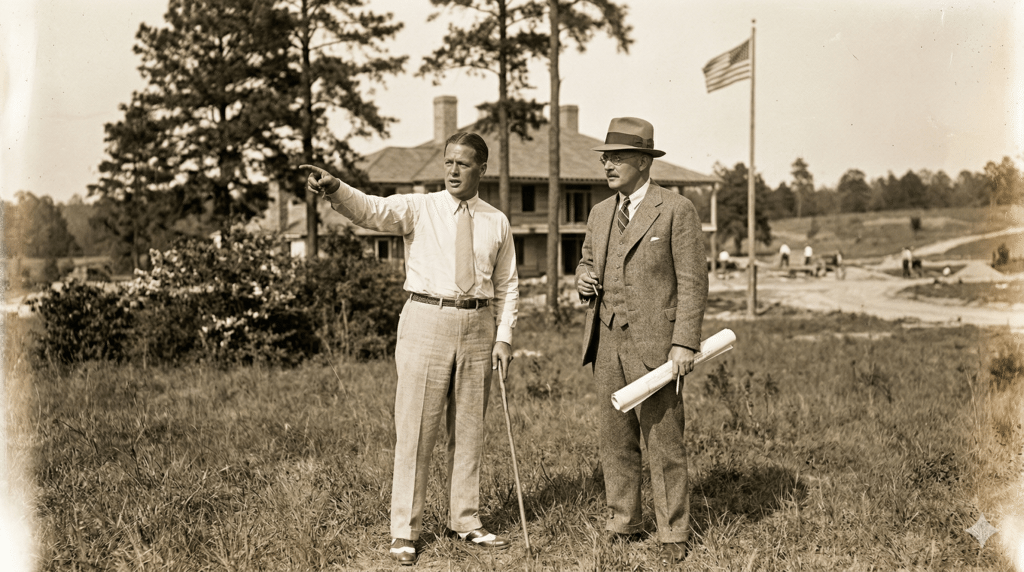
The story begins not on the course, but in the mind of one of golf’s greatest amateurs. After Bobby Jones completed the Grand Slam in 1930, he and investment banker Clifford Roberts purchased a former nursery in Augusta, Georgia. Together with legendary architect Alister MacKenzie, they transformed Fruitland Nurseries into Augusta National Golf Club, which opened in 1933.
The first “Augusta National Invitation Tournament” teed off on March 22, 1934. Horton Smith won the inaugural event (and $1,500) by one stroke over Craig Wood. Interestingly, they even played the course backward that year—holes 10-18 first—before flipping it in 1935 for better flow.
Roberts pushed to rename it the “Masters,” but Jones thought it immodest. Nevertheless, the name stuck officially in 1939. Early crowds were modest because the Great Depression didn’t help. However, one specific moment changed everything.
Just as the Masters defines the history of golf, the history of bourbon tells the story of America’s own spirit of freedom and craftsmanship.
Gemini said
Whether I’m at a local bistro or relaxing on my patio, nothing beats the tradition of a Patriot-style pimento cheese and bourbon pairing while watching the Sunday drama at Augusta.
The Shot Heard ’Round the World (1935)
Trailing by three on the final round, Gene Sarazen holed a 4-wood from 235 yards on the par-5 15th for a double eagle 2. This tied Craig Wood and forced a 36-hole playoff, which Sarazen won. That single swing put the Masters on the map and remains one of golf’s most legendary shots.
The tournament survived the Depression and World War II, though it was canceled from 1943-1945. During that time, the course raised cattle and turkeys for the war effort. By the 1940s, crowds grew significantly. Furthermore, stars like Byron Nelson and Jimmy Demaret elevated the event’s prestige.
See the full list of Masters winners by year.
The Green Jacket Era: Traditions Take Root (1940s–1960s)
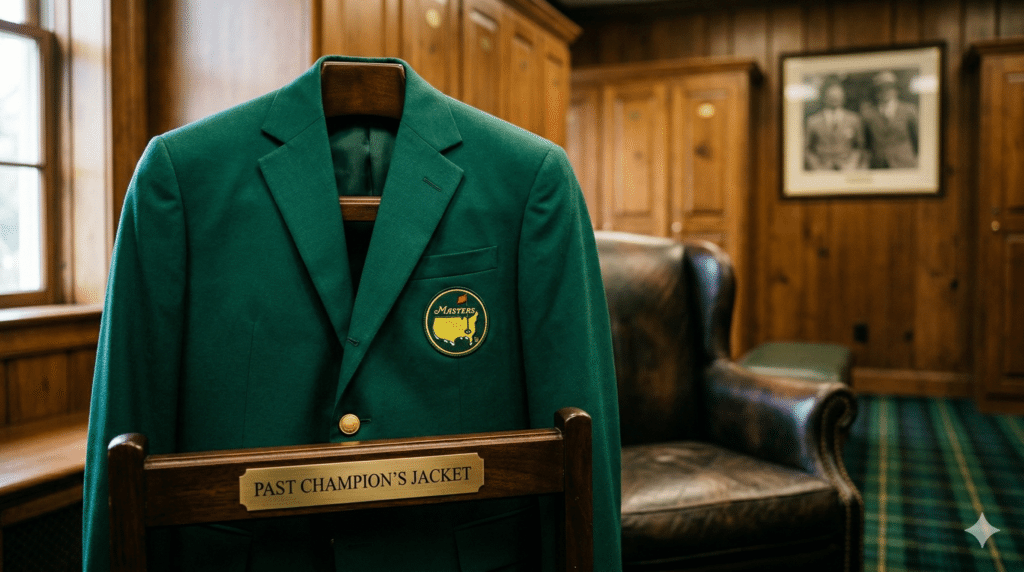
Post-war, the Masters became a symbol of elegance. In 1949, Sam Snead received the first green jacket—now the tournament’s most iconic prize. Champions must return it to the club after one year, but it remains theirs forever.
Other traditions followed:
- Champions Dinner (1952): Ben Hogan started it. The defending champion hosts past winners only.
- Par 3 Contest (1960): A Wednesday highlight on the 1,060-yard course.
- Honorary Starters (1963): Legends like Palmer, Nicklaus, and Player tee off first on Thursday morning.
By the 1960s, the “Big Three”—Arnold Palmer, Gary Player, and Jack Nicklaus—dominated. They won 11 combined titles and turned the Masters into prime-time TV gold.
For many of us, watching these legends is about more than just the score; it is about the ritual of baseball and golf, usually enjoyed with a slow pour and a comfortable robe.
Pro tip for readers: Bookmark the official Masters site for live streams, stats, and the annual film—pure golf porn.
Legends Who Defined Masters Golf Tournament History (1970s–1990s)
Jack Nicklaus owns the record with six green jackets. His 1986 victory at age 46 is pure Masters magic: a final-round 65, back-nine 30, and the immortal “Yes, sir!” call. It is widely ranked the #1 defining moment in tournament history.
Other unforgettable 1980s-90s drama:
- Larry Mize’s chip-in (1987): The Augusta native holed a 140-foot chip on the 11th to beat Greg Norman.
- Nick Faldo’s 1996 comeback: He erased a six-shot deficit to beat Norman in one of the biggest collapses in major history.
- Ben Crenshaw’s emotional 1995 win: Days after mentor Harvey Penick’s funeral, Crenshaw birdied the last hole.
The era also brought important firsts. For example, Lee Elder became the first Black player in 1975, and Seve Ballesteros became the first European winner in 1980.
Tiger Woods and the New Masters Era (1997–2010s)
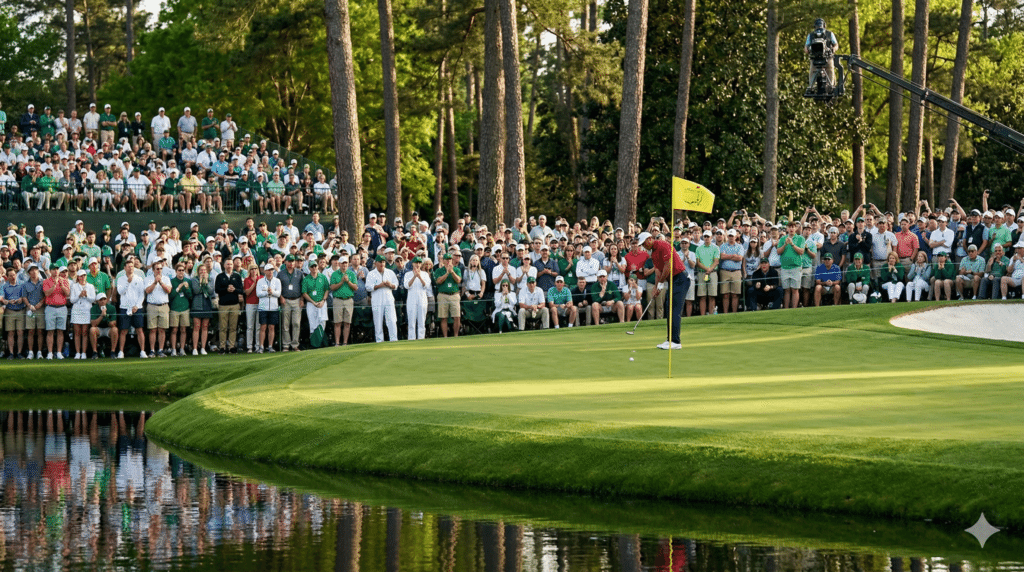
In 1997, 21-year-old Tiger Woods shattered records. He became the youngest winner ever and set a largest margin of 12 strokes. His bear-hug with father Earl on the 18th green symbolized a new era of diversity.
More Tiger magic:
- 2005 chip-in on 16: “In your life, have you seen anything like that?!”
- 2019 comeback: After injuries and scandal, Woods birdied three of four late holes for his fifth jacket.
Other highlights:
- Phil Mickelson’s fist-pump birdie on 18 in 2004.
- Bubba Watson’s hooked wedge from the trees in 2012.
- Dustin Johnson’s record 20-under in November 2020.
Watching a Sunday charge at Augusta is a peak experience for any sports fan, much like the history of MLB reminds us why these pastimes are the soul of the nation.
The Masters Today: Records, Recent Drama, and 2025 Glory
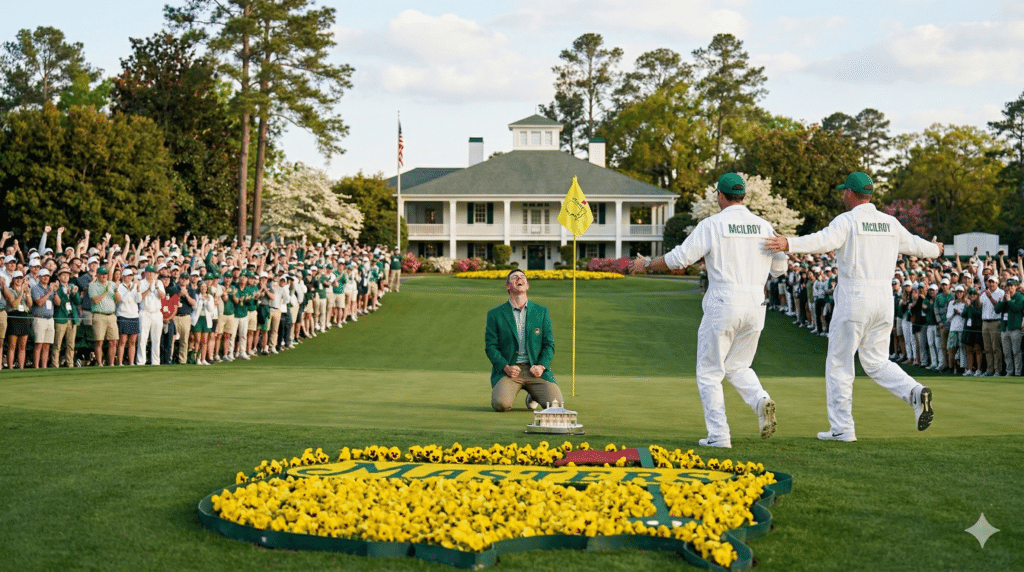
Scottie Scheffler won in 2022 and 2024. Jon Rahm took 2023. Then came 2025: Rory McIlroy finally broke through, beating Justin Rose in a sudden-death playoff. McIlroy completed the career Grand Slam—only the sixth man ever—and fell to his knees in pure joy.
Key Records (as of 2025):
- Most wins: Nicklaus (6), Woods (5).
- Lowest 72-hole score: 268 (-20) by Dustin Johnson (2020).
- Oldest winner: Nicklaus (46 in 1986).
The course itself has evolved, but Amen Corner and the par-3 12th remain sacred. Indeed, the Masters Golf Tournament history continues to be written on these hallowed grounds.
Why the Masters Endures: More Than Golf
What makes it special? Exclusivity, Southern hospitality, and that green jacket ceremony in Butler Cabin. It’s the only major at the same venue every year. Additionally, there are no sponsor logos on the course. This is pure golf theater.
External resource: Dive deeper into Masters milestones on the official site.
This commitment to excellence and tradition is what we celebrate at the Bathrobe Patriot—a bourbon and cigars lifestyle built for the bold and the balanced.
Top 10 Biggest Moments in Masters Golf Tournament History
- Jack Nicklaus 1986 – “Yes, sir!” The Golden Bear’s sixth win at 46.
- Tiger Woods 1997 – Record 12-stroke blowout launches a dynasty.
- Tiger Woods 2019 – Emotional comeback for the ages.
- Gene Sarazen’s double eagle 1935 – The shot that put the Masters on the map.
- Tiger’s 2005 chip on 16 – “In your life!” magic.
- Rory McIlroy 2025 – Career Grand Slam complete.
- Roberto De Vicenzo 1968 – Scorecard error costs a playoff.
- Larry Mize’s 1987 chip-in – Hometown hero stuns Norman.
- Phil Mickelson 2004 – First major on the final hole.
- Nicklaus 1975 putt on 16 – The leap that won his fifth jacket.
Final Thoughts: The Masters Is Timeless
From Horton Smith’s first victory to Rory’s 2025 triumph, the Masters has delivered drama for 92 years. It’s where legends are made and dreams are tested. Because of this rich Masters Golf Tournament history, every April reminds us why we love the game.
What’s your favorite Masters moment? Drop it in the comments below. And if you loved this deep dive, share it with fellow golf fans and subscribe for more high-value golf content.

Eric Webber is the founder of Bathrobe Patriot, a lifestyle brand centered on bourbon, cigars, and common sense. As an ISSA-certified trainer and former restaurant owner with 20 years of experience, he values quality over quantity and backbone over political correctness. Currently, Eric lives in Safety Harbor, Florida, where he advocates for a life of balance, discipline, and the occasional slow pour. Consequently, his mission is to provide you with the unfiltered truth about the gear, spirits, and culture that define the American spirit.