
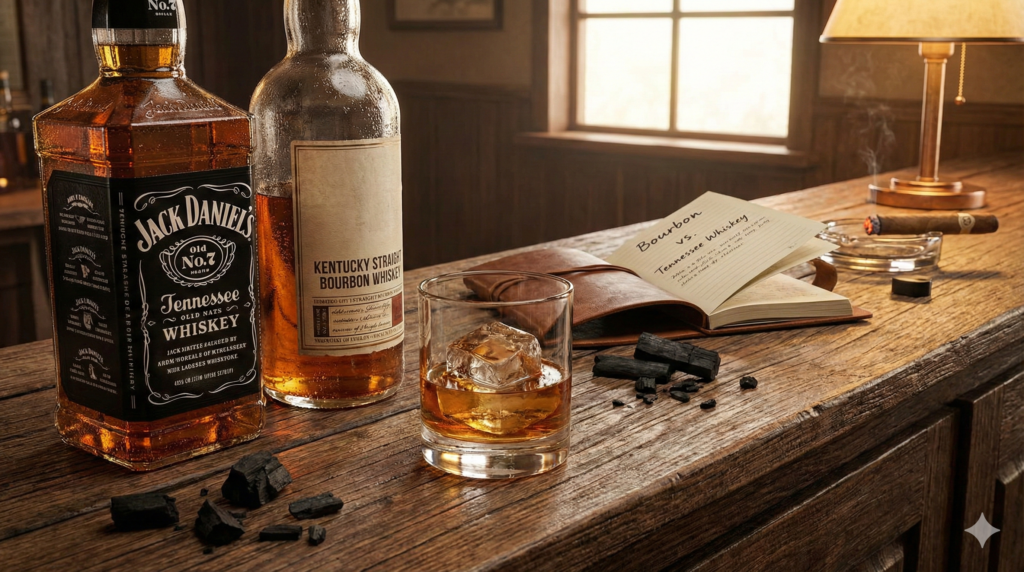
It is the argument that has started more bar fights and debates than perhaps any other topic in the whiskey world. You are trading stories from patios, lounges, and late nights, pouring a drink, and someone confidently claims, “Jack Daniel’s isn’t bourbon.” Someone else immediately fires back, “Yes it is!” Is Jack Daniels bourbon, or is it something else entirely?
The answer is surprisingly simple, yet the marketing behind it is brilliant. Consequently, most people get it wrong. If you want to be the smartest person at your next gathering, you need to look past the label and look at the law. Here is the straight talk on America’s most famous spirit from the perspective of the Bathrobe Patriot mission: quality, integrity, and common sense.
The Rules: What Actually Makes a Bourbon?
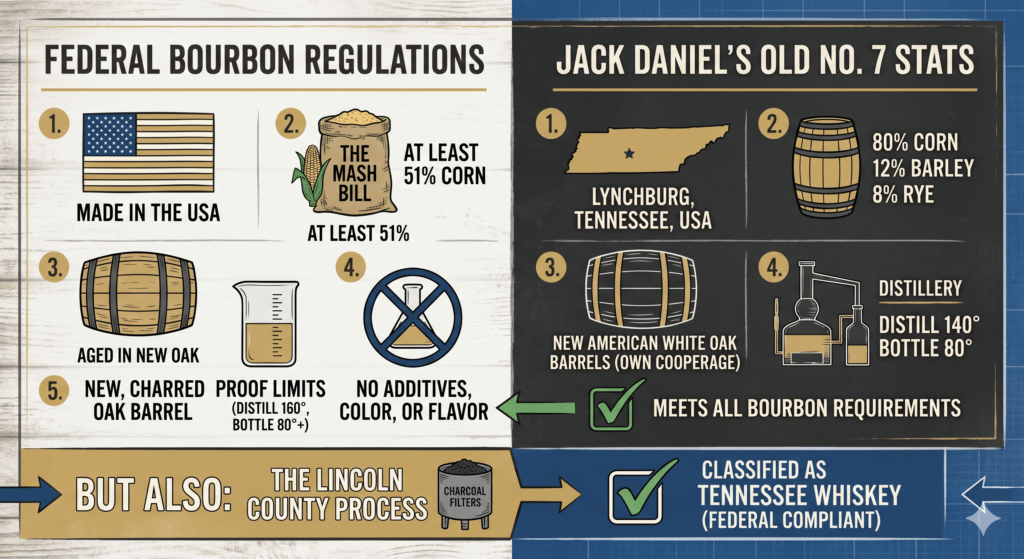
To understand if Old No. 7 makes the cut, we first have to establish the ground rules. As we discussed in our deep dive into the history of bourbon, Congress declared bourbon a “distinctive product of the United States” in 1964. Therefore, to legally be called bourbon, a spirit must follow a strict set of federal regulations.
Specifically, the Federal Standards of Identity for Distilled Spirits state that bourbon must be:
- Made in the USA: It can be made in any state, not just Kentucky.
- The Mash Bill: It must be produced from a fermented mash of at least 51% corn.
- The Barrel: It must be aged in new, charred oak containers.
- The Proof: Distilled at no more than 160 proof, entered into the barrel for aging at no more than 125 proof, and bottled at 80 proof or more.
- Additives: It cannot contain any additives, colorings, or flavorings.
If a whiskey checks all these boxes, it is bourbon. If it misses even one, it is just whiskey.
Does Jack Daniel’s Meet the Bourbon Criteria?
Let’s look at the stats for Jack Daniel’s. First, it is made in Lynchburg, Tennessee, which is obviously in the United States. Furthermore, its mash bill consists of 80% corn, 12% barley, and 8% rye. This is well above the 51% requirement mentioned in our guide to bourbon basics.
In addition, Jack Daniel’s uses proprietary new American white oak barrels that they build themselves. They also distill and barrel the spirit within the correct proof limits. Finally, there are no artificial colors added; that beautiful amber color comes strictly from the wood.
Consequently, the verdict is clear: purely based on the technical and legal definition, Jack Daniel’s is bourbon. However, if you look at the bottle, you will never see the word “Bourbon.” Instead, it proudly says “Tennessee Whiskey.”
The Lincoln County Process: The Technical Twist
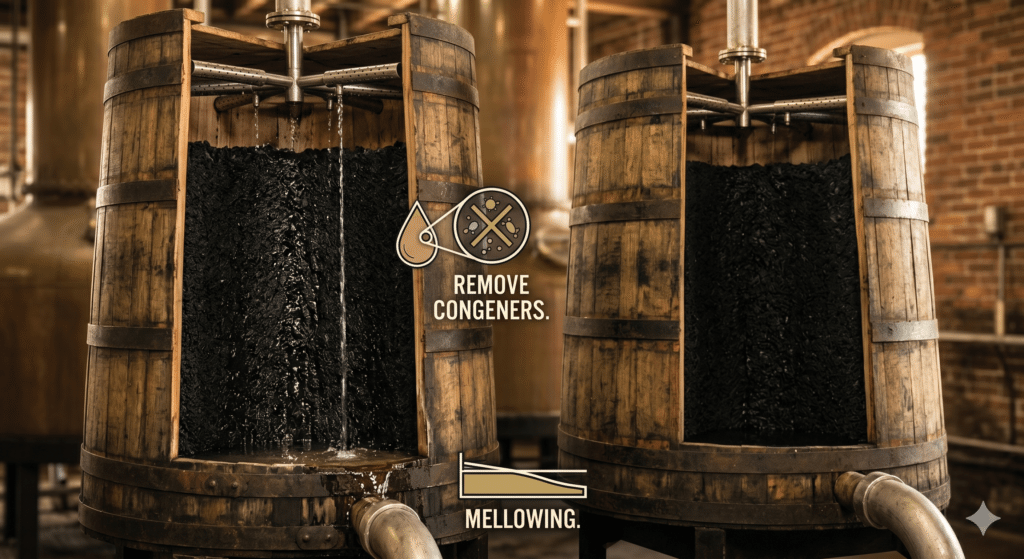
The difference lies in a single production step that happens before the whiskey enters the barrel. After distillation, Jack Daniel’s drips their “white dog” spirit through ten feet of sugar maple charcoal.
This step is called the Lincoln County Process (or charcoal mellowing). The distillery claims this filters out impurities and “mellows” the whiskey, giving it that distinct smooth finish. Because of this extra step, the state of Tennessee passed a law (House Bill 1084) stating that to be “Tennessee Whiskey,” the spirit must be straight bourbon whiskey made in Tennessee and use the Lincoln County Process.
Here is where the confusion starts. Many purists argue that charcoal filtering alters the flavor, meaning it shouldn’t be bourbon. However, federal regulators disagree. The TTB (Alcohol and Tobacco Tax and Trade Bureau) has stated that charcoal filtering does not disqualify a spirit from being bourbon.
Why Marketing Clouds the Common Sense
So, why does Jack Daniel’s refuse to call itself bourbon? Marketing. By creating a separate category called “Tennessee Whiskey,” Jack Daniel’s separated itself from the crowded field of Kentucky bourbons. As a result, they built a unique identity that feels exclusive. They aren’t just another bourbon on the shelf; they are the only Jack.
For the everyday patriot stocking their home bar, this distinction is mostly semantics. Whether you call it bourbon or Tennessee Whiskey, the production methods are nearly identical to the high-quality bourbons you know and love.
Understanding the Mash Bill and Proof Limits
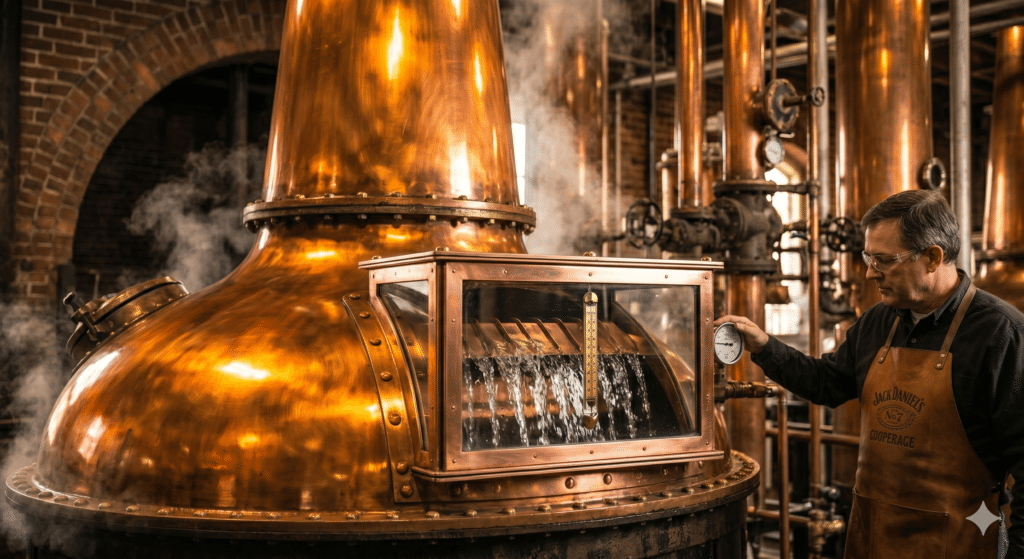
To appreciate the craft, we must look at the science of the pour. Jack Daniel’s maintains a high corn content (80%), which provides that classic sweetness associated with bourbon. The remaining 20% (rye and malted barley) provides the structure and spice.
Moreover, the proof limits are strictly regulated to ensure flavor integrity. By distilling at a lower proof (140 proof for Jack), the spirit retains more of the “congeners”—the natural flavor compounds from the grain. If they distilled at a higher proof, like vodka, they would lose the soul of the whiskey. This dedication to tradition is why it holds its own against any “official” bourbon in a blind taste test.
Age and Wood: The American Oak Tradition
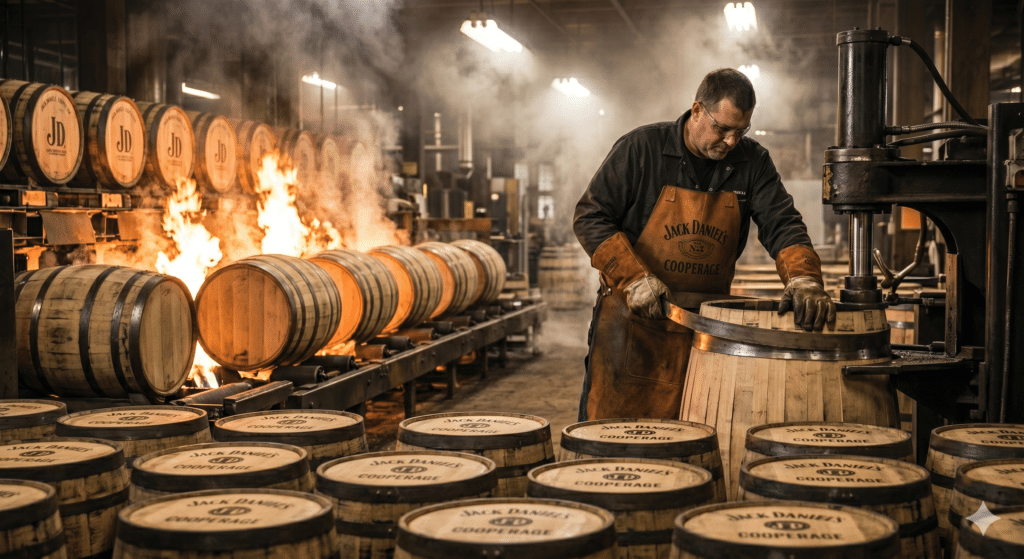
A major requirement for bourbon is the use of new charred oak containers. Jack Daniel’s is one of the few distilleries in the world that owns and operates its own cooperage. This level of vertical integration allows them to control the quality of the wood and the level of the char.
Because they use brand-new wood every time, the whiskey extracts 100% of the vanillins and tannins available in the oak. This is why you get those notes of caramel and toasted marshmallow. If they reused barrels—as they do for Scotch or Irish whiskey—it would legally cease to be bourbon or Tennessee Whiskey.
The Role of Water: The Hollow and the Cave Spring
The water used in the production of Jack Daniel’s is just as critical as the grain. Located at the Cave Spring Hollow, the water flows at a constant 56 degrees and is naturally filtered through layers of limestone. This limestone is vital because it removes iron, which would otherwise turn the whiskey bitter and black. This mineral-rich water is a hallmark of the Appalachian region, shared by the great bourbon distilleries of Kentucky.
Why It Matters to the Everyday Patriot
In a world full of “experts” and gatekeepers, the Jack Daniel’s debate is a perfect example of why we value backbone over political correctness. People love to argue over labels because it makes them feel superior. But as a patriot who values quality over quantity, you know better.
Choosing a whiskey shouldn’t be about conforming to a category; it should be about the craft and the character. Whether you are sipping affordable cedar wood cigars or testing out a seasoned cast iron skillet, you want the truth. The truth is that Jack Daniel’s is a high-quality, grain-to-glass American product that honors the same traditions as the finest bourbons in the world.
Expanding Your Palette: Beyond Old No. 7
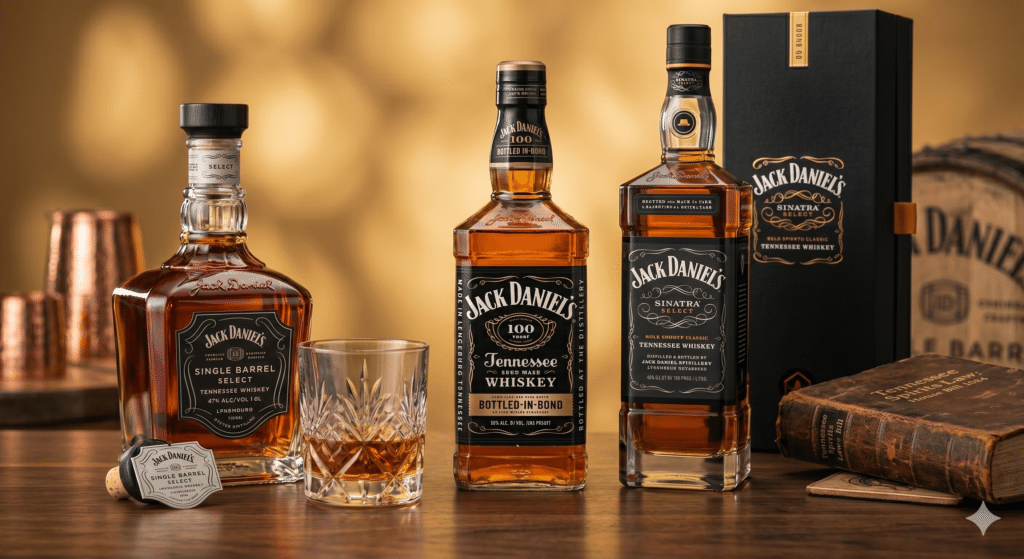
If you want to see how “bourbon-like” Jack Daniel’s can truly be, look toward their premium expressions. The Jack Daniel’s Single Barrel Select or the Bottled-in-Bond series offers a deeper complexity. These expressions highlight the oak and the spice of the rye more prominently, often rivaling elite Kentucky bourbons in richness and depth.
Furthermore, the “Bottled-in-Bond” designation is another layer of federal law that Jack Daniel’s follows for certain releases. This requires the spirit to be the product of one distilling season, one distillery, and aged in a federally bonded warehouse for at least four years—standards that go even beyond the basic bourbon requirements.
The Answer: Yes, Jack Daniel’s meets all legal requirements to be bourbon. It is classified as Tennessee Whiskey because of the Lincoln County Process, but it remains a “Straight Bourbon Whiskey” by federal standards.
The Final Verdict
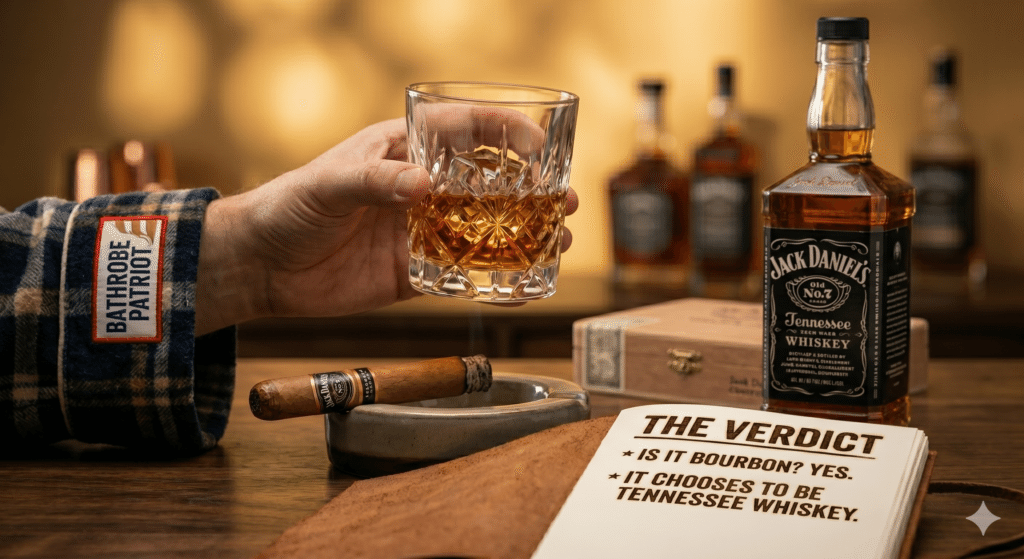
Next time someone tells you Jack Daniel’s isn’t bourbon, you can hit them with the facts. Technically, yes, is Jack Daniels bourbon? Absolutely. It meets every single legal requirement set by the US government.
However, it chooses to identify as Tennessee Whiskey to highlight that extra charcoal mellowing step. It is a square (Tennessee Whiskey) that is also a rectangle (Bourbon). Now that you know the truth, pour a glass, light up a cigar, and enjoy the history in the glass.

Eric Webber is the founder of Bathrobe Patriot, a lifestyle brand centered on bourbon, cigars, and common sense. As an ISSA-certified trainer and former restaurant owner with 20 years of experience, he values quality over quantity and backbone over political correctness. Currently, Eric lives in Safety Harbor, Florida, where he advocates for a life of balance, discipline, and the occasional slow pour. Consequently, his mission is to provide you with the unfiltered truth about the gear, spirits, and culture that define the American spirit.