
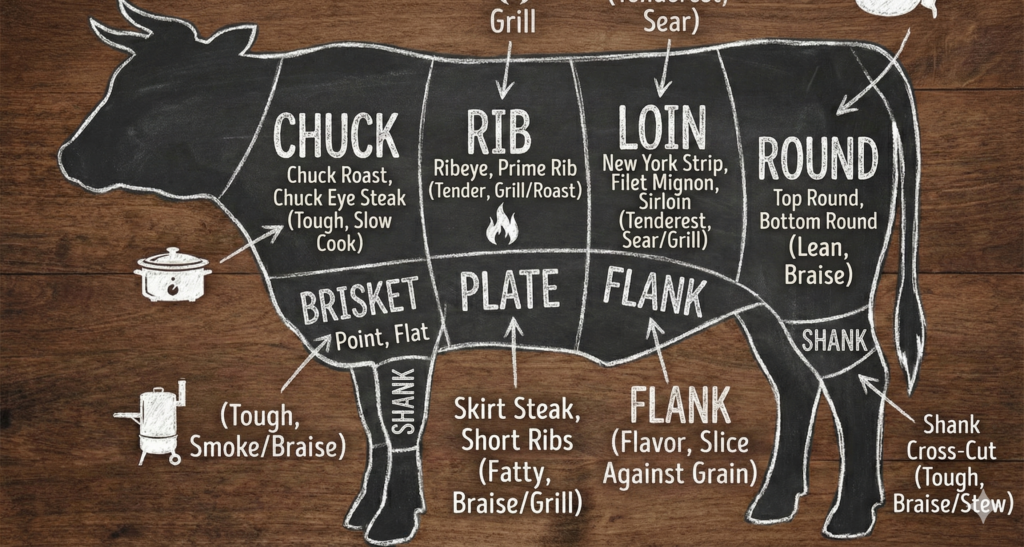
If you’ve ever stood at the meat counter staring at a sea of red plastic-wrapped packages, wondering why one steak is $12 and the one next to it is $28, you aren’t alone. Understanding the different cuts of beef is the foundation of confident cooking. We aren’t talking about fancy, “influencer” cooking with gold flakes and tweezers. We’re talking about real, everyday, common-sense cooking for people who give a damn about what’s on their plate.
This comprehensive guide breaks down the most important beef cuts, their best uses, and how to choose the right meat without draining your bank account.
Why Understanding Beef Cuts Changes Everything
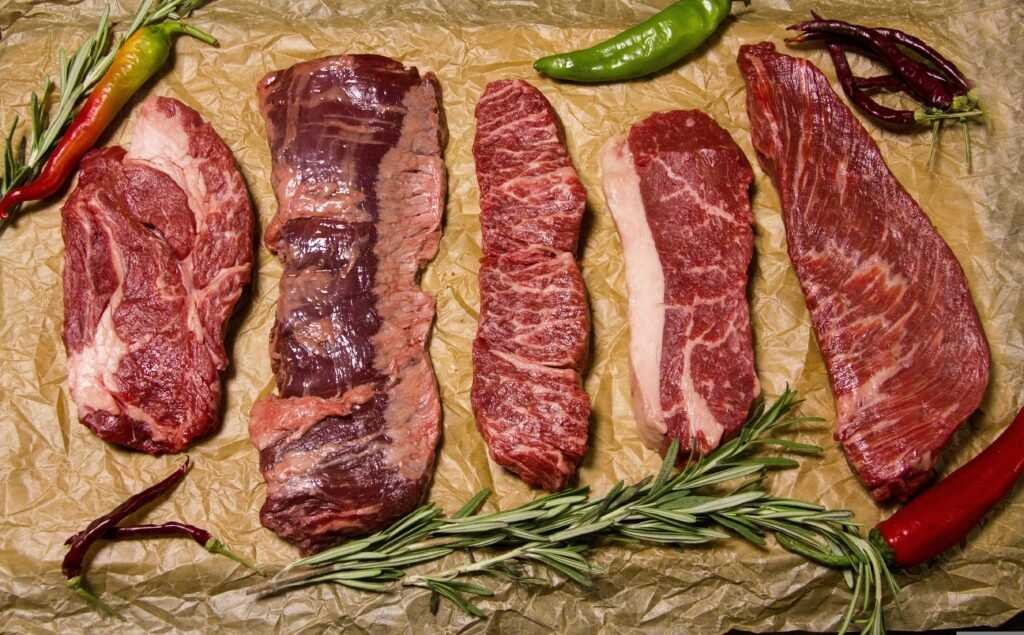
Every cut of beef comes from a distinct muscle group on the animal. Because cows use some muscles for heavy lifting and others hardly at all, the texture and flavor profiles vary wildly. When you master this knowledge, you gain three major advantages:
- Stop Overpaying: You’ll know when a budget-friendly cut can taste like a premium one.
- Stop Overcooking: You won’t try to grill a brisket like a burger or slow-cook a filet mignon into a hockey puck.
- Build Kitchen Confidence: You’ll shop with a plan, not a prayer.
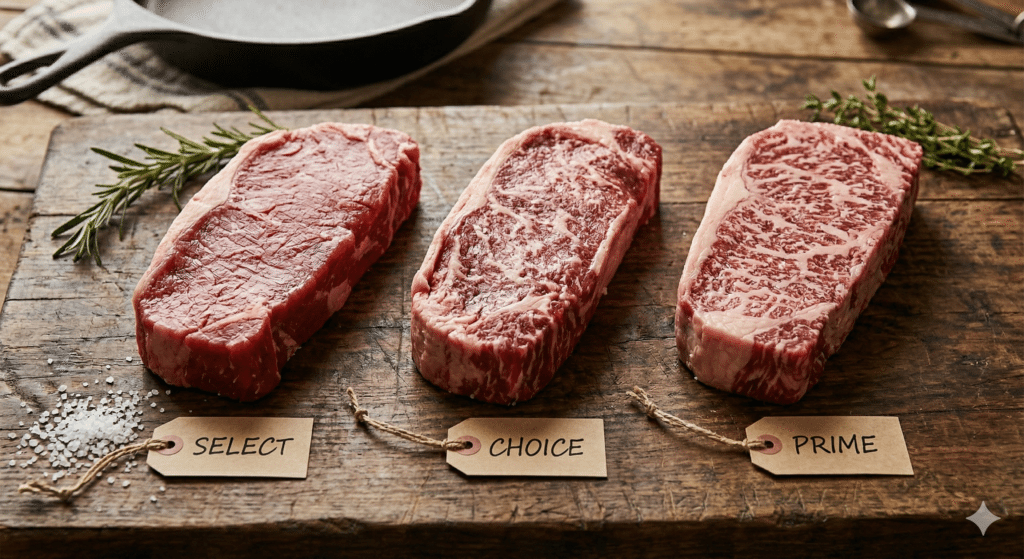
Furthermore, the quality of the meat matters just as much as the location. That is why it is essential to understand the differences between Prime, Choice, and Select meat grades before you even fire up the stove.
The 10 Core Cuts of Beef Every Home Cook Should Know
These are the staples. Whether you are at a local butcher or a big-chain grocery store, these ten cuts offer the best range of flavor, value, and versatility for the Bathrobe Patriot lifestyle.
1. Ribeye (The Flavor King)
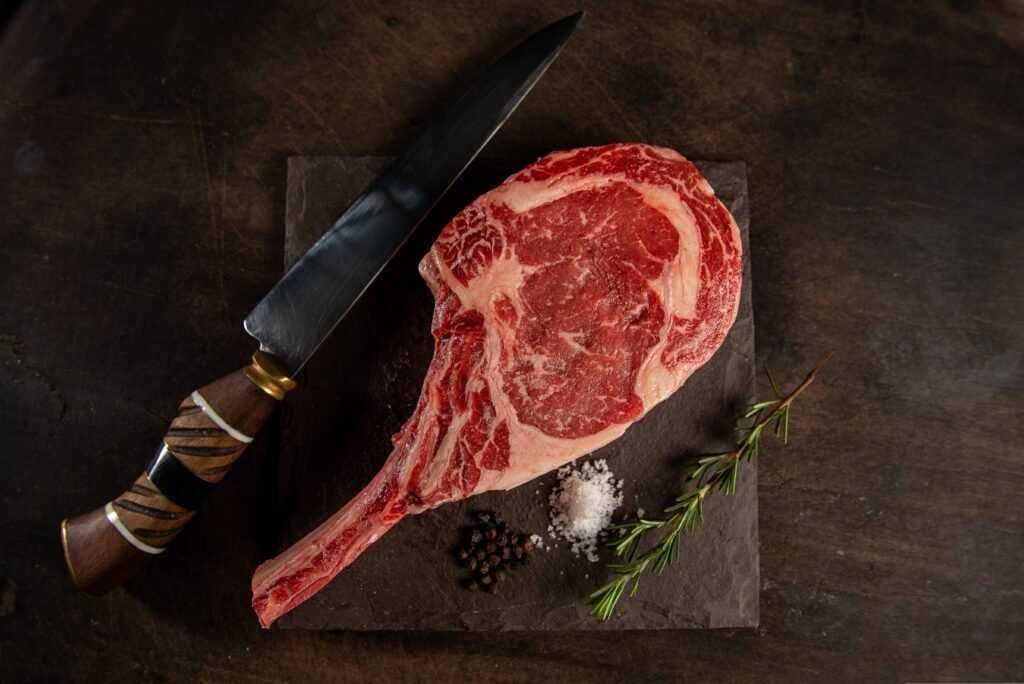
- Best for: Grilling, cast iron searing.
- Tenderness: Very high.
- Price: Premium.The ribeye is harvested from the rib section (specifically ribs 6 through 12). Because this muscle doesn’t do much work, it stays incredibly tender. However, the real draw here is the marbling—those white flecks of intramuscular fat that melt during cooking to baste the meat from the inside out.
2. New York Strip
- Best for: Grilling, pan-searing.
- Flavor: Clean, beef-forward.
- Tenderness: High.Also known as the Ambassador Steak, the strip comes from the short loin. It has a tighter grain than a ribeye, giving it a bit more “chew” while remaining very tender. It usually features a thick “fat cap” along one edge which provides incredible flavor when rendered down in a hot pan.
3. Filet Mignon (The Tenderloin)
- Best for: Pan-searing, butter basting.
- Tenderness: Extremely high.
- Price: Very high.This is the most tender muscle on the animal. Because it is so lean, it lacks the punchy “beefiness” of a ribeye. Consequently, many cooks choose to wrap it in bacon or finish it with a heavy garlic-butter baste to add moisture and depth.
4. Sirloin (The Weeknight Hero)
- Best for: Grilling, slicing, meal prep.
- Price: Affordable.The sirloin is the “working man’s” steak. It is divided into the Top Sirloin (more tender) and the Bottom Sirloin (tougher). It is lean, flavorful, and significantly cheaper than the loin cuts mentioned above. It is the perfect choice for steak salads or family taco nights.
5. Chuck Roast
- Best for: Pot roast, slow cooking, homemade burgers.
- Flavor: Outstanding.
- Price: Budget-friendly.Coming from the shoulder, the chuck is full of connective tissue. If you grill this like a steak, you’ll be chewing until next Tuesday. However, when you braise it low and slow, that collagen breaks down into gelatin, creating the richest, most comforting beef dishes imaginable.
6. Chuck Eye Steak (The “Poor Man’s Ribeye”)
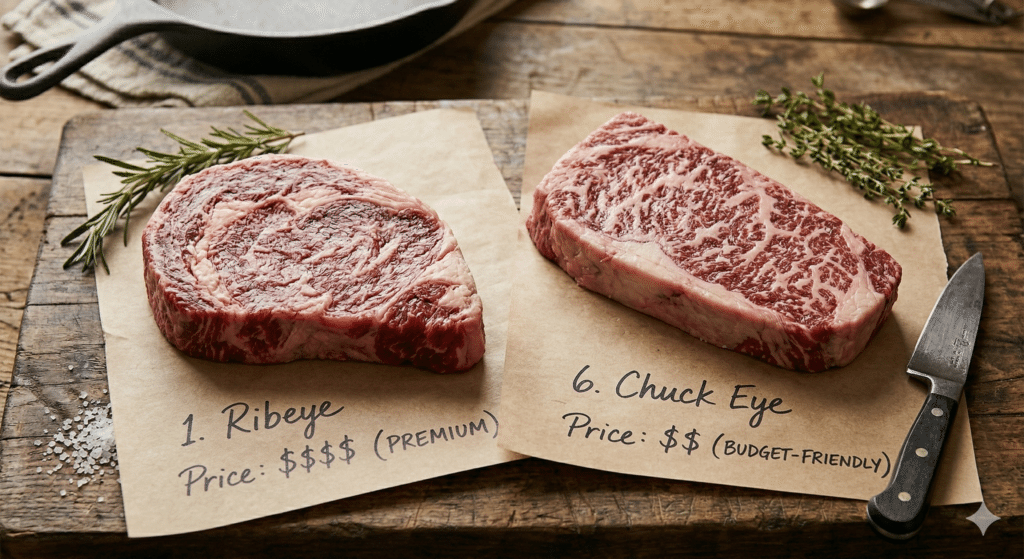
- Best for: Grilling, pan-searing.
- Price: Budget-friendly.This is one of the best-kept secrets in the meat aisle. The chuck eye sits right next to the ribeye. It shares almost the same flavor profile and tenderness but usually costs half the price. If you see one, buy it immediately before your neighbor does.
7. Flat Iron Steak
- Best for: Grilling, broiling, slicing.
- Tenderness: High.Despite coming from the shoulder (the “chuck”), the flat iron is incredibly tender—second only to the tenderloin. It has a deep, mineral-rich flavor and a uniform thickness that makes it very easy to cook evenly.
8. Brisket
- Best for: Smoking, braising.
- Texture: Tough at first, legendary when finished.The brisket is the chest muscle. It supports a massive amount of weight, making it incredibly tough. Patience is the only ingredient that matters here. Whether you are smoking it for 12 hours or braising it for 5, you must give the fibers time to relax.
9. Skirt Steak
- Best for: High-heat searing, fajitas.
- Flavor: Bold and intense.The skirt is a long, thin diaphragm muscle. It has a very coarse grain that is perfect for holding onto marinades. To ensure it stays edible, you must sear it over screaming-hot heat and slice it very thin.
10. Flank Steak
- Best for: Grilling, slicing thin.
- Texture: Lean and structured.Similar to the skirt but leaner and wider. It is a fantastic “sharing” steak. Because it is so lean, it is easy to overcook. Aim for medium-rare and, as always, pay attention to the grain.
Mastering the Science of the Grain
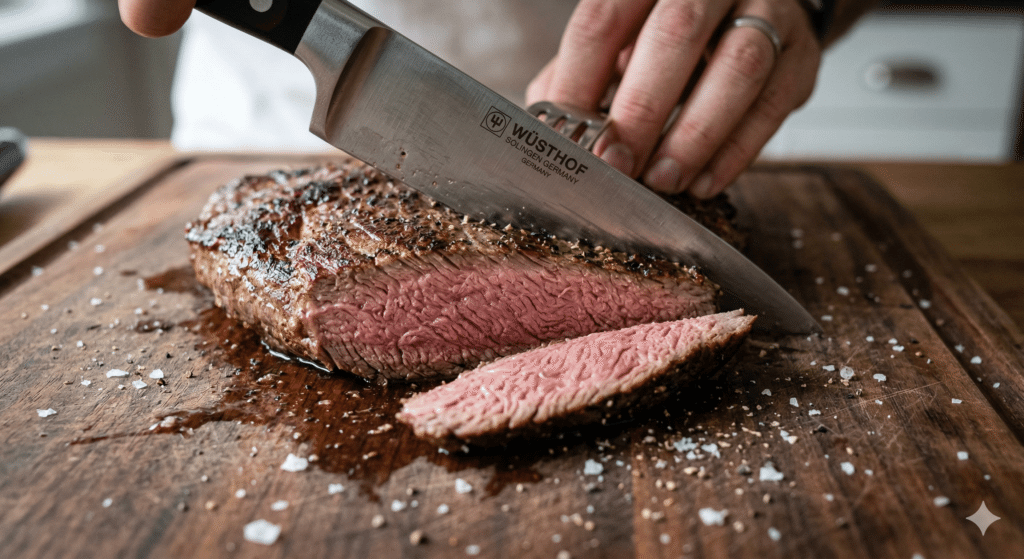
Many people buy a great cut of meat and ruin it at the very last second. This happens because they don’t understand the “grain.” The grain refers to the direction the muscle fibers run.
- Cutting with the grain: You are leaving the long muscle fibers intact. Your teeth have to do the work of breaking them apart. Result? Chewy steak.
- Cutting against the grain: You are pre-cutting those fibers into short segments. Result? The meat falls apart in your mouth.
This rule is non-negotiable for cuts like flank, skirt, and brisket. Use a sharp knife and slice perpendicular to those visible lines of fiber.
Why Quality Gear Matters for Beef
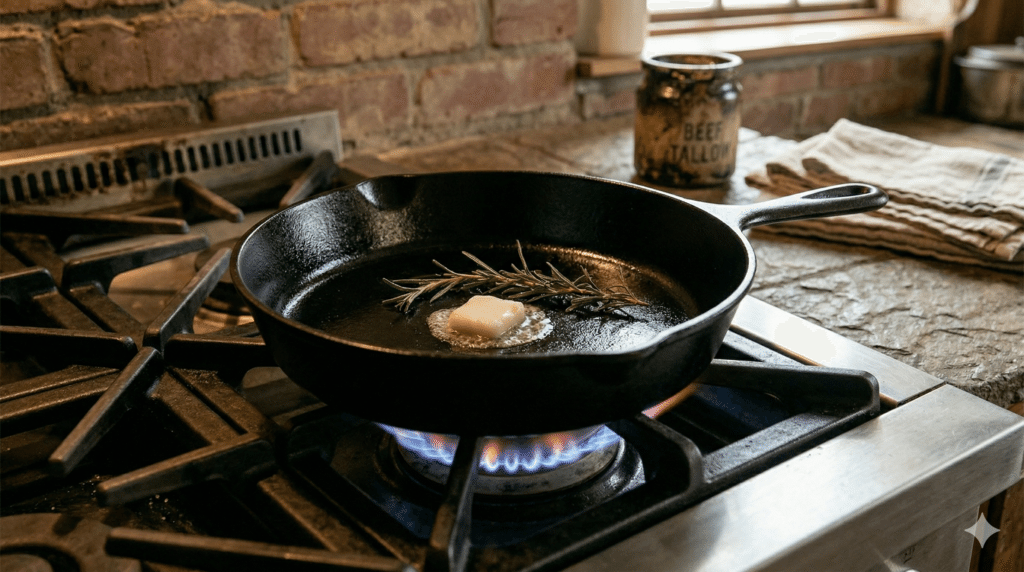
You can buy a Prime-grade ribeye, but if you toss it into a thin, flimsy non-stick pan, you are wasting your money. To get that dark, crusty “sear” that defines a world-class steak, you need heat retention.
Therefore, we highly recommend learning how to season a cast iron skillet to ensure your cookware is up to the task. A well-seasoned pan creates a natural non-stick surface that can handle the high temperatures required for beef.
Additionally, once that meat is cooked, don’t mangle it with a dull butter knife. Using the right cutlery preserves the juices inside the meat rather than squeezing them out onto the plate.
Buying Tips: Prime, Choice, or Select?
When you look at the USDA shield on a package, you are looking at a grade based on marbling and the age of the animal.
| Grade | Marbling Level | Best Use |
| Prime | Abundant | Special occasions, heavy grilling |
| Choice | Moderate | The “sweet spot” for most home cooks |
| Select | Slight | Lean, best for marinating or braising |
For the everyday patriot, Choice is almost always the smartest buy. It offers the best balance of quality and value. If you want to see the full official breakdown, you can explore the USDA grading standards for more detail.
Final Takeaway: No Gimmicks, Just Good Food
You don’t need a chef’s coat or a culinary degree to cook a steak that rivals a high-end steakhouse. You simply need to understand the cut of meat in your hands and treat it with the respect it deserves.
Match your cooking method to the muscle. Use heavy-duty pans. Always slice against the grain. That is the Bathrobe Patriot rule: No shortcuts, no nonsense, just incredible food that brings people to the table.
Pro Tip: You can’t cut a great steak without a rock-solid surface. If your cutting board is sliding all over the counter, it’s time for an upgrade. A heavy wood or composite board provides the stability you need for precision slicing.
Ready to put your knowledge to the test? Head to your local butcher and ask for a Chuck Eye Steak. It’s the ultimate test of a butcher who knows their stuff.
The Patriot’s Resource List
To get the most out of your experience, check out these other guides from the Bathrobe Patriot:
- Pairing Perfection: Learn how to find the best bourbon for the money to pair with your cedar-heavy cigars.
- The Mission: Read the Bathrobe Patriot brand story to see how we’re finding luxury on a budget.
- Cooking Techniques: If you’re smoking on the patio while grilling, check out our guide on mastering methods for every cut of beef.

Eric Webber is the founder of Bathrobe Patriot, a lifestyle brand centered on bourbon, cigars, and common sense. As an ISSA-certified trainer and former restaurant owner with 20 years of experience, he values quality over quantity and backbone over political correctness. Currently, Eric lives in Safety Harbor, Florida, where he advocates for a life of balance, discipline, and the occasional slow pour. Consequently, his mission is to provide you with the unfiltered truth about the gear, spirits, and culture that define the American spirit.