
Understanding Meat Grades

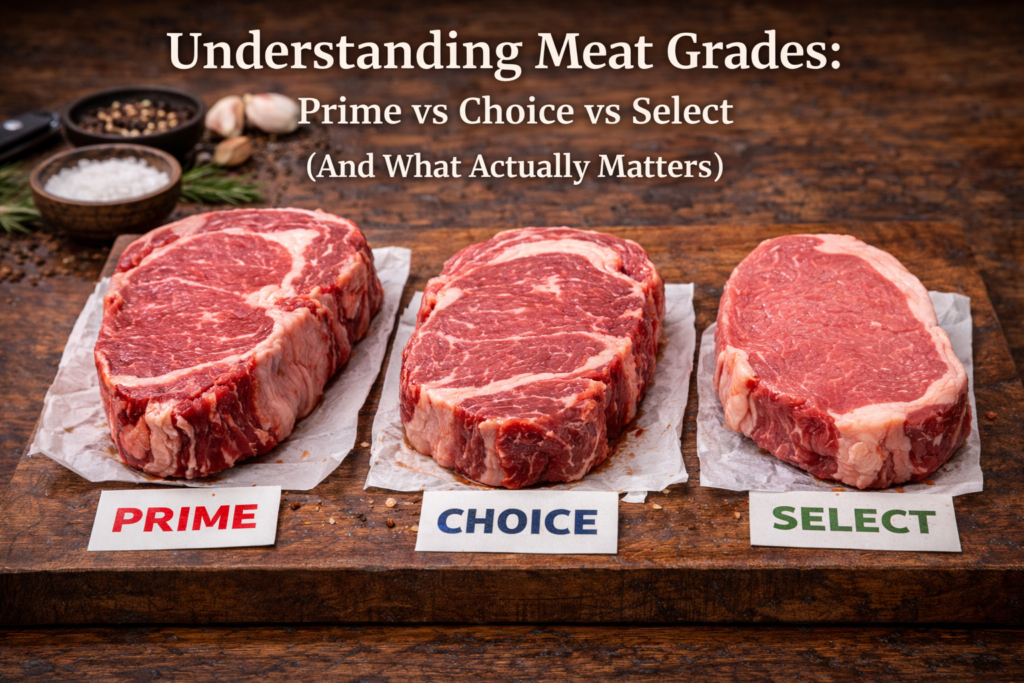
Understanding Meat Grades: Prime vs Choice vs Select

Why Meat Grades Confuse People

Walk up to any meat case and you’ll see labels like Prime, Choice, and Select—usually paired with big price differences and very little explanation.

Most people assume:

  • Prime = best

  • Select = bad

That assumption costs people money.

Meat grades are a tool, not a rule. When you understand what they measure—and what they don’t—you can buy better meat without overpaying.

What Meat Grades Actually Measure

In the United States, beef grades are assigned by the USDA and are based on just two things:

  1. Marbling (intramuscular fat)

  2. Maturity of the animal

That’s it.

Meat grades do not measure:

  • Flavor directly

  • How the animal was raised

  • How the meat was handled after slaughter

  • Whether it’s grass-fed or organic

This is why grades matter—but don’t tell the whole story.

understanding meat grades

USDA Prime: When It’s Worth Paying For

Prime beef has the highest level of marbling and comes from younger cattle. It represents a small percentage of all beef produced.

Prime Works Best When:

  • Cooking thick steaks

  • Using high heat

  • Keeping seasoning simple

Cuts where Prime shines:

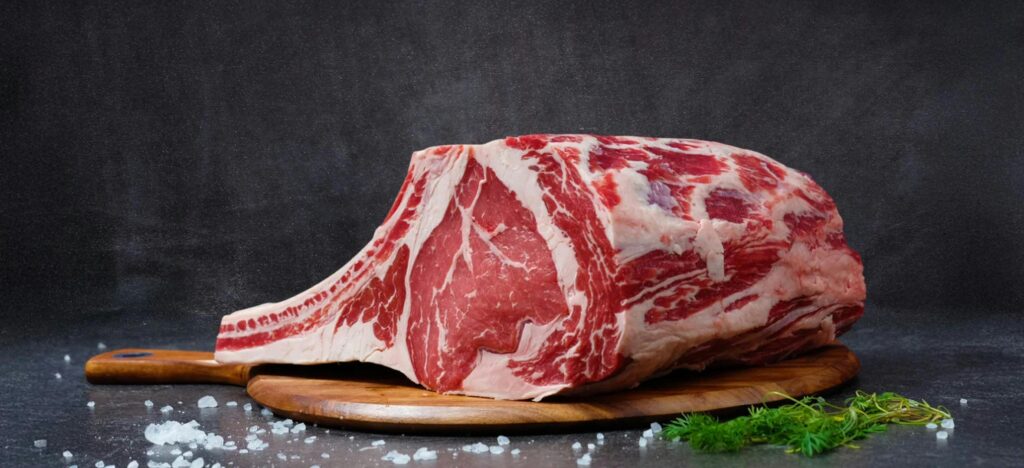
  • Ribeye

  • New York strip

  • Filet mignon

Prime Is Often Wasted When:

  • Ground beef

  • Slow cooking

  • Heavy marinades

If the cooking method doesn’t highlight marbling, you’re paying for something you won’t taste.

understanding meat grades

USDA Choice: The Smart Buyer’s Sweet Spot

Choice beef offers excellent marbling and consistency without the premium price tag.

For most home cooks, Choice is the best value.

Why Choice Makes Sense:

  • Reliable quality

  • Wide availability

  • Strong performance across many cuts

Cuts from the rib and loin sections in Choice grade often eat nearly as well as Prime when cooked properly.

This is where informed buyers live.

USDA Select: Lean, Not Useless

Select beef has less marbling and gets a bad reputation because it’s often used incorrectly.

Select Works Well For:

  • Thin slicing

  • Marinades

  • Slow cooking

  • Lean-focused meals

Select Struggles With:

  • High heat

  • Overcooking

  • Dry cooking methods

Select isn’t bad meat—it’s less forgiving meat.

Grass-Fed vs Grain-Fed: Not a Grade

This is where confusion explodes.

Important:
Grass-fed and grain-fed are not meat grades.

You can have:

  • Prime grain-fed beef

  • Choice grass-fed beef

  • Select grass-fed beef

Key Differences:

  • Grass-fed: leaner, stronger flavor, less marbling

  • Grain-fed: richer flavor, more marbling, more forgiving

Neither is better. They’re different tools for different preferences.

understanding meat grades

What Meat Grades Don’t Tell You

Grades don’t account for:

  • Aging (wet-aged vs dry-aged)

  • Storage conditions

  • Butcher skill

  • How long meat sat in the case

A well-handled Choice steak can beat a poorly handled Prime steak every time.

understanding meat grades

How Patriots Use Meat Grades Wisely

Here’s the practical takeaway:

  • Prime: Buy selectively

  • Choice: Buy confidently

  • Select: Buy intentionally

Match the grade to the cut and cooking method, not the label hype.

Knowledge beats marketing every time.

Got Bourbon?

Grab Your Next Favorite Bottle at The Barrel Tap

Leave a Comment

Your email address will not be published. Required fields are marked *

Scroll to Top